The 5 C’s of teamwork lay the necessary foundations for building teams that achieve optimal results.
Many companies fail to meet the necessary objectives for development and continuity in increasingly competitive and globalized markets.
Therefore, companies must work on all dimensions of the organization from the ground up, starting with the work teams, as they are essential for leveraging competitiveness.
Understanding what these are and their significance can be the differentiating factor your project needs to succeed.

What are the 5 C’s of teamwork?
To help you better understand the process of creating efficient and motivated teams, it’s important to examine the 5 C’s of teamwork one by one.
Complementarity
Members of an effective team should be complementary (which can be reinforced through collaborative activities such as crowdsourcing)., meaning they should perform specific actions based on their knowledge, competencies, and skills—all necessary to achieve the objectives.
Complementarity enriches the team by increasing its competitiveness.
To achieve this, it’s necessary to integrate a defined and measurable talent evaluation system that allows for a detailed understanding of the competencies and abilities of the company’s human capital.
Commitment
Without the commitment of each member to contribute their best to the common project and move the work forward, the team will not function optimally.
This second factor goes beyond satisfactory economic compensation and implies that the worker identifies with the company’s goals and philosophy.
Do you want to stay on top of the latest trends in eLearning, EdTech, and Human Resources?
Fill out the form to receive our weekly newsletter with industry insights from our experts.
Within a team, commitment helps build a relationship of interdependence with other members, sharing values and mission.
In this context, communication is tightened and coordination facilitated, which are two other C’s we’ll see later.
The result is a natural reduction in the need for leadership, turning it more into guidance.
You can strengthen commitment in your teams by:
- Ensuring that objectives and task distribution are clearly defined.
- Providing people with the necessary resources.
- Valuing the potential of individuals and the team as a whole.
- Encouraging communication, analysis, and group decision-making.
- Creating a work environment based on respect.
- Implementing clear communication about expected results.
Communication
Communication among team members, and specifically feedback, are necessary elements for teamwork.
Soft skills such as negotiation ability, problem-solving, empathy, and active listening further highlight the importance of effective, assertive, and constructive communication.
Note that in a team, all members play the role of both sender and receiver of messages. Therefore, promoting active listening and constructive criticism is essential.
This need also applies to exponential leadership, whose main representative must be able to detect the talent of their teams and use clear, concise, and timely communication based on pre-established objectives.

Trust
Trust strengthens the team by fostering mutual knowledge and integration.
It provides cohesion to the group and facilitates interaction. Trust makes it easier to reach consensus, ensuring that tasks meet their deadlines.
Each member must be aware of the team’s strengths, which is why creating an environment of participation and exchange of knowledge and experiences is important.
Coordination
Achieving the elements discussed in the previous points leads to coordination, i.e., developing each member’s tasks in harmony and cooperation, always seeking the common good.
This process leads to learning and employee satisfaction, improving performance and outcomes.
For coordination to occur, each team member must know the project roadmap precisely, have the necessary tools, value their colleagues’ abilities, and feel that their skills are as necessary as those of others.
In this regard, you can initiate a welcome presentation to the group that will facilitate short-term success. You can use the corporate onboarding model to welcome new employees.

Benefits of the 5 C’s in teamwork
By now, it’s clear that fostering the 5 C’s of teamwork helps meet both the group and individual needs of its members. For the group, these needs translate into:
- Sharing common values.
- Valuing the common purpose.
- Creating interpersonal relationships of mutual respect and trust.
- Consolidating each member’s responsibility regarding the team’s final outcome.
Each member needs to know precisely their role in the group and work in a suitable work climate to foster feelings of understanding and tolerance towards their colleagues.
If this balance is achieved, the potential benefits include:
- A surge in creativity and innovation in projects.
- Increased quality of the final result, allowing the company to offer better services or products.
- Improved overall work environment of the organization.
- Enhanced company reputation, increasing the ability to attract talent due to success.
- A conducive environment for employee evolution, as they put their best into each project, desiring continuous improvement to remain competitive.
- Talent retention by solidifying commitment to the company.
- Ease of building a culture of continuous learning through others, enriching each person and the company in turn.
In this dynamic, technological innovations will help you enhance your results.
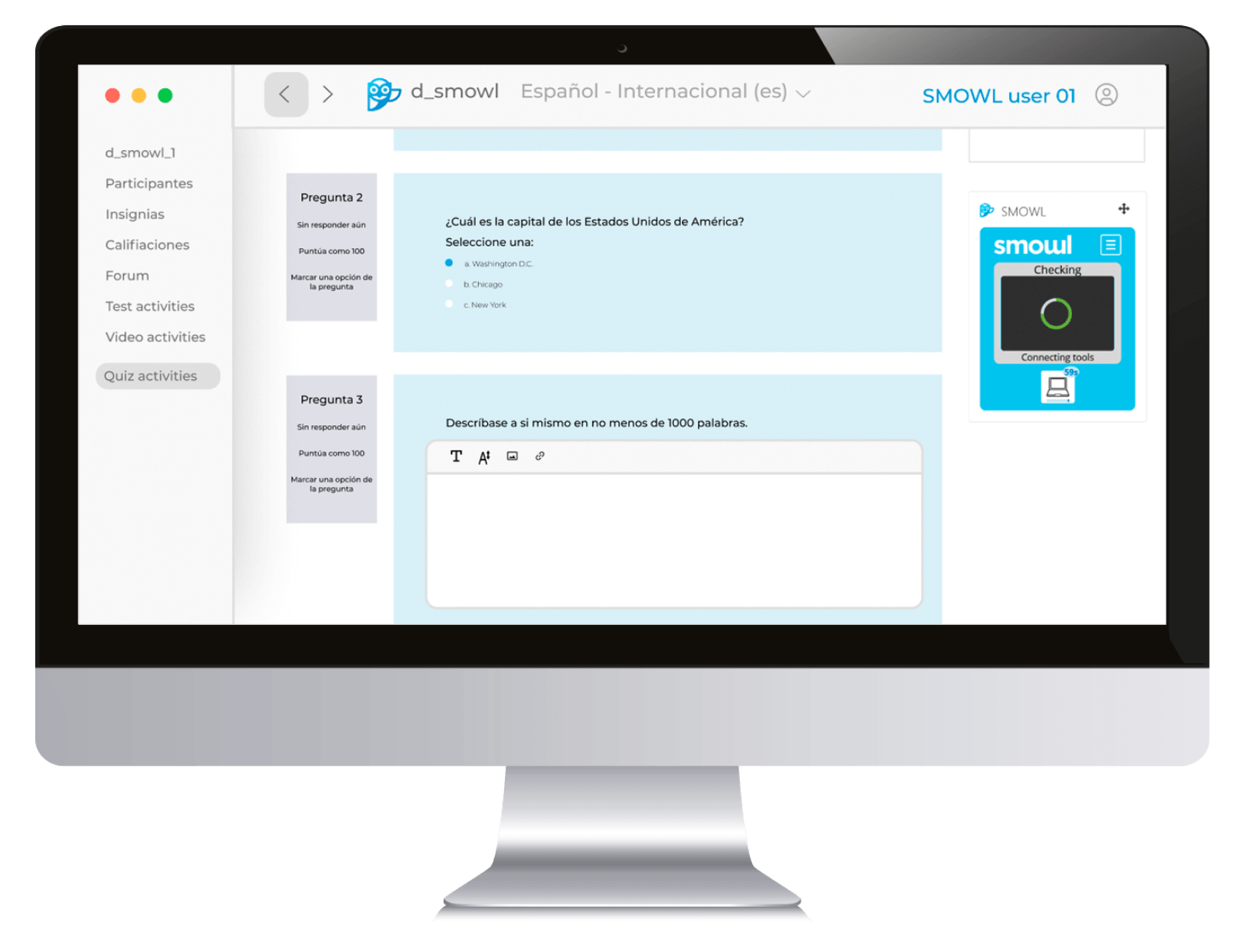
For example, our proctoring plans create secure environments for your assessments, training, and exchanges, and help foster the necessary trust climate to achieve excellence.
Request a free demo; we’re eager to share our innovative solutions for your talent assessment strategies.
8 interesting facts about proctoring
Fill out the form and download the guide where we cover everything about online monitoring and help you choose the best software.