In this rapidly developing digital environment, accessible technology is something more than a buzzword but rather an imperative towards a sustainable and inclusive future.
Where billions depend on technology to get by every day, it is important that it be made accessible to all users, including those with disabilities.
Yet, accessibility does not just benefit individuals but plays a very important role in sustainability, driving social, economic, and environmental well-being.
In this article, we are going to talk about accessibility and sustainability at their intersection, and why the ability to make technology usable by all lies at the core of a fairer, more sustainable future.

Accessible Technology: What Is It?
Accessible technology refers to devices, software, and digital platforms designed with inclusivity in mind.
It ensures that everyone can easily use technology, regardless of physical, sensory, or cognitive abilities.
This means that using technology should be easy for all, regardless of physical, sensory, or cognitive disability.
Examples include screen readers for visually impaired persons, voice recognition software, and as simple as keyboard navigation options. Besides making technology usable for disabled people, these innovations make general interaction with technology easier.
Accessibility is about breaking down barriers and ensuring no one is left behind in the tech revolution.
With around 1 billion people in the world living with some form of disability, creating technology that caters to diverse needs is no longer optional; it’s a necessity.
Do you want to stay on top of the latest trends in eLearning, EdTech, and Human Resources?
Fill out the form to receive our weekly newsletter with industry insights from our experts.
Accessible Technology and Sustainability
You might wonder, how does accessibility relate to sustainability?
The answer is pretty straightforward: social sustainability.
In making technology accessible, we are creating pathways to inclusiveness and equity. By allowing all people to have the same opportunities, communities and economies thrive.
Socially sustainable practices decrease disparities and enable people with disabilities to participate fully in society.
Accessible technology also contributes to economic sustainability by enabling people with disabilities to become employed, bring in talent into the workplace, and foster innovation.
Hence, they become less reliant on others and more independent. As more of them access technology, business thrives and infuses another positive feedback loop for all economic players.
Finally, accessible technology can be used to further environmental sustainability. For example, there are tools created that will enable individuals to work remotely and hence cut commuting time, which is obviously associated with reduced carbon footprints.
How Accessible Technology Contributes to a Sustainable Society
Accessible technology reduces barriers in education, employment, and social participation. In giving persons with disabilities ways of full participation in society, greater social inclusion and equity in digital opportunities are fostered.
These are key components of the United Nations’ SDGs, especially the reduction of inequalities.

Internet for People with Disabilities
In this day and age, access to the internet is important. However, persons with disabilities using the internet face difficulties not as smooth as it really needs to be.
Most websites are not designed to be friendly to people with any kind of disabilities, making their usage pose various challenges for those relying on assistive technologies. For example, a person who depends on a screen reader may find it hard to get through a poorly designed website.
Thankfully, technology has finally started to close the gap. Browser extensions that magnify text, voice search options, and AI-powered captioning have steadily been working to increase access.
The internet is where everyone can connect with each other, learn from each other, and grow with each other, and by making a design accessible, people with disabilities aren’t excluded from this digital space.
How to Make Technology Accessible
Accessibility in technology, like web accessibility, involves design driven by the user. That is, developers and designers have to take into consideration a wide range of people using technology: different kinds of procedures for browsing the content-typing, voice, or touch; compatibility with assistive devices like screen readers and Braille displays; intuitive interfaces that are easy to use without needing fine motor control or sharp vision.
Different users with different abilities can test such technologies; such testing should focus on international standards, like WCAG. A company will thus be assured of the accessibility of its products to all kinds of customers.
Accessibility and Technology Go Hand in Hand
Wherever technology drives accessibility, accessibility furthers technology. The need to innovate to keep up with the needs of people with disabilities has enabled the firms to find new markets and new uses for their products creatively. Voice-activated assistants, initially developed to keep up with accessibility, have grown into the mainstream today.
Some companies have seized the bull by the horns. For instance, Apple has millions of users using its free VoiceOver technology. By embracing inclusion, digital organizations can enhance their products for everyone at the same time foster inclusion.
Assistive Technologies That Empower Users
Assistive technologies play a key role in making daily life more manageable and independent for people with disabilities. Some examples include:
- Screen readers: Help visually impaired users by converting text into speech
- Voice recognition software: Allows users to control devices through speech, aiding those with mobility issues
- Closed captioning: Essential for people who are deaf or hard of hearing, providing text descriptions for audio content
These technologies have empowered users by enabling them to participate fully in society—whether it’s through education, work, or social interaction. And as they continue to evolve, they contribute significantly to a more inclusive world.

How Accessible Technology Reduces Digital Inequality
Accessible technology matters because lessening the digital divide requires equal access to online resources, services, and opportunities.
Other initiatives include free or low-cost assistive technology tools, classes in digital literacy, further helping to shrink the divide.
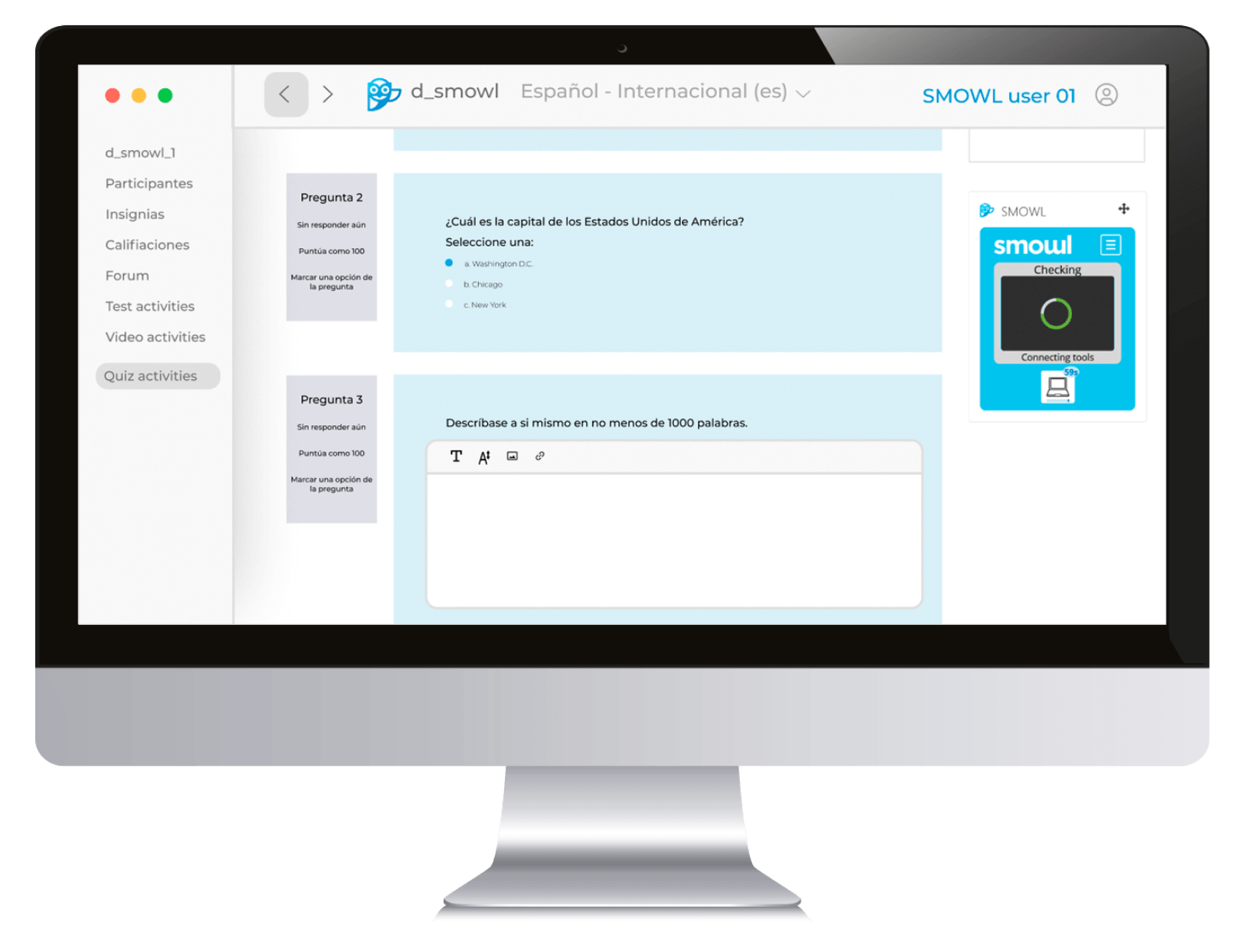
Solutions like SMOWL, a proctoring tool designed with inclusivity in mind, show how technology can help people with disabilities achieve their academic and professional goals.
By making proctoring systems accessible to all, tools like SMOWL proctoring plans ensure academic integrity and a fairer and more inclusive learning environment and, ultimately sustainable education worldwide.
Ask for a free demo where we will show you the innovative solutions we can offer you.
8 interesting facts about proctoring
Fill out the form and download the guide where we cover everything about online monitoring and help you choose the best software.