Student data privacy poses major challenges in information societies that may jeopardize the well-being of students.
Protecting the collection, compilation and access to student data is essential to ensure the integrity of students. Parents, schools and governments must work together to achieve this.
Because of its great relevance, in this article we are going to focus on some of the key aspects of student data privacy, and we will explain how to protect it using proctoring software.
What is student data privacy?
Student data privacy is the protection of students’ personal data and their management to prevent unauthorized persons from accessing them, with the resulting damage that this may entail. Tghis requires, among other things, an ethical management of data.
With the emergence of Trusted Internet Connections (TIC) in education, as well as the massive compilation of data in digital infrastructures, the need to protect student information is a priority.
Therefore, schools and teachers must comply with student privacy laws that ensure that data remains safe, thus protecting the integrity and well-being of students.

Why is data privacy important to students?
Data privacy is important to students because of the consequences that can arise if it is breached.
It is believed that when measures for student data protection are deployed, behaviors such as bullying or cyberbullying, which can cause great physical and psychological harm to students, are avoided.
In addition, students and their families may even be exposed to identity thieves from the dark web and exposed to other risks such as extortion or the following:
- Stalking. This is the constant tracking of a person’s movements.
- Doxxing. It consists of trying to damage the victims’ image and reputation by publishing personal information.
- Grooming. This occurs when an adult tries to gain the trust of a minor with the intention of extracting information that could compromise him or her in order to extort money from him or her at a later date.
Do you want to stay on top of the latest trends in eLearning, EdTech, and Human Resources?
Fill out the form to receive our weekly newsletter with industry insights from our experts.
Student data privacy: federal laws
The U.S. Department of Education enforces a number of federal laws, such as those listed below, to enforce privacy laws.
Family Educational Rights and Privacy Act (FERPA)
The FERPA requires schools to protect the privacy of student education records. They must also ensure that parents have access to those records.
FERPA also defines what information schools may collect, maintain, and disclose with or without parental or guardian consent.
Protection of Pupil Rights Amendment (PPRA)
The PPRA provides parents of students with rights related to their children’s participation in surveys and some physical exams, or the disclosure of their data for marketing or commercial purposes.
This law applies to institutions such as the state education agencies (SEA), the local education agencies (LEA) or any other agency that receives funds from programs funded by the U.S. Department of Education.
Children’s Internet Protection Act (CIPA)
The CIPA requires K-12 schools and libraries to use Internet filtering to protect children from accessing content not authorized for them, as well as adopting other protective measures.
Children’s Online Privacy Protection Act (COPPA)
The COPPA focuses on the collection of information from children under the age of 13 and mandates that the data be used only for educational purposes. To this end, it requires parental consent in the first instance.
Guardians and teachers may also provide this consent, but only if the information is to be used, as we have just explained, for educational purposes.
Who is responsible for protecting student data?
The responsibility for student data lies with the educational institutions that collect the information, and they can be held liable for its violation.
For this reason, data protection in educational centers is imperative, and the school must take the necessary measures to ensure that only persons with a legitimate interest can access student records.
To achieve this, they must use resources such as email encryption, access authentication, etc.

How to protect student data privacy using proctoring software?
Proctoring software can help you comply with the requirements of the Student Data Privacy Agreement (DPA) in your online proctoring, although not all do.
So, when choosing proctoring software, check that it complies with the DPA, a data privacy agreement that describes how schools and educational technology providers must handle student data responsibly.
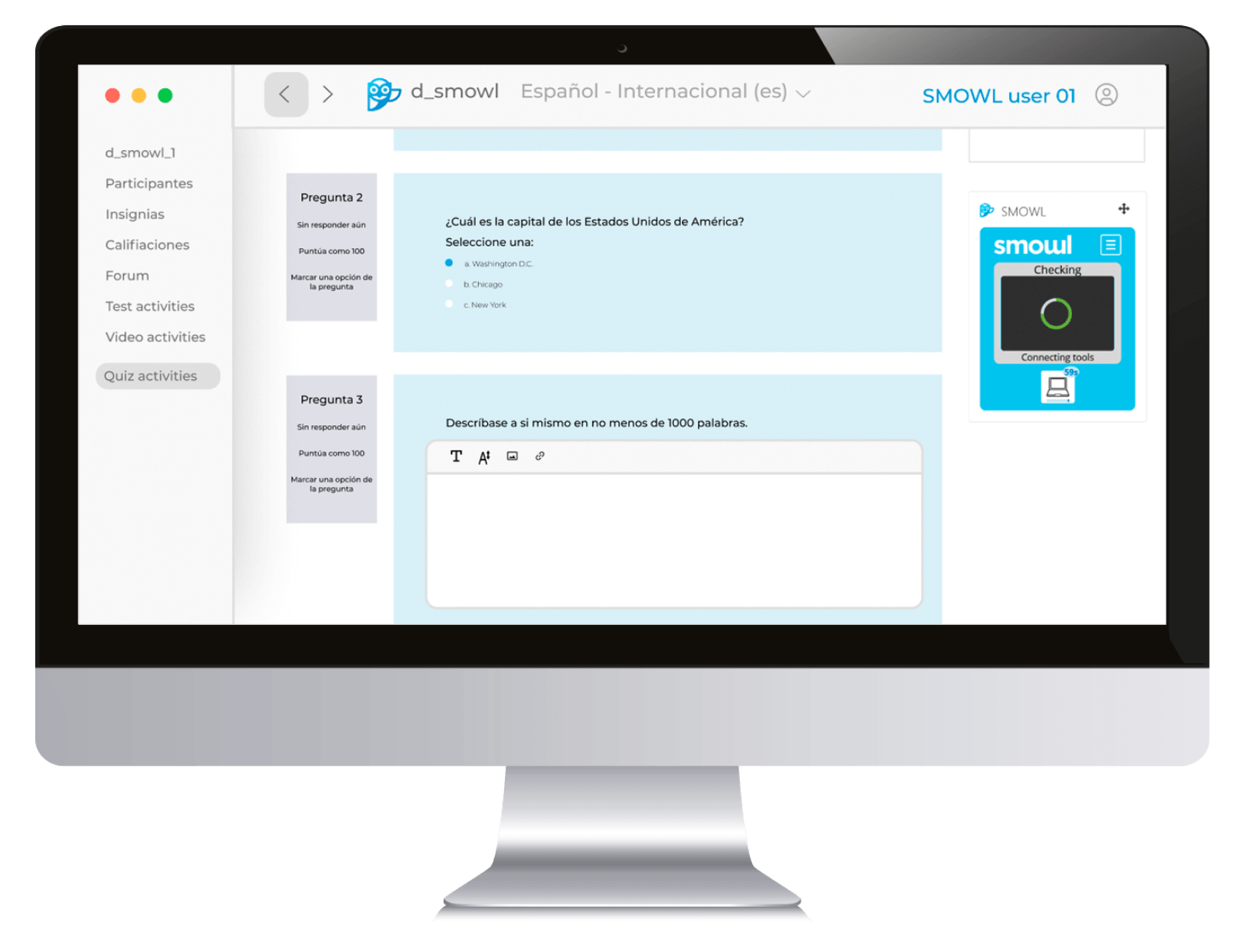
On that note, SMOWL’s proctoring systems do comply with legal requirements for data protection. For this reason, our solutions are a great tool for the many solutions they can offer you to protect the privacy of your students:
- They comply with the legal requirements of federal privacy laws, such as those we have seen in previous lines.
- They ensure that the data collected can only be used for limited and justified purposes, such as internal analysis or auditing.
- They ensure that the privacy policy is adhered throughout the educational practice or assessment, as well as that students understand what type of data is collected and for what purpose.
- They provide tools for fair and objective monitoring, increasing student confidence in testing.
- They use advanced encryption and access control protocols to protect data transmission.
- They promote transparency in the management, collection and transmission of information.
In addition to all these functions, our proctoring softwares guarantee something very important in education: that students’ evaluations are carried out under the same conditions.
This is possible because Smowltech has extensive experience in the development of proctoring plans, which explains why we can differentiate ourselves from most of our competitors, both in the national and international market.
All this know-how allows us to offer our clients innovative, flexible and efficient solutions that respect the legal recommendations in force in terms of student data privacy. Ask for a free demo so we can explain in detail what we can do to enhance the effectiveness of your educational project.
8 interesting facts about proctoring
Fill out the form and download the guide where we cover everything about online monitoring and help you choose the best software.