Remote work, a concept that was once considered a perk or reserved for specific industries, has now firmly established itself as a standard work model.
This shift has been fueled primarily by advances in technology that allow people to work from anywhere in the world, giving rise to the concept of workshifting. The global COVID-19 pandemic further accelerated this transition, forcing companies to adopt remote work on an unprecedented scale.
But what exactly has led to the triumph of remote work, and what does this mean for the future of our workplaces?

Historical context
The concept of remote work isn’t entirely new. In the 1970s and 1980s, some forward-thinking companies began experimenting with telecommuting, allowing employees to work from home occasionally. However, these early experiments were limited by the technology of the time.
Employees relied on landline telephones and snail mail, with email just beginning to emerge as a tool for business communication.
The internet was in its infancy, and the idea of cloud computing was still science fiction. Yet, these early forms of remote work laid the groundwork for the future, planting the seeds of what would eventually become a widespread phenomenon.

How has technology changed the workplace?
The rapid advancement of technology in the 21st century has been the primary driver behind the growth of remote work. High-speed internet and broadband connections are now ubiquitous, enabling seamless communication and access to online resources from virtually anywhere.
Cloud computing has revolutionized data storage and access, allowing employees to work on projects simultaneously from different locations without the need for physical servers.
Tools like Google Drive, Dropbox, and Microsoft OneDrive have become essential for file sharing and collaboration.
Collaboration platforms have also played a crucial role in enabling remote work. Tools like Zoom, Slack, and Microsoft Teams have replaced traditional in-person meetings and office chatter, providing platforms where teams can communicate, share ideas, and collaborate on projects in real-time.
These tools have been instrumental in breaking down geographical barriers, allowing companies to tap into a global talent pool and enabling employees to work from wherever they are most productive.
Do you want to stay on top of the latest trends in eLearning, EdTech, and Human Resources?
Fill out the form to receive our weekly newsletter with industry insights from our experts.
Impact of COVID-19 Pandemic
The COVID-19 pandemic was a pivotal moment in the history of remote work. As lockdowns and social distancing measures were implemented worldwide, businesses were forced to adapt quickly.
For many, this meant transitioning to a fully remote workforce almost overnight. What was initially viewed as a temporary solution soon became a long-term strategy. Companies realized that not only could their employees work effectively from home, but in many cases, they could be even more productive.
The pandemic also highlighted the resilience of both technology and the workforce. Despite the challenges, businesses continued to operate, and in some cases, even thrived. This experience has led many organizations to reconsider the traditional office model, with some choosing to adopt remote work permanently.
The shift to remote work during the pandemic has had lasting effects, fundamentally changing how we think about work and the workplace.
Advantages of Remote Work
Remote work offers numerous advantages that have contributed to its widespread adoption.
- One of the most significant benefits is flexibility. Employees have the freedom to create their own schedules, allowing them to balance their work and personal lives more effectively. This flexibility can lead to reduced stress, higher job satisfaction, and improved overall well-being.
- Cost savings are another major benefit of remote work. For employees, the savings come from reduced commuting costs, lower expenses for work attire, and the ability to prepare meals at home. For employers, the cost savings can be even more substantial. By reducing the need for office space, companies can save on rent, utilities, and other overhead costs. These savings can then be reinvested into the business, leading to further growth and innovation.
- Moreover, studies have shown that remote work can lead to increased productivity. Without the distractions of a traditional office environment, employees can focus more on their tasks and complete their work more efficiently. The ability to work in a comfortable environment, free from the pressures of office politics, can also contribute to higher levels of job satisfaction and engagement.
Challenges of Remote Work
Despite its many advantages, remote work is not without its challenges.
- Communication and collaboration can be more difficult when team members are not physically present in the same location. While tools like Zoom and Slack have made it easier to stay connected, they cannot fully replicate the spontaneous interactions that often occur in an office setting. This can lead to feelings of isolation and disconnection from the team.
- Cybersecurity is another significant concern in a remote work environment. With employees accessing company data from various locations and devices, the risk of security breaches increases. Companies must invest in robust cybersecurity measures, such as virtual private networks (VPNs), secure file-sharing platforms, and regular security training for employees, to protect sensitive information.
- Furthermore, the lack of social interaction in a remote work environment can negatively impact mental health. Humans are social creatures, and the absence of face-to-face interactions can lead to feelings of loneliness and depression. Employers need to be mindful of these potential issues and provide resources and support to help employees maintain their mental well-being.

The Role of Employers in Facilitating Remote Work
To make remote work successful, employers must take an active role in providing the necessary tools and support. This includes investing in reliable technology, such as high-speed internet, updated in-house training strategies as bootcamps, collaboration tools, and secure data storage solutions. Employers should also establish clear communication channels to ensure that team members can easily stay connected and informed.
Creating a supportive company culture is also crucial. This means fostering an environment of trust, where employees feel empowered to manage their own time and work independently. It also involves providing opportunities for team building and social interaction, even in a remote setting.
Virtual team-building activities, regular check-ins, and open lines of communication can help maintain a sense of community and connection among remote workers.
The role of proctoring
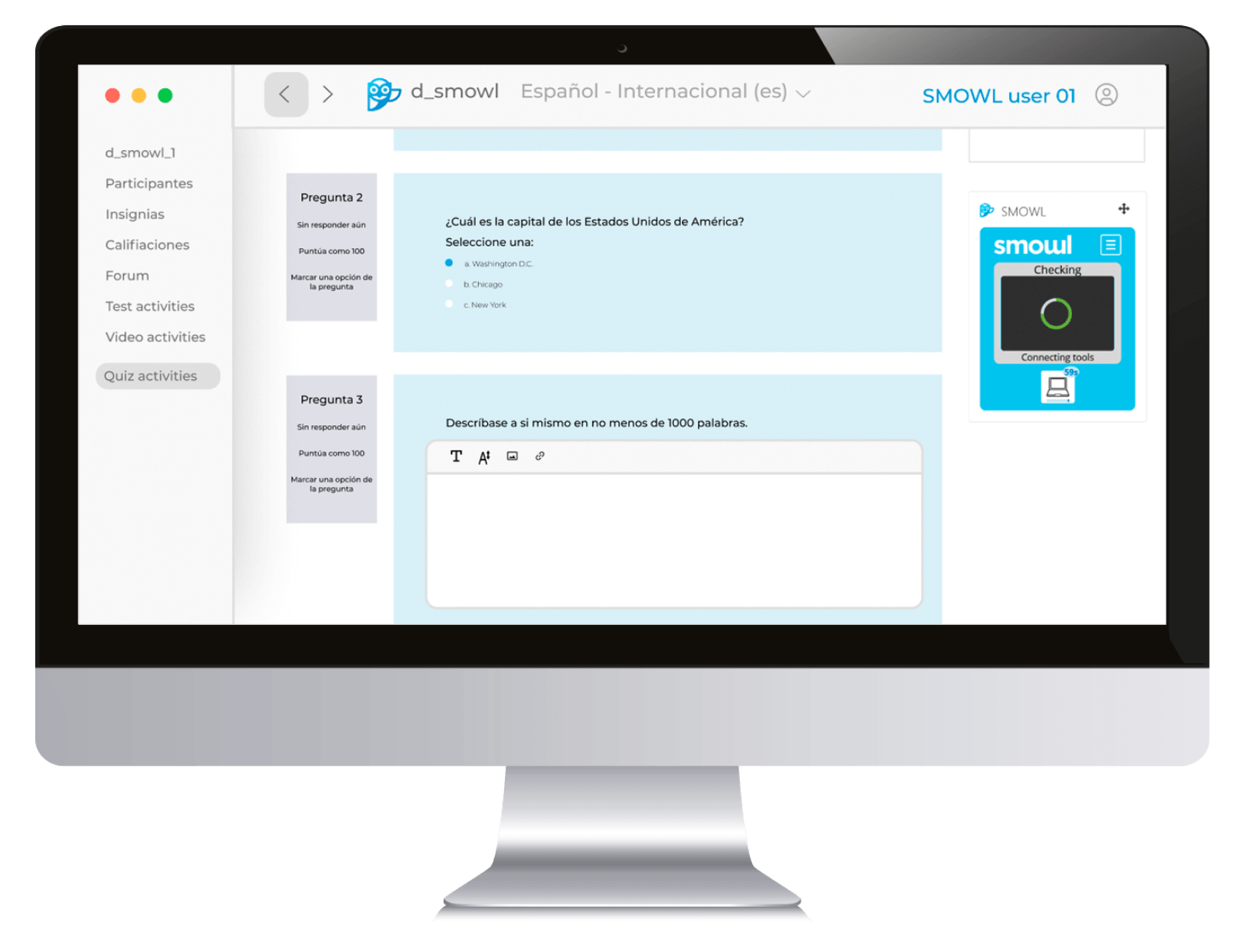
Remote proctoring is a powerful tool that complements the rise of remote work by making professional development more accessible, maintaining the integrity of certifications, and supporting continuous learning.
As remote work continues to evolve, the role of remote proctoring will likely become even more significant, helping to ensure that remote workers can continue to learn, grow, and advance in their careers from anywhere in the world.
This collaboration between remote proctoring and remote work underscores the broader trend towards a more flexible, inclusive, and technologically-driven future.
Choose user-friendly, secure, reliable remote proctoring solutions to enhance the reputation of your company with our proctoring plans.
Request a free demo to discover how SMOWL products can benefit your project.
8 interesting facts about proctoring
Fill out the form and download the guide where we cover everything about online monitoring and help you choose the best software.