Virtual education leverages digital technologies and the Internet to facilitate and optimize distance teaching and learning.
This approach blurs the boundaries of time and space between instructors and students, providing flexible, adaptive, accessible, and personalized learning.
It received a significant boost due to the COVID-19 pandemic, making educators and institutions readjust their roles, though the integration of information and communication technologies in education had already been underway.
By continuing to read, you will understand not only what virtual education entails but also why it promotes more inclusive teaching and helps develop skills such as autonomy, creativity, and critical thinking.

What is virtual education?
Virtual education is a teaching-learning process carried out in a virtual campus through tools, resources, and technological platforms that allow instructors and students to interact either in real time or asynchronously, without needing to be in the same physical space.
This way of organizing education provides great flexibility in both time management and learning. Some theorists even describe virtual education as an opportunity to “learn how to learn,” focusing on the learning process rather than mere content delivery.
It encourages students to understand how they learn, helping them become more autonomous and self-regulated through the development of metacognitive strategies.
Learning Management Systems (LMS) play a key role as technological and management bases, while Universal Design for Learning (UDL) serves as the pedagogical approach:
- Learning Management System (LMS): Facilitates online communication, collaboration, resource management, assessment, and progress tracking.
- Universal Design for Learning (UDL): Based on neuroscience and educational technology, it develops inclusive classrooms with multiple content representations, diverse ways of expression, and ways to motivate students.
Difference between virtual education and e-learning
The main difference between virtual education and e-learning is that the former focuses on curricular integration, meaning it is managed within an educational institution and follows an official academic structure — for example, a university offering a degree online.
E-learning, in contrast, is broader and can refer to regulated learning or informal self-paced courses or webinars.
In other words, e-learning encompasses any learning mediated by digital technology, ranging from certified online courses to self-guided tutorials.
In summary, digital education is more formal, while e-learning can include informal options. Both, however, share a common feature: the use of digital technologies and the Internet to support distance learning and promote student autonomy.
What is the virtual education model? Teacher and student roles
Before focusing on the virtual education model, it is necessary to discuss how distance education models have evolved since the late 20th century.
Each new approach has been classified around the idea of “generations of educational models,” depending on technological advances and the conception of teaching and learning.
Early generations relied mainly on printed materials and one-way communication: teacher-to-student. Over time, as digital environments emerged, classroom experiences transformed: it was no longer just about transmitting information but about creating knowledge and building learning ecosystems.
The real shift came with the fourth and fifth generations, which focused on the learner, facilitated by technological tools:
- Fourth generation: Personal Learning Environments (PLEs) were introduced, where the student becomes a co-creator of learning and the tutor acts as a guide-facilitator, bridging the traditional distance. This change also involved personalized assessment.
- Fifth generation: The concept of the “intelligent learning environment” emerged, an ecosystem tailored to each student’s needs. Intelligent agents search for content, resources, and tools to help learners reach their full potential. The educational process now aims to help each student develop skills, knowledge, and competencies for lifelong personal growth.

Physical distance has gradually become less relevant in favor of ubiquitous and personalized learning.
Student role
In virtual education, the student is the protagonist. The goal is to develop skills that enable them to:
- Learn by reflecting on their own learning: The student becomes aware of how they learn and regulates their own process (metacognition). For example, by incorporating elaborative interrogation in the form of a brief reflection in each exercise, considering how the student reached the conclusions they expressed, what they found most difficult, and so on.
- Learn collaboratively: This allows them to enrich their knowledge with other perspectives and experiences. Cooperative learning promotes group responsibility, but also individual accountability, as each student must take on their assigned portion of the work. A simple way to put this into practice is through peer tutoring, where one student supports another in their learning, just as a tutor would.
- Learn autonomously: Online learning requires not only time management but also emotional management. For example, the student must be aware of the time available to complete a task and be able to handle frustration caused by technological issues, such as an Internet connection failing at a critical moment.
- Improve their digital competence while constructing knowledge: The student becomes familiar with technological tools that are essential in the information society. Information and communication technologies (ICT) will be present throughout their entire educational experience: in preparing assignments and communicating with peers and instructors. Therefore, these skills must be accompanied by ethical practices and assertive, effective communication.
Teacher role
In virtual education, the teacher becomes a strategic guide and a point of reference. Their role is to motivate students to continue learning and to identify how each student can reach their full potential.
In this sense, their responsibility is no longer merely to transmit knowledge, but to design personalized and meaningful learning experiences that add value while fostering student autonomy. The goal is for students to be able to apply what they learn in real-world contexts throughout their lives.
The teacher can be seen as a type of digital tutor who supports the student with empathy, active listening, and careful planning. To achieve this, they need to focus on:
- Encouraging reflection.
- Building a respectful and collaborative environment.
- Providing continuous, constructive feedback that involves students in their learning progress.
- Ensuring accessibility so technology creates opportunities rather than barriers.
Throughout this process, content design and strategies must be adapted to the needs of these new learning environments.
Advantages of virtual education
Virtual education offers significant benefits and opportunities:
- Flexible scheduling.
- Equitable access to education.
- Varied and constantly updated content.
- Wide academic offerings.
- Development of digital skills.
- Personalized learning.
- Interactive and collaborative learning.
- More inclusive environments.
- Stimulates creativity and autonomy.
To give you a deeper view of the main advantages of virtual learning, we will examine some of them in more detail.
Flexibility, autonomy, and personalization
Virtual education allows students to set their own pace, provided they have sufficient maturity and autonomy, and to manage their learning paths according to their needs and interests.
Students decide what, how, when, and which resources to use when asynchronous learning is allowed. This flexibility enhances essential skills like time management, responsibility, and self-assessment.
Moreover, research, such as that conducted by Quispe-García et al. (2024), indicates that virtual education fosters competencies like autonomy because it promotes students’ self-regulation and independence in their activities.
Didactic innovation and collaborative learning
Undoubtedly, one of the greatest advantages of this digitalized education is pedagogical innovation. This ICT-based paradigm shift brings changes in methodology, as well as in digital teaching skills, enabling educators to meet the challenges of the innovative dynamics of future institutions.
Collaborative learning is greatly enhanced by online communication tools such as forums, chats, wikis, and video calls, which allow interaction either synchronously or asynchronously.
Additionally, the LMS platforms mentioned earlier enable the creation of active virtual communities that not only learn but also share ideas, experiences, and resources.
Users can collaboratively seek solutions while developing fundamental values that reinforce a spirit of cooperation, such as respect, solidarity, and inclusion.
Do you want to stay on top of the latest trends in eLearning, EdTech, and Human Resources?
Fill out the form to receive our weekly newsletter with industry insights from our experts.
Diversity of resources and multimodal stimulation
The learning experience benefits from a wide variety of materials that adapt to different learning styles and needs. Both teachers and students can create, adapt, share, and select content in various formats: audio, video, infographics, simulators, and more.
There is also the opportunity to develop interactive and gamified activities that are constantly updated, making them not only more engaging but also relevant.
In this context, two of the most sought-after skills in the labor market take center stage: creativity and critical thinking.
Students, guided by the teacher, can design their own learning pathways while developing skills such as proactivity and a sense of responsibility.
Monitoring, analysis, and continuous improvement
Another major advantage of online learning is that ICT or data mining applied to virtual education allows the collection and analysis of information on student participation and performance, even in real time.
For example, you can access valuable data to analyze your strategies, such as interaction patterns, time spent on each activity, resources used, or preferred tasks.
A key action for continuous student improvement is feedback, and technology also helps implement constructive and engaging feedback.
Additionally, this ability to intervene throughout the process supports early detection of difficulties and promotes continuous improvement in teaching.
In fact, automated feedback is part of what is known as learning analytics, a discipline that provides essential information to optimize learning and develop rich educational models.
Inclusive education and metacognitive competencies
As we have explained, virtual education promotes the acquisition and development of metacognitive skills, with the ultimate goal of helping students learn how to learn.
To achieve this, it is necessary for them to develop autonomy, apply strategic thinking, and continuously adapt. This also helps strengthen their resilience.
In this context, learning environments must become more inclusive, supporting recognition of participant diversity and the universal design of resources.
To accomplish this, tools and materials must be accessible and adaptive, ensuring fair and tailored instruction and assessment for each student.
Challenges of virtual education and how to overcome them
The two main challenges in virtual education are, first, achieving inclusivity in the classroom, and second, preventing student frustration from negative experiences. Let’s examine ways to overcome them.
Inclusivity in virtual classrooms
The starting point for developing it is to know your students thoroughly, understand their needs, and pay attention to their different learning styles. Only then can you develop a motivating strategy.
This also means developing your own skills, staying up to date with pedagogical innovations, and fostering an environment that removes not only physical barriers but also cognitive and cultural ones.
Keep in mind that for students to get the most out of learning, they need to feel valued and have access to the same opportunities as everyone else. Your key ally is Universal Design for Learning (UDL), which allows you to use tools that improve accessibility and offer varied ways of representation and expression.
Open Educational Resources (OER) can also be very useful — public domain materials available in teacher communities and on dedicated online platforms.
Student frustration from poor experiences
Another major challenge in virtual learning is frustration, which can discourage students, causing disengagement and increasing the risk of dropout. What can cause this? It can range from lack of support, communication issues, and unclear objectives to technical problems with the platforms being used.
The consequences go beyond mere discouragement, potentially leading to low self-confidence, negative perceptions, and complete rejection of digital learning.
Careful planning of your virtual programs can help reduce the risk of student frustration through measures such as:
- Being present in the virtual classroom through messages, guiding students to find solutions and move forward when blocked.
- Setting clear, realistic, and understandable objectives for students.
- Providing initial training on the platforms that will be used.
- Maintaining constant communication and offering prompt, constructive responses to reinforce student confidence.
- Encouraging collaboration among students through group activities, forums, and similar methods.
To fully leverage all the possibilities of virtual learning and ensure students benefit from it, it is essential to keep your digital competencies up to date.
Modalities and key examples of virtual education
Virtual education can take three main forms:
- Synchronous: Supports real-time interaction, such as videoconferences or online chats.
- Asynchronous: Allows access anytime, anywhere, to recorded materials, forums, and quizzes.
- Hybrid: Combines physical and virtual education for maximum benefit. This includes blended learning with both synchronous and asynchronous activities.
Now, here are some examples of virtual education strategies:
Examples of innovative strategies in virtual and blended learning
The following list highlights some of the most commonly used strategies in virtual education. Knowing them will help you understand the wide range of possibilities available and how technology can enhance them:
- Concept map construction to promote meaningful learning and critical reflection.
- Gamification dynamics to motivate active participation.
- Microlearning for brief, segmented content.
- Continuous, assertive, and motivating feedback, both synchronous and asynchronous.
- Project-based activities and real-world problem solving.
- Incorporation of simulations, virtual labs, and practical exercises.
- Personalized learning paths optimized with artificial intelligence and big data.
- Self-assessment, peer assessment, and evaluation using rubrics and guidelines.
- Virtual tutoring and automated student support.
- Learning analytics to provide personalized tracking adapted to individual needs, pace, and learning style.
This small selection demonstrates how virtual education can enrich learning by offering flexible, inclusive, and interactive experiences tailored to the needs of technology-driven societies.

Examples of platforms you can use in your classes
Here is a selection of some of the most widely used platforms in virtual education:
- Course and management platforms: LMS that allow course creation and management of content, forums, tasks, assessments, etc. Examples: Moodle, Canvas, Blackboard.
- Virtual class tools (videoconferencing): Used for live classes, tutoring, and collaborative synchronous activities. Examples: Zoom, Google Meet, MS Teams.
- Simulators and virtual labs: Useful for real scientific practice and simulated experiments. Examples: Labster, VRLab Academy.
- Virtual Learning Environments (VLE): Personalized educational spaces for content access, tutoring, teamwork, and sometimes social networking. Examples: Chamilo, Trello Education, ClassDojo (in addition to the previously mentioned LMS platforms).
- Evaluation rubrics: Matrices for assessing performance according to multiple criteria and levels. Examples: RubiStar, Additio, CoRubric.
Continuous assessment in virtual education
When evaluating virtual education, the following elements are especially important, as noted by María Galdeano and María Paula Buontempo in their book Educación virtual: aportes para su diseño (2021):
- Organize the course into modules.
- Establish a temporal sequence.
- Promote interaction among participants.
- Assume the teacher’s role as a mediator.
For this reason, it is important that assessment is not only conducted at the end of each unit, but is an ongoing process that encourages student reflection.
Assessment should foster active participation, applied knowledge, and the development of strategic skills. In virtual environments, it is even more crucial to carefully select the methods and tools used.
These tools must allow students to monitor and regulate their own learning, enhancing metacognitive skills. This places them at the center of the learning process, reinforces their confidence, and progressively structures their knowledge with teacher support. The result is solid, meaningful, and long-lasting learning.
Challenges include properly accrediting students and collecting objective data to conduct fair, unbiased assessments that respect user privacy.
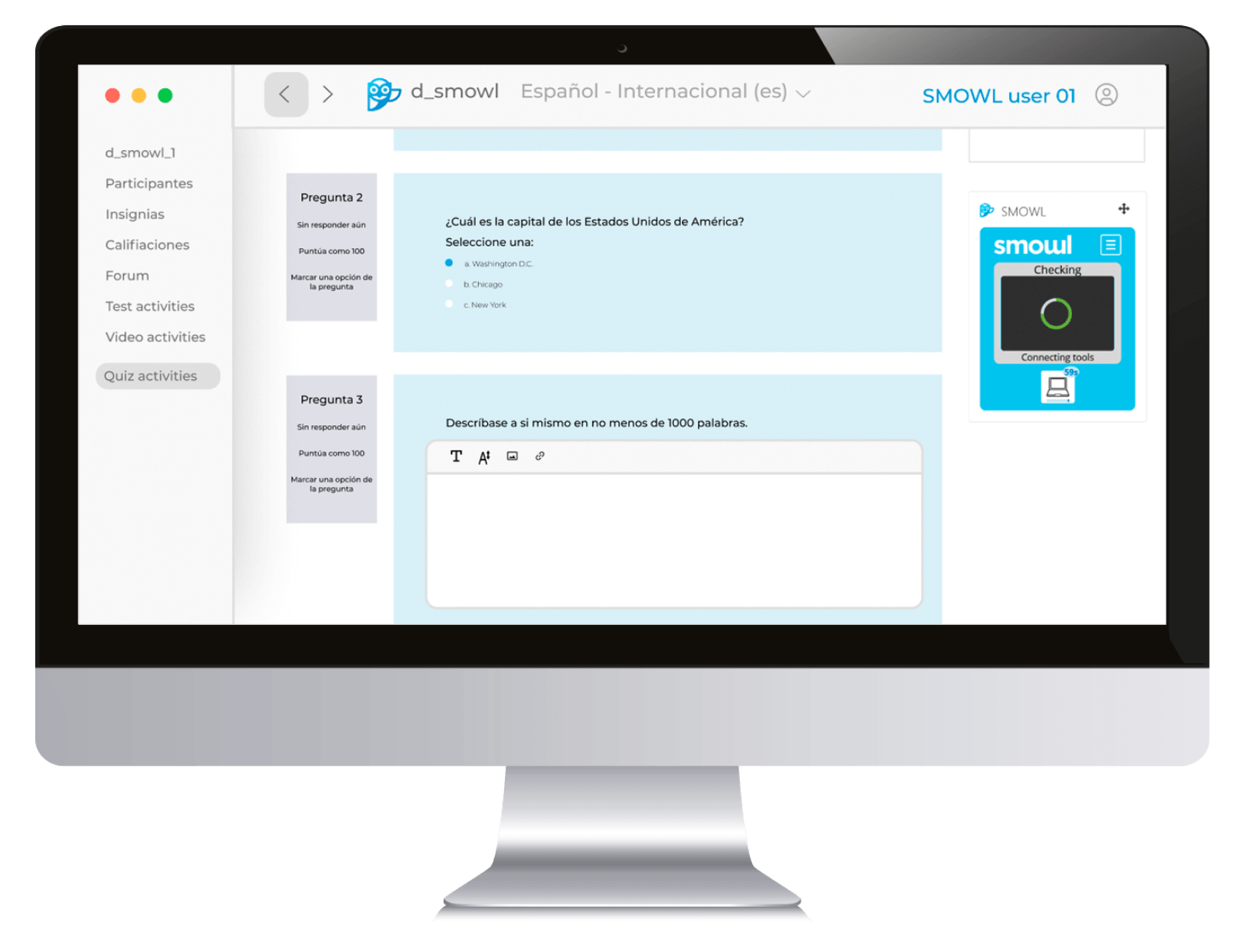
At Smowltech, we have designed remote proctoring solutions to ensure the integrity, fairness, and security of virtual assessments. We provide clients with functionalities such as user authentication, continuous monitoring, and detailed session reports.
Additionally, SMOWL solutions integrate easily with widely used LMS platforms, professionally completing your virtual ecosystems while complying with data protection regulations and current privacy laws. We encourage you to try it by requesting a free demo.
References and additional resources for further study
The following resources allow you to explore the flexibility and versatility of virtual education further:
- In A. W. Bates’ academic book Teaching in a Digital Age (2015, Creative Commons), the author explains clearly how to integrate technology into formal education.
- Lorenzo García Aretio’s article, Distance and virtual education: quality, disruption, adaptive and mobile learning, analyzes how virtual and distance education is becoming an increasingly effective educational modality.