Work-integrated learning equips students with the skills they need to stand out in a competitive and constantly evolving job market.
This dynamic is growing rapidly around the world in response to the need to improve youth employability.
WIL requires a tripartite collaboration in which the institution, the company, and the student must work together to design a pedagogical tool that benefits everyone.
Below, we invite you to explore what work-integrated learning is, what benefits it can provide, and real-life examples to complete the analysis.
What is work-integrated learning? Defining the framework
Work-integrated learning (WIL) is a structured educational experience that creates synergy between the classroom and the workplace, delving into relevant learning that responds to the real needs of the job market.
WIL has become a strategic priority in higher education, as universities and employers seek to improve career readiness and bridge the skills gap between theory and practice.
By combining academic training with real-world experience, students graduate with verified professional skills through different modalities such as cooperative education, internships, or community service.
Thus, this strategy is implemented as an intentional component of a curriculum, where work-based experiences provide students with the opportunity to integrate theory with meaningful professional practice.

Essential elements of work-integrated learning
For it to be successful, two essential elements must be present:
- Reciprocity. The practice must be beneficial to the student, the academic institution, and the host organization. As the demand for graduates prepared for the world of work grows, institutions are implementing scalable and evaluated WIL models to improve employability. The process is beneficial for everyone, including society.
- The practical community. In addition to performing authentic professional tasks, students are immersed in a sociocultural reality in which knowledge is generated and shared through everyday interactions.
Work-integrated learning can be used interchangeably with other concepts related to experiential learning such as cooperative education, clinical practice, practice-based learning, or workplace training.
The 9 core models of experiential and work-integrated learning and examples
To stand out in the US job market, students must master both theory and practice. In this sense, work-integrated learning (WIL) structures this connection through nine types of formally designed experiences.
These models, adapted to the needs of the US workforce, ensure that the transition from university to first job is smooth and strategic, as well as productive from the outset.
Let’s address them one by one based on the guide by Cooper, Orrell, and Bowden (2010), which states that for WIL to be effective, it must meet three conditions:
- Be a formal part of the university curriculum.
- Have explicit learning objectives with institutional assessment.
- Generate benefits for the student, the university, and the employer.
Co-op modality
These are structured programs where students alternate academic semesters with periods of full-time paid work that must be directly related to their field of study.
The co-op is multi-cycle; students return several times to the same employer or sector, allowing them to accumulate up to 18 months of experience before graduating.
One of the national leaders in this field is the University of Cincinnati.
This is the WIL modality that offers the most evidence of impact on employability and starting salary.
Internships
In this case, the work experience is supervised and limited (usually to one semester or the summer). Students perform specific tasks within an organization, which may or may not be paid.
The learning objectives are defined by the university, a supervisor in the organization, and a formal academic evaluation.
Practicum / Clinicals
This is generally a mandatory professional practice in order to obtain a license or certification in regulated fields. In the USA, some of the most common examples are:
- Student teaching in education.
- Clinicals in nursing and medicine.
- Field placements in social work and psychology.
The designated supervisor in the workplace shares responsibility for evaluation with the university. In this modality, the student learns to work and, at the same time, works to learn.
Service-learning
In this case, the student will perform real community service that will be evaluated as part of a course.
You may think that this is volunteer work, but unlike volunteer work, the benefit is two-way: the community receives the service and the student deepens their academic understanding. The latter is important because the practice requires structured reflection.
This modality is widespread in studies such as social sciences, public health, and humanities because of its civic engagement dimension.
Field experience
This takes place in a real professional environment as part of a course.
Unlike passive observation, in field experience the student participates, collects data, applies methods, and generates products under supervision that will be evaluated.
Therefore, it is a type of work-integrated learning that is common in studies such as environmental sciences, education, social work, and anthropology.
It is a step up from what is done in secondary school, except that in field experience, students not only see what a job is like, but also do it.
Applied research projects
This type of work-integrated learning involves a team of students who must solve a real problem posed by a company, government agency, or community organization.
Students must cooperate using academic methodologies to generate concrete solutions.
In other words, they use active methodologies such as problem-based learning to create meaningful knowledge.
The entity or organization provides the problem and access to data; the university provides the theoretical framework and supervision; the students provide the solution. This example shows how strategic WIL can be.
All of this offers a great advantage for the organization: students contribute creative ideas and innovation that regular employees are not always able to offer.
This improves one of the great challenges of today’s societies: the transfer of knowledge from universities to businesses.

Entrepreneurship / Startup incubation
In this case, students carry out a real venture or a detailed and professional business plan as part of their curriculum. This modality is usually developed in a university incubator and under the mentorship of active entrepreneurs.
Here, we are no longer dealing with a class project but rather an activity that involves real interaction with the market, meaning that it is necessary to go through the initial phases of a startup that seeks to have a social impact:
- Customer validation.
- Prototyping.
- Pitch to investors.
In the US, you can find programs such as the Deshpande Center at MIT or the Entrepreneurship Centers at Babson College.
This WIL practice takes place at the intersection of academic theory and real-world production.
Workplace simulations / Simulated work environments
This modality is based on the design of environments that replicate the conditions, pressures, and decisions of the real world of work, but the student does not have to go to an organization.
To get a more accurate idea, think of moot courts or mock trials in law, or clinical simulators in medicine and nursing.
This is a form of work-integrated learning that has been driven by the COVID-19 pandemic and the implementation of virtual reality and augmented reality in education.
It is also being widely adopted as a means of overcoming economic or geographical barriers.
However, although it is a very interesting practice for students to apply what they have learned in a practical way and gain confidence, it cannot completely recreate the social and cultural dimension of real practice.
Registered apprenticeships
In this case, it is a technical training program structured and regulated by the U.S. Department of Labor, which combines theoretical instruction in the classroom with paid practical training in the workplace.
Unlike co-ops, apprenticeships focus on trades and technical careers and are much longer in duration, lasting up to five years.
As a general rule, these types of programs are active in technology, advanced manufacturing, cybersecurity, and healthcare. Sometimes, they may be sponsored by private companies.
As we have mentioned, for these modalities to work, they must be intentional, curricular, and evaluated.
They differ from each other in factors such as the degree of immersion in the work environment or the duration, as you have just seen.
Who does work-integrated learning benefit?
Work-integrated learning creates mutually beneficial ecosystems that help connect individual aspirations with macroeconomic needs, increasing student employability and business competitiveness.
The success of this methodology therefore depends on each party in the tripartite relationship obtaining strategic advantages.
For students: beyond the resume
Students find WIL to be a catalyst for career readiness. Beyond improving their resume, the main benefits they gain are as follows:
- They develop transferable skills. Students acquire critical soft skills such as problem solving, professional communication, and adaptability.
- They are confronted with a realistic view of employment. This allows them to validate their career choice before graduating, reducing professional uncertainty.
- They can create professional networks. Students develop strategic contacts that can translate into direct job offers after graduation.
- They gain access to expert mentoring. People who participate in these types of programs gain access to highly qualified and proven knowledge that complements their training.
- They work on knowledge transfer. Students see for themselves the practical application of what they have learned, deepening their academic understanding and thereby reinforcing their commitment.
For higher education institutions: retention and rankings
Universities and colleges also benefit from a tool that can help them stand out in a highly competitive education market:
- They can improve their employability rankings, enhancing their reputation.
- They increase talent retention and student engagement.
- They keep their curricula up to date with industry trends and cutting-edge technologies.
- They strengthen their commitment to regional economic development and civic responsibility.
- They participate in knowledge transfer, generating a positive impact on the environment.
For employers: building a talent pipeline
Organizations that take on these students do not do so out of philanthropy (or not solely); they also reap benefits:
- They secure early access to talent, creating a talent pool that allows them to reduce the costs of acquiring qualified profiles and reduce the risks of future hires.
- They participate in reducing the skill gap. Keep in mind that employers can influence student training to focus on the development of strategic skills for a sector.
- They gain access to fresh approaches, new ideas, and renewed energy that can enhance the resolution of specific problems.
- They foster internal leadership development. Since they have to supervise students, the process can become an opportunity for their current employees to develop mentoring and team management skills.
Do you want to stay on top of the latest trends in eLearning, EdTech, and Human Resources?
Fill out the form to receive our weekly newsletter with industry insights from our experts.
What is the work-integrated learning process?
The work-integrated learning process is a pedagogical cycle based on David Kold’s experiential learning cycle, which is divided into four cyclical stages focused on transforming experience into applied knowledge.
Concrete experience – The work
At the starting point, the student is faced with something new or a reinterpretation of an existing experience in the workplace, whether it be a simulation, a company, or a community.
The student actively participates in real tasks, facing the organizational culture and challenges of the sector.
Reflective observation – The journaling
Metacognition is necessary for the work experience to guarantee learning. Students must reflect on the experience in which they are participating.
They can use process journals, for example, to analyze what they have done, what skills they have activated or developed, and how they have felt throughout the process.
Abstract conceptualization – The theory
In this third stage, students connect their observations with academic concepts and theoretical frameworks, that is, they activate their pre-existing knowledge, strengthening their long-term memory of what they have learned.
This fundamental link integrates university theory with work practice.
At this point, students can understand the logic behind the tasks they have performed in the organization.
Active experimentation – Application
After all this work, students can apply their new theories and concepts to solve problems and make decisions in other future circumstances.
Ultimately, they strengthen the transfer of knowledge and give meaning to their learning, incorporating it into a cycle of continuous improvement: students create mental models and theories about how work functions, gain experience, and prepare to raise their level of competence and professional maturity.
It is essential that, for the process to be effective, scalable, and rigorous, assessment touchpoints must be incorporated into these stages.
Here are some examples focused on remote exchanges that ensure that all parties involved can participate:
| Fase WIL | Touchpoints |
| Work experience | Remote monitoring using sensors or activity logs. |
| Reflection | Analysis of learning journals. AI sentiment analysis solutions can be integrated. |
| Theory integration | Automated assessments that validate theoretical understanding. |
| Application | Verification of results using digital assessment rubrics shared between the employer and the university. |
In this regard, monitoring and proctoring technology is the resource that will ensure academic integrity and the fulfillment of objectives.
WIL case study: applied Behavioral Sciences in community settings
To illustrate the real impact of WIL in the Behavioral Sciences, we propose analyzing a field experience model in a community health context in the USA.
The scenario involves a senior psychology student at an urban university who joins a non-profit community center focused on caring for at-risk adolescents. The center has detected an increase in reports of anxiety.
The work-integrated learning process would be as follows:
- Concrete experience. The student is assigned the task of co-facilitating weekly support groups, in addition to conducting intake interviews, under the supervision of a Licensed Clinical Social Worker.
- Reflective observation. By compiling data from their interventions in their practice journal, the student identifies a pattern: adolescents are more open to participating in non-linear group dynamics than in traditional question-and-answer sessions.
- Abstract conceptualization. The student shares their observations with their professor. Together, they review Applied Behavior Analysis (ABA) theory and Dialectical Behavior Therapy (DBT) models. This helps them understand the scientific logic involved in emotional self-regulation in group settings.
- Active experimentation. The student designs and implements a 4-week pilot module that integrates mindfulness techniques with conflict resolution activities, under the supervision of their mentor at the organization.
As a result of the internship, the community center adopts the pilot module after observing an improvement in the young people. The student develops key competencies in NACE (National Association of Colleges and Employers), such as critical thinking and equity and inclusion.

WIL vs. traditional internships: key differences
While it is true that in the American educational and work ecosystem, the terms internship and work-integrated learning are often used synonymously, if you want to develop effective career readiness, it is necessary to point out their differences:
- Traditional internship: often perceived as an extracurricular activity. It is true that the student gains experience, but there does not always have to be an academic link. In many cases, the faculty does not supervise the academic objectives, creating a gap between theory and the work performed.
- Work-integrated learning: in this pedagogical framework, coordination between the faculty and the employer is essential. The internship is integrated into the curriculum, and the employer co-designs the activity and participates in the formal evaluation of the student’s performance.
As you can see, a student who has gone through a WIL model has demonstrated their ability to apply theoretical knowledge to solve real problems in business environments.
Scalability and Rigour in WIL through Online Proctoring
Work-integrated learning, as with other educational methodologies, is evolving towards hybrid and virtual models.
This transformation poses a fundamental challenge: how to validate the development of skills outside the controlled environment of the classroom?
This challenge becomes even more relevant in the face of alternative developments in WIL, such as micro-internships or virtual WIL (VWIL), especially when projects are promoted on an international scale.
These are modalities that allow access to short or specific projects that provide access to delocalized professional experiences.
This type of methodology requires intelligent monitoring systems capable of certifying student authorship and commitment to their performance.
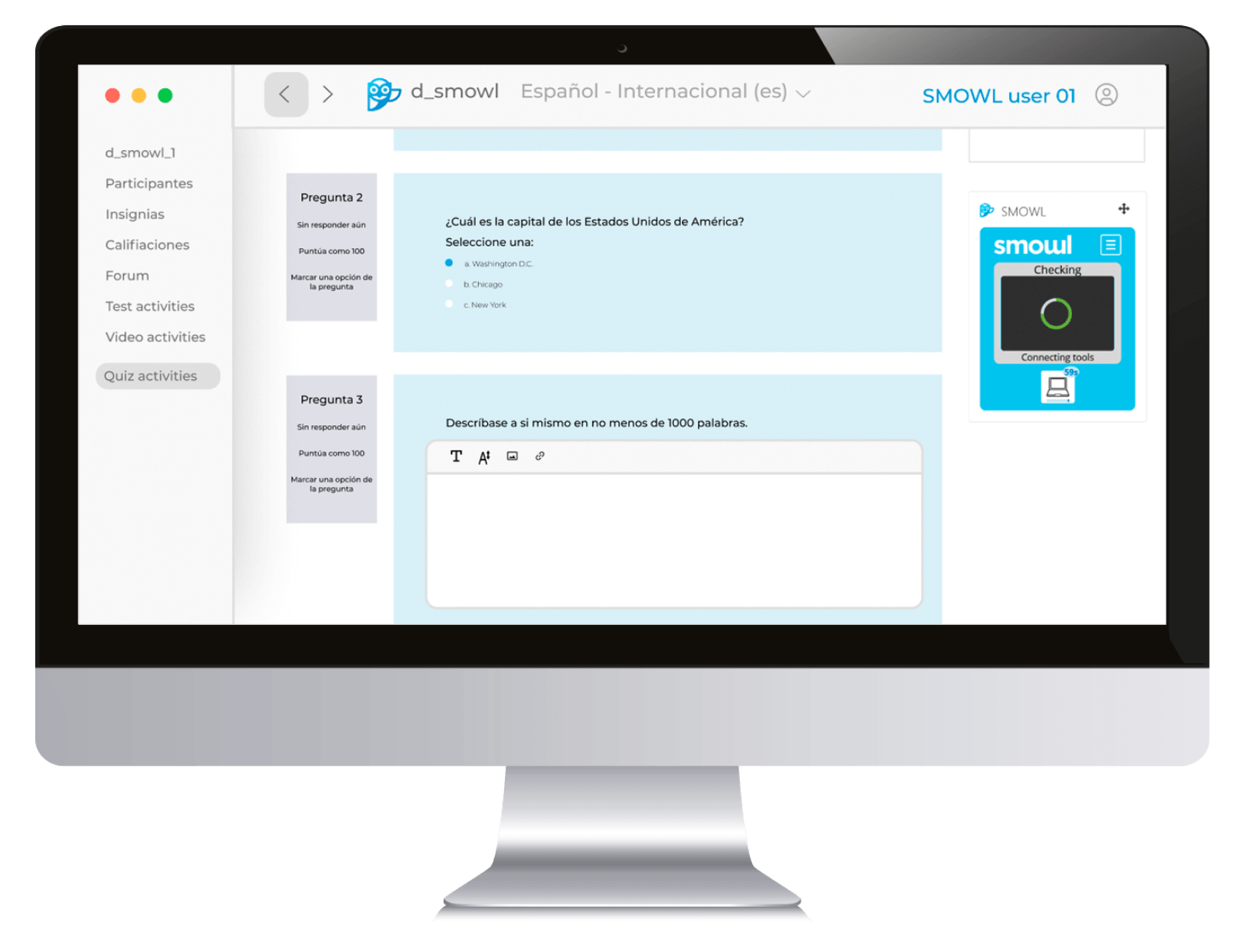
An example of this can be found in Smowltech’s proctoring plans. These are remote monitoring solutions that allow you to:
- Validate skills in real time by monitoring the critical assessment milestones of the Kolb cycle.
- Achieve strategic scalability that makes it easy for a single WIL coordinator to manage dozens of students in various host organizations thanks to automated solutions.
- Create a secure assessment environment to demonstrate micro-credentials and certifications that US employers recognize as proof of verified skills.
If you want to find out how it works, don’t hesitate to request a free demo with no obligation. This will allow us to show you the innovative solutions that can boost your WIL programs.
To learn more about this topic
If you want to continue learning about work-integrated learning, the following resources are a good starting point:
- What is Work-Integrated Learning? Article by Julia Bleakney of Elon University on this pedagogical practice.
- World Association for Cooperative and Work-Integrated Education (WACE). A leading organization that connects universities with employers to promote WIL internationally.