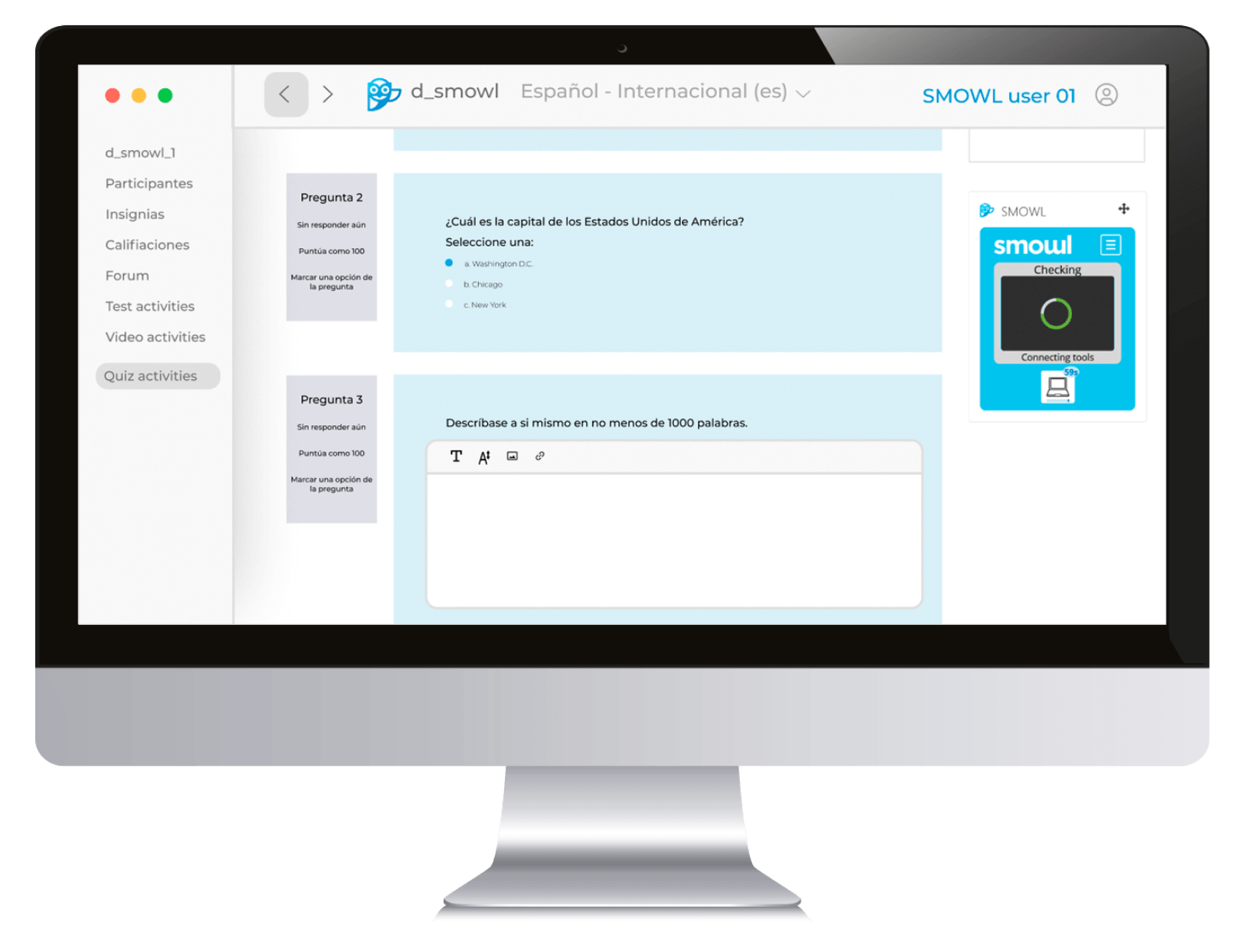
An e-learning platform is a virtual environment that enables the management and access to online educational resources, such as courses, multimedia materials, communication tools, assessments, and student progress tracking.
If you’re still unsure whether your company or institution needs an e-learning platform, this post will define what it is and how it works.
What is an e-learning platform?
An e-learning platform is a virtual learning environment that leverages information and communication technologies to facilitate the teaching and learning process.
It consists of various tools that allow users to interact, communicate, and collaborate online. These tools may include discussion forums, live chat, video conferencing, online quizzes, interactive learning materials, and digital assessments, among others.
Additionally, an e-learning platform can be used to deliver online courses, training programs, virtual workshops, webinars, and many other forms of distance education. Through an e-learning platform, students can access educational content from anywhere, at any time, allowing them to adapt their learning to their own pace and schedule — especially when developed under SCORM standards.
Another key feature of e-learning platforms is their ability to integrate emerging technologies such as artificial intelligence (AI) and adaptive learning. These technologies further personalize the user experience by offering content tailored to specific needs or identifying areas for improvement based on performance.
This not only enhances educational outcomes but also increases student motivation.
Moreover, electronic learning platforms are essential tools for promoting sustainability. By reducing the need for printed materials and minimizing travel associated with in-person training, these solutions help lower environmental impact.
What is an e-learning platform used for?
An LMS e-learning platform is designed to facilitate and enhance the teaching and learning process through the use of information and communication technologies. Below are some of its main functions:
- Delivering online courses: E-learning platforms allow students to access content anytime, anywhere.
- Creating and sharing educational materials: Teachers can create and share content in various formats, such as videos, presentations, and text-based resources.
- Interacting and collaborating online: Features like discussion forums, chats, and wikis foster student participation and knowledge exchange.
- Assessing and providing feedback: Teachers can evaluate students and give feedback online, streamlining academic tracking and performance improvement.
- Personalizing learning: Virtual learning platforms can adapt to individual learning needs, increasing engagement and motivation.
Beyond these core functions, e-learning platforms are ideal for implementing innovative strategies like microlearning. This approach breaks educational content into small, easy-to-digest lessons, making it especially useful for busy individuals or those who prefer learning in short, frequent sessions.
In corporate settings, e-learning platforms play a crucial role in digital training. Companies can use them not only to train employees on technical subjects or specific skills but also to ensure compliance with mandatory courses, such as workplace safety or data protection training.
Evolution of electronic learning platforms
Digital learning has revolutionized the educational sector over the past few decades, transforming what was once a novel concept into an integral part of modern education.
From the early experiments with computer-based training (CBT) to today’s advanced virtual learning solutions, this evolution has been driven by the goals of expanding accessibility, improving teaching effectiveness, and adapting to diverse student needs.
Initially, online learning platforms served relatively simple purposes, such as distributing training materials. However, recent advances in AI have dramatically enhanced their capabilities.
Modern platforms can now recommend personalized content tailored to individual learners, creating a more engaging and effective learning experience. Additionally, they have become increasingly mobile-friendly, allowing students to access courses anytime and anywhere, whether on a phone, tablet, or laptop.
As technology continues to advance, digital learning is set to offer even greater opportunities for personalized, flexible, and impactful education in the years to come.
What is e-learning?
The term “e-learning” originates from English, combining “e” for “electronic” and “learning.” It was first introduced in the late 1990s during a European Commission conference on online education.
Since then, the term has evolved beyond simple digital content access. Today, e-learning encompasses immersive experiences using technologies such as augmented reality (AR), virtual reality (VR), and gamification. These tools transform traditional learning into a more engaging and interactive process.
For example, a gamified course might include virtual rewards or interactive challenges that encourage students to complete modules while having fun learning.
Education for everyone: how digital learning platforms break down barriers
Virtual learning platforms have emerged to remove traditional limitations to education by addressing key factors:
- Accessibility: E-learning removes obstacles for learners with physical disabilities or mobility limitations. Courses can integrate tools like screen readers, captions, and adjustable interfaces, ensuring education is available to everyone.
- Cost: By minimizing expenses related to textbooks, accommodation, or commuting, digital learning makes education more affordable.
- Distance: Learners no longer need to travel to a physical classroom. Courses can be accessed from anywhere with an Internet connection, supporting those in remote locations.
- Time: Unlike traditional classes with fixed schedules, e-learning allows students to engage with content at their own pace. This flexibility makes it easier to balance education with work, family, or other commitments.
By addressing these factors, digital learning platforms are making education more inclusive, flexible, and accessible than ever before, empowering learners to reach their full potential regardless of their circumstances.
Evaluating e-learning platforms: pros and cons
Online learning platforms have rapidly changed the way people access education, offering flexible learning opportunities. However, like any educational approach, they come with both advantages and challenges that learners and educators should consider.

Advantages of online learning platforms
Virtual learning platforms provide learners, institutions, and organizations with tools and opportunities that traditional classroom settings often cannot match:
For students
Below are the advantages of digital learning platforms for students:
- Pace of learning: Students can move through material at a speed that suits their understanding, revisiting concepts as needed.
- Personalized learning: AI-driven platforms can tailor content and recommendations to individual strengths and weaknesses, improving engagement and retention.
- Time management: Learners can schedule study sessions around work, family, or other commitments, building strong self-discipline.
- Convenience: Courses can be accessed from anywhere, whether at home, during commutes, or while traveling.
- Collaboration: Many platforms enable group projects, discussions, and peer feedback online, fostering interaction despite physical distance.
Overall, these benefits make e-learning platforms a flexible, engaging, and sustainable option for students, empowering them to take control of their learning while balancing other commitments.
For institutions and corporations
Electronic learning platforms offer significant advantages for institutions and organizations, helping them streamline training and educational programs while improving efficiency and outcomes:
- Scalability: E-learning platforms allow organizations to train large numbers of employees or students simultaneously, without the limitations of physical classroom space.
- Cost-efficiency: By reducing the need for printed materials, facilities, and on-site instructors, digital learning can significantly lower training and operational expenses.
- Standardization: Organizations can ensure consistent delivery of training content, policies, and educational materials across multiple locations or departments.
- Data and analytics: Platforms often include tracking and reporting tools that help monitor learner progress, identify knowledge gaps, and optimize training strategies.
- Flexibility: Institutions and corporations can update or expand content quickly to respond to evolving needs, regulations, or industry standards.
- Employee or student engagement: Interactive elements, gamification, and personalized learning paths can increase motivation and participation, improving overall learning outcomes.
- Long-term value: E-learning creates reusable content and training materials, maximizing investment and supporting continuous learning initiatives.
Next, we will explore the challenges associated with these platforms.
Do you want to stay on top of the latest trends in eLearning, EdTech, and Human Resources?
Fill out the form to receive our weekly newsletter with industry insights from our experts.
Disadvantages of digital learning platforms
Despite their benefits, e-learning platforms also present several challenges.
For students
Below, you will find some of the key challenges students may face when using e-learning platforms:
- Limited social interaction: Learners may miss out on face-to-face collaboration and networking opportunities.
- Self-discipline required: Without a structured classroom environment, students need strong time-management and self-motivation skills.
- Technical issues: Accessing courses depends on reliable Internet and compatible devices, which can be a barrier for some learners.
- Potential distractions: Learning from home or mobile devices can make it easier to get distracted and reduce focus.
- Reduced hands-on experience: Practical skills or lab-based subjects may be harder to teach effectively online.
These challenges highlight areas where students may need additional support. Next, let’s explore the potential drawbacks and considerations for institutions and organizations using e-learning platforms.
For institutions and corporations
While virtual learning platforms offer many advantages, institutions and organizations also face specific challenges when implementing and managing them:
- Initial costs: Developing or licensing a platform, integrating content, and training staff can require significant upfront investment.
- Technical complexity: Maintaining the platform, ensuring compatibility across devices, and handling updates or troubleshooting can be demanding.
- Content creation and updates: Producing high-quality, engaging, and up-to-date learning materials requires time, expertise, and ongoing effort.
- User adoption: Encouraging employees or students to consistently use the platform may be challenging, especially if they are accustomed to traditional methods.
- Data privacy and security: Organizations must ensure sensitive learner data is protected and comply with privacy regulations, adding complexity to platform management.
Despite these challenges, with careful planning, adequate resources, and ongoing support, institutions can not only overcome potential obstacles but also maximize the long-term benefits and impact of e-learning platforms.
How to choose the best e-learning platform
Selecting an effective virtual learning platform is crucial for enabling both educators and learners to achieve their goals successfully.
The right platform must enhance engagement, streamline learning, and provide the tools necessary for a successful educational experience. Consider the following factors when making your decision:
- Identify your needs and those of your students: Determine the learning objectives, course types, and accessibility requirements to ensure the platform aligns with your goals.
- Evaluate the features: Look for essential tools such as content creation, quizzes, analytics, interactive elements, and integration with other software.
- Consider user experience and support: A platform should be intuitive, easy to navigate, and provide responsive technical support to minimize frustration.
- Seek opinions and references: Read reviews, ask colleagues for recommendations, and explore case studies to understand real-world performance.
- Test the platform thoroughly: Take advantage of free trials or demos to experience the interface, features, and reliability firsthand.
- Evaluate costs: Consider the value provided relative to your budget.
By carefully weighing these factors, you can select an e-learning platform that maximizes learning potential, efficiency, and long-term satisfaction for both instructors and students.
E-learning platform development: custom-built vs. ready-made solutions
Developing a built-in digital learning platform can be an excellent option for institutions or organizations with specific needs that off-the-shelf solutions cannot fully address.
While existing learning platforms serve many institutions and businesses effectively, they may lack certain functionalities or customization options, making navigation and adaptation challenging.
By building a custom platform, organizations gain complete control over the system, tailoring it precisely to their goals, workflows, and user requirements.
This approach is ideal for entities with sufficient resources, including a budget for development and maintenance, time to oversee the project, and a capable tech team. A custom learning platform allows for full customization, creating a unique learning experience that aligns perfectly with the organization’s objectives.
Conversely, institutions without these resources may be better served by ready-made solutions, which provide built-in features, ongoing support, and quick deployment. Ultimately, the decision to build or buy depends on balancing customization needs with available resources and timelines.

Top e-learning platforms
Below are some of the most widely used e-learning platforms, popular among educational institutions, businesses, and organizations for digital training:
Moodle
Moodle is one of the most popular LMS (Learning Management System) platforms worldwide. It is open-source, allowing users to customize it to their needs. Key features include:
- Flexibility and customization, with plugin and external tool integration.
- A strong user community providing updates and support.
- Ideal for educational institutions and companies seeking an affordable, adaptable solution.
Canvas
Canvas LMS is a cloud-based platform known for its modern design and ease of use. It is especially popular in universities and educational centers thanks to:
- An intuitive interface, ideal for users with no technical background.
- Features like SpeedGrader and Canvas Gradebook for grading and feedback.
- Mobile compatibility, ensuring access from anywhere.
Blackboard
Blackboard Learn is a robust platform primarily used in large educational institutions. It offers:
- Advanced tools for managing educational content.
- Extensive integration options with external tools such as Pearson and Films on Demand.
- Features designed to enhance collaboration between students and instructors.
- An e-learning platform is a virtual learning environment using information and communication technologies to facilitate teaching.
Chamilo
Chamilo is an open-source LMS designed to improve educational access in developing regions. It features:
- User-friendliness for both students and administrators.
- A strong focus on accessibility, making it ideal for global educational projects.
- Presence in over 150 countries.
Sakai
Sakai is another open-source LMS, developed by universities for universities. It stands out for:
- A collaborative focus, with tools specifically designed for higher education.
- Widespread use in institutions like the Complutense University of Madrid.
Other notable platforms
Other popular e-learning platforms include:
- Google Classroom: Ideal for schools, with direct integration into other Google tools.
- Udemy: A marketplace where experts can offer courses to the general public.
- evolCampus: A commercial solution focused on businesses, ready to use without complex setups.
Each platform has unique features tailored to different user needs. For example, Moodle is great for flexibility, while Canvas excels in user-friendliness. The choice depends on the educational or business context and available budget.
The good news is that SMOWL’s proctoring plans integrate seamlessly with most LMS platforms, including Moodle, Blackboard, and Canvas, providing a complete digital monitoring solution.
If you want to enhance the quality and security of your online assessments, SMOWL is the right tool.
Request a free demo today!
Updated on