Student-centered learning (SCL) is an educational approach in which students co-create their own education and decide what, when, and how they learn.
Unlike other, more traditional teacher-centered models, SCL encourages students to take the lead in their own learning process, while teachers act as facilitators and sources of specialized information.
This guide covers the definition of this educational methodology, its 4 fundamental principles, the research-backed benefits, and real-world examples from elementary and secondary schools across the United States.
What is student-centered learning?
Student-centered learning is a teaching strategy in which students’ interests, needs, and learning styles guide educational decisions. Students can decide what content to learn and how to engage with it, and teachers take on the role of guides, making them an indispensable resource in the process.
In other words, the traditional standardized script with limited student participation is replaced by a dynamic and organic model that is shaped by student input.
How the student-centered approach differs from traditional teaching
The key differences between student-centered learning and teacher-centered learning lie in classroom roles, decision-making authority, and sources of motivation.
In traditional classrooms, teachers control the pace, content, and assessment methods. In contrast, in student-centered environments, the teacher and the class collaboratively design learning pathways.
Students progress based on their mastery of the content, rather than following a static chronological sequence, and engage in learning through meaningful, real-world projects.
This comparison chart we’ve prepared will help you see more clearly the differences between placing the teacher or the student at the center of the educational process:
| Aspect | Teacher-centered learning | Student-centered learning |
| Who leads? | Teacher directs all instruction | Students co-create learning experiences |
| Pacing | Whole class moves together | Students progress based on individual mastery |
| Motivation | External (grades, compliance) | Internal (interest, relevance, ownership) |
| Assessment | Summative tests at unit end | Ongoing formative assessment and self-evaluation |
| Teacher role | Content dispenser, authority figure | Facilitator, mentor, resource provider |
To gain a deeper understanding of what student-centered learning is, it helps to imagine a typical scene in this type of classroom: while one group is designing an experiment to measure air quality in their city, another is editing a podcast on local history, and a third group is reviewing material with the teacher’s support.
As you can see, this setup is a far cry from the teacher lecturing from the blackboard. The student-centered methodology aims to create dynamic and diverse “micro-universes” that cater to different learning styles and stages, and that connect learning to real-world interests and measurable impact.
The 4 core principles of student-centered learning
The 4 principles of student-centered learning are cogs in the same wheel that sustain the model’s overall logic:
- Learning is personalized and competency-based.
- Students progress as they master the content.
- Learning takes place anytime and anywhere.
- Students’ opinions and choices drive the process.
By combining these basic principles, we can create meaningful, engaging educational experiences tailored to each student’s individual needs. Ultimately, it’s about personalizing learning, but by involving the student in the process.
Learning is personalized and competency-based
Personalized and competency-based learning means that the educational path must be adapted to each student, rather than offering a one-size-fits-all approach.
Students progress as they consolidate knowledge and develop specific competencies. No student is left behind or held back by arbitrary learning paces that do not meet their needs. In this sense, this approach becomes an inclusive experience that enhances the well-being of students in the classroom.
Students progress based on mastery, not seat time
In this type of learning, progress is determined by demonstrated mastery of skills and knowledge. What matters is not the time spent in the classroom but what the student has actually learned.
For this reason, age or academic credits are no longer the only factors taken into consideration.
Learning happens anytime, anywhere
Ubiquitous learning creates constant opportunities for meaningful education. Learning can take place in a variety of settings: community projects, internships, online platforms, or real-world experiences.
What matters is addressing content in contexts that are relevant to students and demonstrate that learning is meaningful.
Student voice and choice drive the process
One of the cornerstones of this system is that, for students to participate and be self-directed, they need to have a significant say in what they study, how they demonstrate their learning, and the pace that works best for them.
By ensuring this involvement, engagement, and motivation, educators foster the development of critical self-management skills, which are essential for preparing students for academic and professional success.

Why is student-centered learning important? Research-backed benefits
Student-centered learning increases student engagement, improves academic outcomes, and develops essential 21st-century skills such as critical thinking, collaboration, and the ability to defend one’s arguments.
Studies conducted by Stanford University, the Nellie Mae Educational Foundation, and XQ Schools demonstrate that placing the student at the center of the educational strategy leads to higher graduation rates.
Furthermore, students will be better prepared to face the challenges of college because they will develop interpersonal intelligence.
Academic outcomes and student engagement
The study Student-Centered Schools: Closing the Opportunity Gap (Friedlaender et al., 2014) was conducted by Stanford University in four California schools.
It demonstrated that higher graduation rates, academic performance, and college enrollment among low-income populations occurred when student-centered learning was implemented.
Social-emotional learning and real-world skills
Another benefit of this teaching method is that it naturally fosters social-emotional learning skills and real-world skills. Student-centered learning creates opportunities to collaborate, solve real-world problems, and communicate with a variety of people.
In the process, students gain greater self-confidence, a greater ability to advocate for themselves, and better preparation for the workforce and civic engagement.
Equity and inclusion in diverse classrooms
In addition to all the benefits that underscore its importance, the SCL methodology promotes equity in the classroom because it allows instruction to be tailored to each student’s needs, background, and learning styles.
Schools that apply this type of pedagogical approach to students learning English or those with individualized education plans achieve college admission rates higher than the district average.
Examples of student-centered learning: from theory to practice
Examples of student-centered learning include community-driven projects that address real-world challenges; student profiles that foster empathy and help teachers understand individual needs; and competency maps that visualize the learning process.
The essence of these methods is that they combine academic rigor with students’ freedom of choice. This enables them to pursue their interests while meeting educational standards.
Community-driven projects at New Harmony High
One of the schools supported and promoted by the XQ Institute project in New Orleans, New Harmony High, has developed a flagship example of interdisciplinary learning and project-based learning focused on the Great Migration.
To carry it out, they combine resources provided by teachers with readings by Langston Hughes and their own historical research. After this exercise in gathering information and sources, they create original works of art that foster a connection with their community.
Student Personas for Empathy-Building at Brooklyn Lab
At Brooklyn Laboratory High School, educators have created an interactive tool called “Student Personas for Empathy-Building.”
This resource helps educators, through profiles of students and the adults who support them, understand which individual circumstances influence learning. In this way, they can design accommodations so that the most vulnerable students can improve their performance.
Competency maps and visual learning journeys at PSI High
At PSI High in Sanford, Florida, teachers have created visual content maps so that students and their families can get an overview of the learning process for each unit.
This fosters intrinsic motivation and encourages students to take ownership of their own progress by clearly understanding the learning path and structure.
The teacher’s role in student-centered classrooms
As we’ve been discussing, the role of teachers is key:
- They act as resources who contribute their specialized knowledge and facilitate student collaboration with external entities.
- They take on a mentoring role, instilling confidence in students and providing support.
- They also serve as guides who provide structure and help students understand how their work relates to broader objectives.
This shift in identity essentially means that they transition from being content dispensers to becoming content resources.
From content dispenser to learning facilitator
One of the requirements of this system is that educators move from being the sole source of knowledge to becoming one of the many resources available to students.
Furthermore, this is a more motivating role for teachers because they not only guide research but also provide feedback and grant students greater freedom.
The goal here is not to control, but to monitor the development of skills and foster the autonomy of their students so that they can take ownership of their own learning. This process opens the door to creativity among faculty, who can form working groups focused on innovation.
Building trusting relationships and mentorship
Student-centered learning requires a solid teacher-student relationship based on trust. This is where creating a support network is essential.
For example, when working with immigrant students who are learning English, this type of relationship creates a sense of belonging that reinforces students’ confidence in their own learning and makes them more receptive to acquiring knowledge.
Supporting student agency without losing structure
The secret to the success of a student-centered strategy is for teachers to strike a balance between fostering student autonomy and providing clear structure and guidance.
To achieve this, they often use tools such as visual learning maps or best practices for developing independent work. Peer mentoring programs are also effective.
The crux of the matter is ensuring student freedom, but accompanied by responsibility and support systems designed to prevent students from feeling overwhelmed or lost.
Implementing student-centered learning: challenges and solutions
When we talk about implementing a student-centered learning model, we are referring to transforming the dynamics of the classroom. Therefore, it is essential to understand the common methodological and management challenges to ensure a successful transition.
Common Challenges of Student-Centered Learning and Practical Solutions
We have summarized the four main challenges of the system in the following table:
| Challenge | Solution |
| Increase in noise levels | Embrace productive noise: don’t view constant peer-to-peer dialogue as chaos, but rather as a clear sign of active participation and the cooperative construction of knowledge. |
| Higher standards for classroom management | Help create rules and agreements: Involve students in creating consensus-based rules to foster their sense of responsibility. |
| Learning gaps and uneven learning paces | Ensures a personalized learning pace and tutoring: implements peer tutoring and differentiated support strategies so that each student can progress according to their abilities. |
| Friction and resistance to change | Introduce changes gradually: You can gradually implement small changes using progressive autonomy techniques, such as learning stations. Avoid overhauling the entire curriculum all at once. |
Student-centered learning in K-12: trends and future directions
The rapid expansion of student-centered learning is driven by three key forces of change:
- Equity and inclusion: a central need, especially in publicly funded schools with high economic vulnerability (such as Title I schools).
- Technological innovation: it is a method that integrates seamlessly with blended learning and the personalization of educational pathways through artificial intelligence.
- Regulatory alignment: It helps meet the requirements and frameworks of the Every Student Succeeds Act (ESSA).
XQ Institute, Edutopia, and the Deeper Learning Network are some examples of organizations leading this transformation with initiatives designed to help students develop essential skills for changing environments, such as:
- Critical thinking: the ability to analyze, evaluate, and solve complex problems.
- Flexibility and adaptability: the ability to navigate uncertainty and adjust strategies.
- Lifelong learning: the autonomy to continue learning throughout one’s life.
Key takeaways: making student-centered learning work in your school
To put the student at the center of learning, you need to combine a set of practices that reinforce one another. You can start building your strategy on these three pillars:
- Listen to your students before designing.
- Make a three-step transition.
- Work on systemic impact.
Below, we outline some guidelines you can follow for each of these dimensions.
Listen to students before designing
The best way to engage students is to listen to them. Ask your students what they need and what they hope to achieve to give meaning to the process from the very beginning.
By doing so, you’ll ensure that the class feels valued and actively participates in shaping their own learning.
Make the transition in 3 steps
As we’ve explained, student-centered learning is a paradigm shift that, to be successful, must be gradual. If you transform the model all at once, you’ll create resistance and chaos.
So, keep these 3 basic steps in mind:
- Move forward in stages, allowing each change to take hold before introducing the next one.
- Embrace a culture of continuous professional development as a teacher and participate in groups of professionals and specialists in this methodology to share ideas and resources that will help sustain the transition.
- Develop a flexible curriculum to turn the course of study into a tool that adapts to students’ pace and interests.
One of your greatest allies in this process is active methodologies such as project-based learning, gamification, the flipped classroom, or design thinking.
Work on systemic impact
Schools that achieve transformative results reorganize their time, spaces, and culture, and work to ensure that the student-centered learning model translates into greater equity, participation, and college success.
To achieve this, it is essential to involve the entire educational community, including families.
Do you want to stay on top of the latest trends in eLearning, EdTech, and Human Resources?
Fill out the form to receive our weekly newsletter with industry insights from our experts.
The need for flexible learning in student-centered instruction
As you can imagine, flexibility is paramount in this educational strategy. If each student progresses at their own pace, the classroom no longer functions as a monolithic unit. Some students may need two weeks to master a skill, others five; some learn best through a community project, while others learn best on a digital platform at their own pace.
Given this, to support this diversity, it is necessary to rethink when, where, and how learning takes place. In this scenario, hybrid or blended learning is taking on an increasingly prominent role, and with it, new challenges such as academic integrity arise.
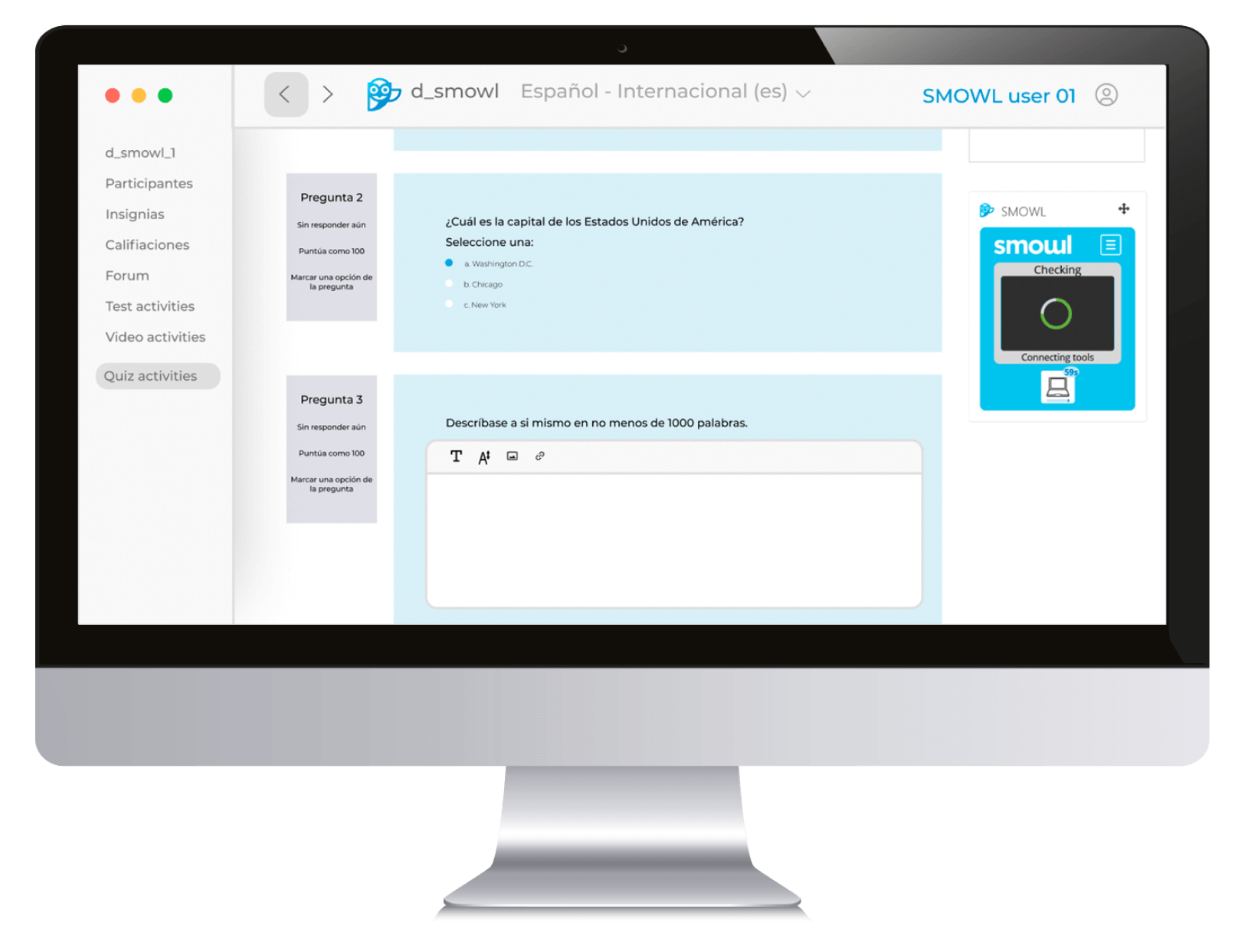
Professional online proctoring solutions, such as SMOWL’s proctoring plans, resolve this tension in the context of remote assessments. They allow, for example, for verifying a student’s identity and ensuring the integrity of the test from anywhere, with different levels of oversight depending on the type of assessment. You can choose from automated supervision using artificial intelligence to live human monitoring for highly rigorous certifications.
Thanks to proctoring, flexibility does not compromise the rigor of assessments in new formats. We invite you to request a free demo so you can gain hands-on experience with the most innovative resources and tools for non-intrusive, secure, and effective remote proctoring.
Resources for continuing to learn about student-centered learning
Now that you have a broad understanding of what student-centered learning is and how it works, we encourage you to delve deeper using the following resources:
- Stanford Center for Opportunity Policy in Education Resources (SCOPE). This is the research center at Stanford University specializing in educational equity and one of the most rigorous theoretical and empirical sources on student-centered methodology.
- American Institutes for Research (AIR). This is a resource platform for teachers and administrators where you’ll find articles and resources for classroom management.
- Jobs for the Future. This is a national organization that leads the convergence between K-12 education, higher education, and the labor market. They publish research on the educational strategy we’re discussing, competency-based learning and pathways to higher education.