The advancement of technology has revolutionized many aspects of our lives, including how we learn and assess knowledge.
With the rise of online education and remote work, there is a need to ensure the integrity of assessments in virtual environments.
In this context, proctoring – or remote supervision – has become a technological challenge and a crucial tool for both educational institutions and businesses.
The growth of online education and assessments
In recent years, we have witnessed exponential growth in online education and remote assessments.
The flexibility and accessibility offered by these methods have attracted an increasing number of students and professionals seeking to improve their skills.
However, with this expansion, challenges have also arisen in terms of ensuring authenticity and equity in assessments.

What is Digital Proctoring?
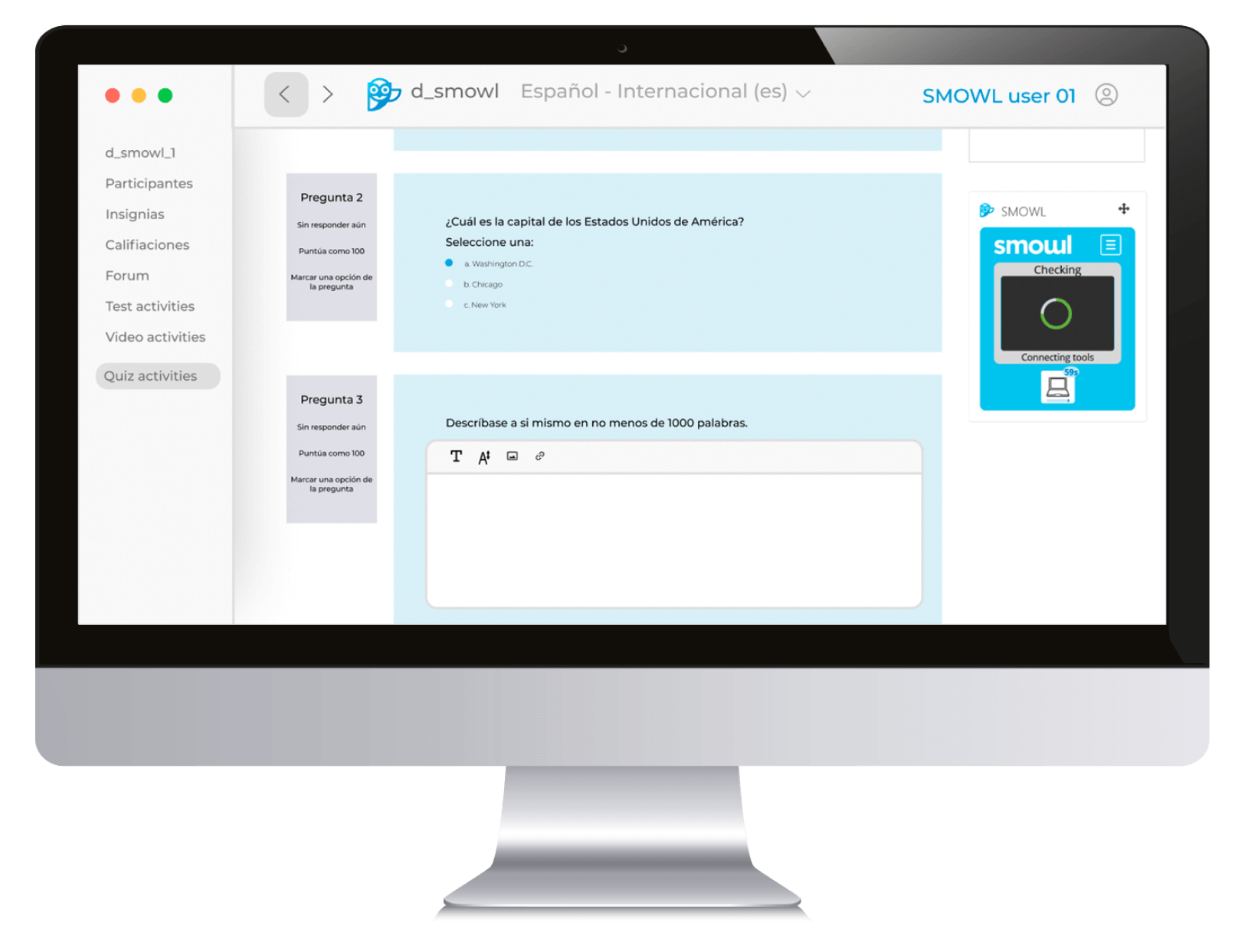
Digital proctoring is a technique that uses technological tools to monitor and collect evidence during exams and assessments in virtual environments.
This may include authentication through web cameras, monitoring user behavior, and detecting possible fraud attempts, such as using unauthorized devices or consulting prohibited materials.
The importance of proctoring in education and companies
Proctoring plays a fundamental role in both educational and business environments.
In education, it ensures the integrity of online exams and assessments, ensuring that students comply with established regulations and preventing any attempt at academic fraud. This is crucial for maintaining the validity and credibility of grades obtained, as well as for preserving equity among students.
On the other hand, in the business environment, proctoring becomes an essential tool for supervising competency assessments, personnel selection tests, or certification exams.
It ensures that employees or candidates meet established requirements and that assessments are fair and objective. Additionally, it helps protect the company’s intellectual property and sensitive data, while fostering an environment of transparency and trust.
Benefits of technological proctoring
Technological proctoring offers many benefits that positively impact both the educational and business spheres. Some of the most notable benefits include:
1. Improvement of assessment integrity:
Technological proctoring ensures the authenticity and validity of assessments by detecting and preventing any fraud attempts.
This promotes fairness and confidence in the results obtained, ensuring that achievements truly reflect the knowledge and skills acquired.
2. Flexibility in exam administration:
Proctoring technology allows for online assessments, offering greater flexibility in terms of scheduling and locations.
This benefits the accessibility of students and professionals who can take exams from anywhere with internet access, eliminating geographical barriers and facilitating the participation of individuals with busy schedules.
Do you want to stay on top of the latest trends in eLearning, EdTech, and Human Resources?
Fill out the form to receive our weekly newsletter with industry insights from our experts.
3. Cost and resource reduction:
By eliminating the need for in-person supervision, technological proctoring helps reduce costs associated with exam administration, such as renting physical spaces and hiring surveillance personnel.
This makes online assessments more accessible and affordable for educational institutions and businesses.
4. Enhanced data security
Technological proctoring platforms are designed to ensure the security of user data, protecting the privacy and confidentiality of personal and academic information.
This is especially important in the case of business assessments involving sensitive company data or confidential information.
5. Personalization and data analysis:
By using artificial intelligence algorithms, technological proctoring can provide detailed analysis of participants’ performance in assessments.
This allows for identifying areas for improvement and customizing exam content to better suit the individual needs of each student or employee.

Challenges of proctoring in the educational sphere
Although proctoring offers numerous benefits, it also poses significant challenges in the educational sphere. These challenges include:
Student privacy:
The implementation of proctoring technologies can raise concerns about student privacy. Collecting biometric data may infringe on students’ privacy rights, leading to distrust and resistance from some students.
In this regard, entities opting for Smowltech’s proctoring plans can rest assured, as we strictly comply with data privacy regulations, including FERPA, the EU’s GDPR, and California’s CCPA.
Equity in assessment:
Technological proctoring may not be equally accessible to all students, especially those who do not have access to adequate technological devices or a stable internet connection.
This can create disparities in how assessments are administered and supervised, affecting the fairness and objectivity of the process. Fortunately, SMOWL is capable of supervising in weaker connections by working with image captures instead of video.
Adaptability to different learning environments and needs:
Proctoring technologies may not be suitable for all learning environments or educational modalities.
For example, some disciplines may require more flexible or project-based assessment methods that do not easily lend themselves to technological proctoring. This poses challenges in terms of adaptability and customization of the assessment process.
Detection and prevention of fraud:
Although technological proctoring is designed to detect and prevent academic fraud, students may use increasingly sophisticated methods to circumvent these measures.
This requires constant updating and improvement of proctoring technologies to keep up with new forms of fraud.
Challenges of proctoring in the business sphere
Proctoring also faces specific challenges in the business sphere.
These challenges include:
Protection of sensitive data:
Proctoring involves the collection and analysis of sensitive employee data, such as facial images and behavior patterns during assessments.
This raises concerns about data privacy and security, especially in the context of data protection regulations such as GDPR in Europe.
Employee acceptance:
The implementation of proctoring technologies may encounter resistance from employees, who may perceive it as invasive or a violation of their privacy.
It is important to clearly communicate the purpose and benefits of proctoring and ensure transparency in its application to foster acceptance by staff.

Adaptability to different work contexts:
Proctoring tools may not be suitable for all work contexts or types of assessments. For example, in environments where creativity and collaboration are key, technological proctoring may limit employee expression and interaction.
This requires a flexible and personalized approach to proctoring implementation in the business sphere.
Ensuring fairness and objectivity:
Technological proctoring must ensure that assessments are fair and objective for all employees, regardless of location or circumstances.
This requires implementing measures that minimize any bias or discrimination in the assessment process and ensure fairness in decision-making based on the results obtained.
The future of Proctoring
As technology continues to evolve, technological proctoring is likely to experience significant advances. (we already have examples of new trends such as proctoring and digital nomads).
New tools and techniques are expected to emerge that improve the effectiveness and accuracy of proctoring, while addressing ethical and privacy concerns more effectively.
At Smowltech, we have overcome these challenges with our SMOWL tool. Whether you are a company or an educational institution, we invite you to try our solution with a free demo.
8 interesting facts about proctoring
Fill out the form and download the guide where we cover everything about online monitoring and help you choose the best software.