STEM education offers a multidisciplinary approach based on real-world contexts that provides consistency in learning and improves student outcomes.
The first beneficiary of this type of strategy is the student, who is solidly prepared to face the challenges of an increasingly technological and competitive society.
On the other hand, society is also strengthened by the resilience and innovation that these profiles provide to their environment.
If you want to know more about what is STEM in education, what are its advantages, and know some examples, read on. We explain it all in this article.

What does STEM education stand for?
STEM education is an interdisciplinary approach to learning that combines the four disciplines that make up its acronym: science, technology, engineering and mathematics, to help students understand them through hands-on, problem-based experiences.
The goal of this type of strategy is to prepare students for the social and professional challenges of the information society that creates highly technical and constantly evolving environments.
You can find some examples of STEM degrees in scientific fields, but it is also used as an educational strategy in programs that seek to provide versatile skills to their tudents that they can employ throughout their lives such as critical thinking and computational thinking among others
STEM owes its name to science administrators at the National Science Foundation (NSF) who in 2001 introduced the acronym to replace SMET, which refers to the same disciplines.
In short, STEM learning pedagogy focuses on achieving learning in real-world contexts, demonstrating its relevance and pertinence, and resulting in motivated and engaged learners who improve their outcomes.

What are STEM skills?
STEM skills are skills that complement the technical learning of the subjects studied and that can be applied in all areas of life such as problem-solving, communication, creativity, collaboration and critical thinking.
In turn, these skills are widely demanded in the labor market in any field of application.
Do you want to stay on top of the latest trends in eLearning, EdTech, and Human Resources?
Fill out the form to receive our weekly newsletter with industry insights from our experts.
STEM vs STEAM education
Both multidisciplinary systems invite students to develop inquiry-based thinking and problem-solving.
However, the STEAM methodology introduces in STEM a complementary discipline to the scientific-technological ones: the arts, comprising visual arts, linguistics, music and theater or design, enhancing the development of creativity, communication and collaboration.

Advantages of STEM education
STEM education does not simply prepare students to study specific careers related to science and technology, but equips them with skills that help shape more resilient, technologically adapted and innovative societies.
Beyond this important advantage, the STEM approach provides these other benefits:
- It helps develop essential skills such as critical thinking, collaboration and teamwork that are sorely needed in an increasingly interconnected world.
- It establishes communicating vessels between theory and practice, providing a sense of learning that develops beyond the classroom and motivates the learner, enhancing their acquisition of knowledge.
- It boosts labor competitiveness, as it prepares students for jobs in sectors with high demand for STEM skills and improves their employability.
- Contributes to integrating people into a technological and interconnected society.
- It promotes long-lasting, deep and conscious learning that stimulates students, but also teachers, thanks to the incorporation of attractive and effective resources and tools to approach the subjects.
Why is STEM education important?
Now that you know what is STEM in education and what its advantages are, you can understand its implications and relevance for society, which is where its importance lies.
To recap, think that a student who is literate in STEM disciplines will become critical and innovative, essential qualities to improve not only his or her professional career but society as a whole.
In its more practical aspect, the person will be able to opt for a better paid job than if they did not have these skills, but it will also improve their ability to transmit their knowledge, something that will benefit their entire environment.
So much so that the National Science Foundation (NSF) report “A National Action Plan for Addressing the Critical Needs for U.S. Science, Technology, Engineering, and Mathematics Education System” states that students must have STEM skills to meet the challenges of globalization and a knowledge-based economy.
STEM education examples
As we have been explaining, STEM education is active and practical and is oriented towards problem-solving in a real-world environment that also perfectly complements extracurricular informal learning in which people assimilate knowledge by alternative means.
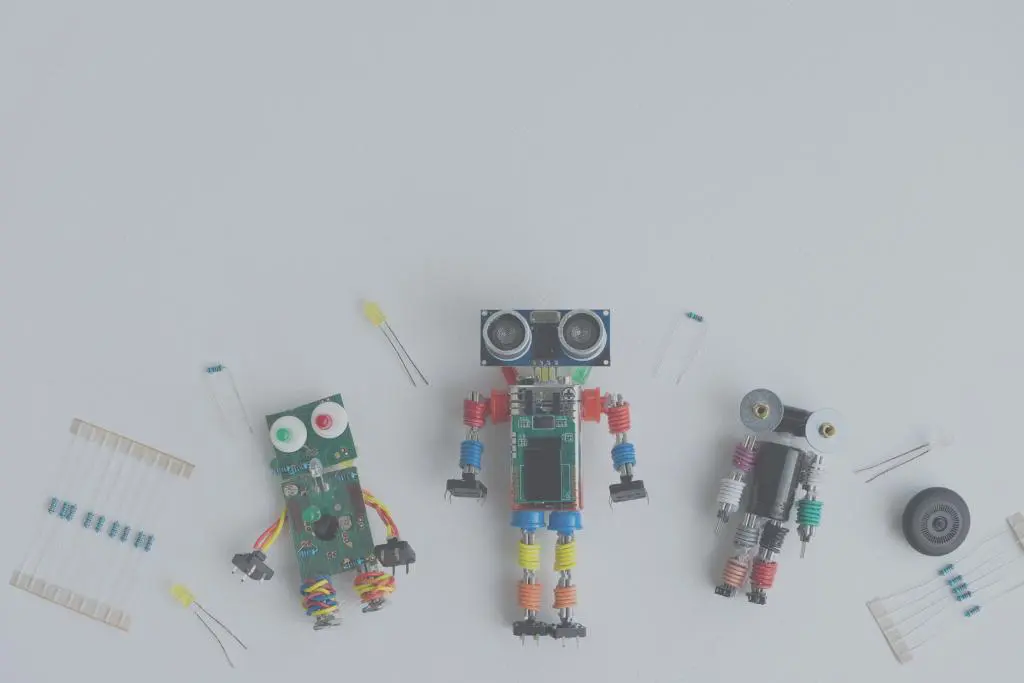
Thus, an example of STEM in education can be robotics workshops in which a robot is created and programmed, or other direct research projects typical of discovery learning.
Science experiments are another way to introduce this type of multidisciplinary approach. For example, students can be asked to analyze the impact of pollution in their city by taking samples and designing some kind of solution to mitigate it.
The goal is to propose experiential activities through which students can put into practice scientific, technological, engineering and mathematical knowledge to solve a problem.

How is the STEM in education approach evaluated?
Evaluation of STEM programs tends to be more hands-on and competency-based than traditional assessments.
In projects in which the student participates, issues such as innovation, functionality or the design of the final product are assessed, as for example, in the case of the robot programming that we have seen a few lines ago.
Learning portfolios can be used to show the evolution of the students through the compilation of their prototypes, diagrams or comments, as well as continuous formative evaluations based on observation and feedback between the teacher and the student.
In any case, for your remote supervisions, you need something key: to create environments that invite exchange in which people do not feel controlled but accompanied.
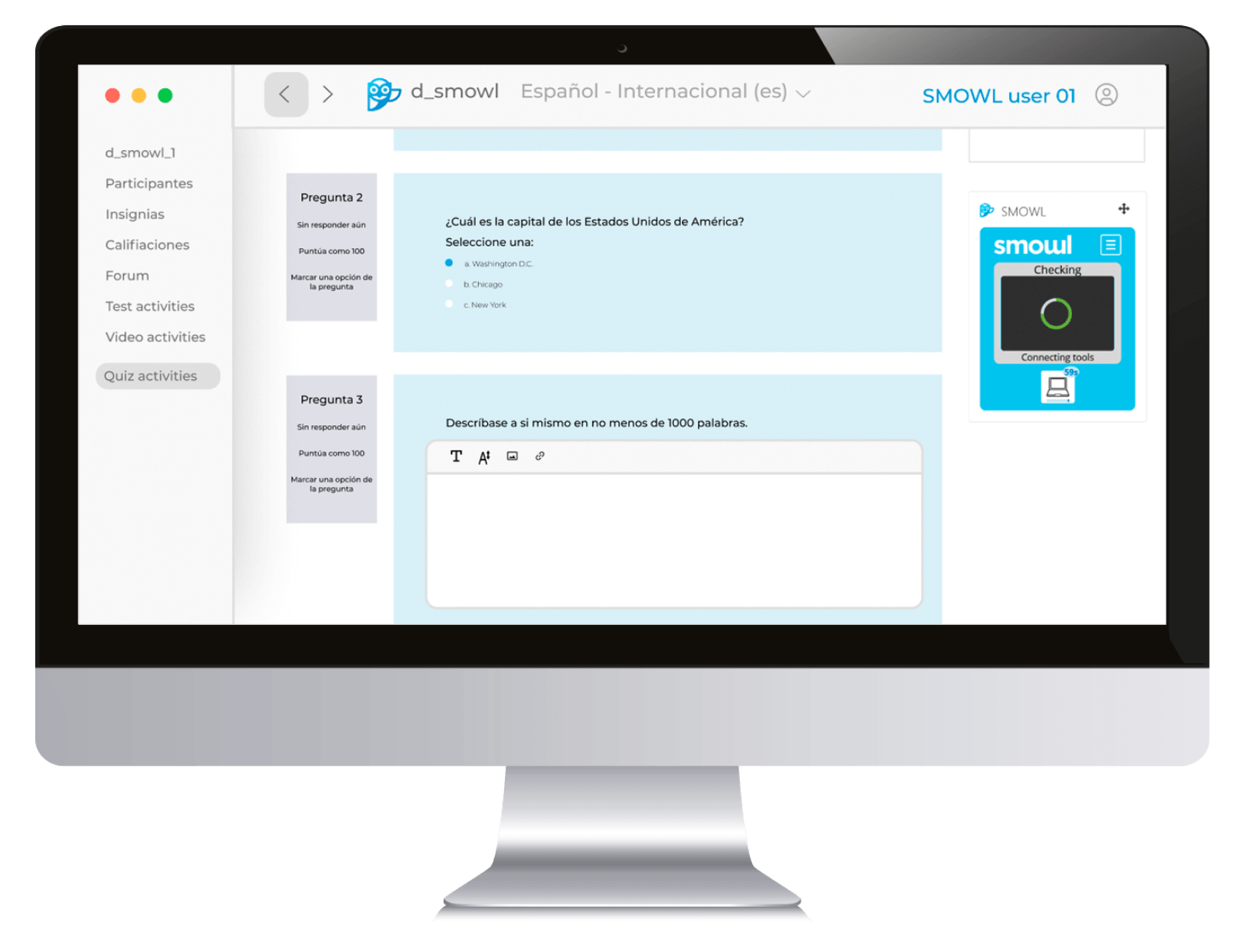
At Smowltech we can help you achieve this thanks to our proctoring plans and professional online monitoring solutions that adapt to all types of assessments respectfully and innovatively.
If you want to learn more about this type of monitoring, we invite you to request a free demo.
FAQs – STEM education
What is STEM education?
STEM education is a cross-disciplinary method that integrates science, technology, engineering, and mathematics, engaging students in practical, project-driven learning that emphasizes problem-solving and real-world applications. It prepares learners to face real-world challenges by building critical thinking and computational skills.
What is a STEM education program?
A STEM education program is a structured learning path that integrates science, technology, engineering, and mathematics through real-world, project-based activities.
Why is STEM education beneficial?
STEM education is important because it equips students with essential 21st-century skills like critical thinking, collaboration, and creativity. It prepares learners for a rapidly changing, technology-driven world and improves employability by training them for in-demand jobs.
How can STEM education shape the future?
STEM education shapes the future by preparing students to tackle real-world challenges with innovation and resilience. This helps students become more adaptable, technologically advanced, and better equipped to solve complex problems.
What are some examples of STEM educational toys?
STEM educational toys promote hands-on learning through exploration, building, and problem-solving. Examples include magnetic construction sets that teach geometry and engineering, circuit-building kits for understanding electricity, robot-coding toys that introduce programming logic, microscope exploration sets that develop scientific inquiry, and simple machine kits that let children experiment with levers, pulleys, and gears.
STEM vs STEAM education: what is the difference?
STEM focuses on science, technology, engineering, and mathematics, emphasizing technical skills and problem-solving. STEAM adds art to the mix, fostering creativity and design thinking alongside STEM skills. This integration encourages innovative solutions and a more holistic approach to learning.
Updated on