An educational portfolio is a curated collection of student work that demonstrates their progress, achievements, and reflection on learning.
As an authentic assessment tool within active learning methodologies, it makes it possible to gather learning evidence, encourage self assessment, develop key competencies, and analyze the learning process beyond traditional grading.
We invite you to keep reading and discover what it is, how it is structured, its benefits and real examples using tools such as Google Sites, Genially, or Canva. In addition, we include a 5 step guide so you can create your own or help your students create theirs.

What is an educational portfolio? Definition and characteristics
An educational portfolio is a learning and assessment instrument that gathers student work across various formats. It documents their progress and achievements in one or more subjects continuously and in context.
The benchmark definition comes from Paulson, Paulson, and Meyer (1991), who define a portfolio as a purposeful collection of student work that exhibits their effort, progress, and achievements in one or more areas. Similarly, the National Education Association (NEA) describes the process as a record of learning centered on student work and their metacognitive reflection upon it.
Key characteristics: collection, selection, reflection, and projection
The four essential traits of an educational portfolio are collection (systematic gathering of student work), selection (choosing items based on relevance criteria), reflection (metacognitive analysis of the learning process), and projection (planning future improvements).
Thanks to this 4 phase structure, the portfolio becomes a tool for self regulated and active learning.
Differences between a paper portfolio and a digital portfolio
A paper portfolio can be more accessible in contexts with low technological connectivity. The digital portfolio, on the other hand, provides major advantages such as continuous updating and the multimedia integration of various formats (text, audio, video, infographics, links).
Furthermore, the digital ecosystem facilitates collaborative work, ubiquitous learning, and the development of both student and teacher digital skills. In return, it requires addressing issues that paper does not present, such as the access gap, data privacy, and reliance on institutional infrastructure.
Importance of the educational portfolio for authentic assessments
The educational portfolio is key to authentic assessment because it gathers real evidence of contextualized learning, helping evaluate the process rather than just the final outcome.
For the student, it drives reflection on their own work and promotes self assessment, while also aligning with active learning methodologies where students participate in constructing their knowledge in an active and meaningful way.
Educational portfolio in formative and summative assessment
In formative assessment, an educational portfolio offers continuous feedback during the learning process, allowing for immediate adjustments and improvements. In summative assessment, it provides a global overview of goal achievement once the course ends.
While its greatest value lies in the formative dimension, integrating it into both types of assessment enables a deeper analysis of student performance.
The educational portfolio as a tool for self assessment and metacognition
Studies such as the one by psychologist Ernesto Panadero (2017) has concluded that self assessment improves learning outcomes. By integrating an educational portfolio, students can review their own work, identify strengths, and pinpoint areas for improvement.
Moreover, through reflective prompts, teachers guide students to analyze what they have learned, how they have learned it, and which strategies worked best. As a result, students develop autonomy and gain self-regulated learning skills that will stay with them for a lifetime.
Connection with active methodologies and key competencies
This collection of work aligns perfectly with educational strategies such as project based learning, the flipped classroom, or cooperative learning, where students construct knowledge interactively.
By creating an educational portfolio, students acquire and refine skills such as autonomous learning, digital competence, communication, critical thinking, and reflection; all of which are considered strategic skills in information driven societies.
Objectives and benefits of an educational portfolio
An educational portfolio transforms traditional education into an active process by documenting student progress, strengthening communication, and enhancing teaching.
To help you see its impact, we will take a closer look at the objectives and benefits of this tool below, as well as its challenges and drawbacks.
Key pedagogical objectives of an educational portfolio
The pedagogical objectives of incorporating a portfolio as an educational tool help improve the relationship between teachers and students. The most notable include:
- Guiding the learning process.
- Making student achievements visible.
- Connecting prior knowledge with new learning.
- Showing a comprehensive view of learning.
- Facilitating communication and collaboration among teachers, students, and families.
Benefits for students, teachers, and families
One of the reasons this tool is so effective is that it benefits students, teachers, and families alike:
- Benefits for teachers: Enables continuous assessment, provides a deeper understanding of each student’s progress, and facilitates personalized feedback.
- Benefits for students: Increases motivation, self esteem, autonomy, and metacognitive ability.
- Benefits for families: Makes real progress visible beyond numerical grades, fosters school/family communication, and promotes understanding of their children’s educational process.

Drawbacks and implementation challenges
The benefits of using portfolios in the classroom are clear, but they also present challenges, such as translating student work into traditional numerical grades and requiring students to maintain consistent engagement throughout the process.
The key lies in making a methodological shift toward active teaching that promotes techniques to reinforce student autonomy. This work consumes teacher time due to the need for continuous review of classroom work, and it requires specific training in digital tools and shared evaluation criteria.
What are the elements of an educational portfolio?
An effective educational portfolio must integrate diverse multimedia evidence and apply clear and transparent evaluation criteria using objective rubrics.
Basic structure of an educational portfolio: Table of contents, introduction, core topics, and conclusion
Based on the proposal by Elena Barberá, one of the leading figures and researchers in e-portfolios or digital portfolios, the basic structure of a portfolio should include:
- Table of contents: Determines the type of work and the didactic strategy.
- Introduction: Includes intentions, beliefs, and the initial starting point.
- Core topics: Shows the learning achieved through the selected documentation.
- Conclusion: Provides a synthesis of learning in relation to the shared content.
With this foundation in place, we can break down the core topics into more practical components for the classroom through two sections that promote metacognition and future planning: reflection and projection.
With this in mind, the expanded structure of an educational portfolio is as follows:
| Section | What to include | Pedagogical function |
| Table of contents | Ordered list of sections and evidence. | Guides the reader and organizes the content. |
| Introduction | Student presentation, objectives, initial beliefs, and starting point. | Establishes intent and contextualizes the collection. |
| Core topics | Selected evidence with description and justification. | Shows achievements and competence development. |
| Reflective Analysis | What was learned, how it was learned, the difficulties encountered, and the strategies used. | Fosters self assessment and self regulated learning. |
| Projections | Future goals, areas for improvement, and action plan. | Promotes continuous improvement. |
| Conclusions | Final synthesis of learning, key achievements, and reflective closure. | Demonstrates overall evolution and closes the process. |
Types of evidence: text, audio, video, graphics, and links
As mentioned above, evidence can take different formats. Here, it is important to establish which ones will be used based on the educational objectives and the skills to be developed in the student.
Among the most common formats are:
- Text: Essays, summaries, written reflections.
- Audio: Recordings, oral presentations, podcasts.
- Video: Practical demonstrations, recorded presentations.
- Graphics: Concept maps, infographics, diagrams.
- Links: External resources and relevant websites.
Naturally, integrating all these types of evidence requires a digital portfolio.
Assessment criteria and rubrics for portfolios
Defining evaluation criteria correctly is just as important as ensuring students know them before they start building their portfolio. Some of the most widely used criteria include:
- Portfolio completeness.
- Quality of evidence.
- Depth of reflection.
- Organization and structure of information.
- Fulfillment of objectives.
- Competency development.
One of the most effective tools for analyzing performance across all these areas is competency-based assessment rubrics, featuring clear performance levels and specific descriptors tailored to the strategy.
Real portfolio examples: Subject based portfolios
There is no single model for designing an effective educational portfolio. A nursing portfolio looks nothing like a fine arts or mathematics portfolio.
Below, we share several educational tools based on documented experiences from several universities and centers that demonstrate the value they bring to each context.
Do you want to stay on top of the latest trends in eLearning, EdTech, and Human Resources?
Fill out the form to receive our weekly newsletter with industry insights from our experts.
Foreign language educational portfolio
An example of an educational portfolio with institutional authority is the European Language Portfolio (ELP), a document promoted by the Council of Europe.
It is a personal tool in which students record their linguistic experiences, set goals, and self-assess their skills according to the Common European Framework of Reference for Languages (CEFR) scales.
In Spain, it has been implemented since 2006 across educational institutions at all levels, built around three core pillars:
- Language Passport: A summary of skills, qualifications earned, and intercultural experiences.
- Linguistic Biography: A reflective space where students plan goals, evaluate their progress, and record what they can do in each language.
- Dossier: A collection of actual work samples selected by students to demonstrate their skills.
To put this approach into practice, an example structure for 10th grade would be:
- Speaking competence: A recorded mock job interview conducted in pairs.
- Writing skills: A drafted cover letter.
- Reading comprehension: A reflection on strategies used to understand a complex or technical job offer.
Key to the ELP: All of these pieces of evidence are added to the portfolio in multiple versions to track improvement. It is important to note that the ELP is not an official qualification and does not replace certification exams, but it complements official credentials by providing tangible evidence of how students learn and their actual communication abilities.
Let’s look at two other significant examples in different fields.
Clinical portfolio in health sciences (nursing)
In health sciences, a portfolio helps collect real world evidence from a student’s practice in healthcare settings.
It includes anonymized records of cases managed, reflective analysis of critical incidents, self assessment of technical procedures, and samples of patient interactions.
By gathering performance data and evidence of complex professional competencies, such as clinical judgment, empathy, protocol application, and decision making, educators can evaluate these competencies with greater accuracy and depth than through traditional assessment methods.
Teaching portfolio in teacher education
In this context, a structured collection of evidence is used to document the future teacher’s pedagogical development.
In this type of educational portfolio, students typically include lesson plan designs, peer reviewed audiovisual evidence of microteaching, assessment rubrics, and reflections on their evolving teaching performance.
This tool helps educators connect educational theory with classroom practice and demonstrate mastery of methodological skills. Regarding assessment, it helps verify the authenticity of a student’s pedagogical reasoning and self critical thinking.
As you can see, the value of an educational portfolio lies in its ability to adapt to the real demands of each discipline. While a traditional exam tests what a student knows at a single moment, a portfolio documents what they are capable of doing, analyzing, and improving throughout their learning process.
How to create an educational portfolio?
Designing an effective educational portfolio requires following 5 sequential phases:
- Systematic collection of materials and evidence.
- Selection of the most relevant work to demonstrate progress.
- Metacognitive reflection on what and how learning occurred.
- Future goals and planning for upcoming improvements.
- Continuous maintenance through periodic updates.
Phase 1: Collection of materials and evidence
This initial phase involves collecting all the materials produced by the student throughout the course. These may include written assignments, projects, presentations, reflections, recordings, and more.
Ideally, at the beginning of the course, the teacher should explain how to collect and organize the work by date or topic, without selecting which materials will ultimately be included.
Phase 2: Selection of the most relevant work
The student selects, with guidance from the teacher as needed, the evidence that best demonstrates their progress, achievements, and competency development.
It is important to include early, intermediate, and final pieces of work, as this helps show evolution along a timeline. Each piece of evidence should be accompanied by a brief description explaining its relevance and contribution to the overall learning process.
The work in this phase encourages students to reflect on their own learning and performance.

Phase 3: Metacognitive reflective analysis
In this stage, the student analyzes what they have learned, how they learned it, which strategies were most effective, what challenges they faced, and how they overcame them.
To capture these insights, students can use educational journal entries or written notes, as well as audio or video recordings.
Phase 4: Future goals and action planning
Once students have built their portfolio, the next step is to identify areas for improvement, set future goals, and plan concrete actions to enhance their learning process.
Students can ask themselves questions such as “What do I want to improve?”, “What new goals do I have?”, or “Which strategies work best for me?”
This approach fosters lifelong learning skills that transfer to any future academic or professional context.
Phase 5: Tips for keeping a portfolio updated
Maintaining an updated portfolio is essential so that it remains useful throughout the course or academic program.
Education experts typically recommend dedicating 15 to 20 minutes per session to review and organize content, request feedback from peers and teachers, and keep the portfolio dynamic so it evolves alongside learning.
The process of designing and maintaining a portfolio builds meaningful, relevant learning that helps solidify knowledge and transfer it to other areas throughout a student’s life.
Examples of tools for creating portfolios in the classroom
At this point in the article, we find it helpful to share several practical examples of the most widely used tools for designing portfolios. Keep in mind that much of their success depends on how well they adapt to the educational level and learning styles in the classroom.
Portfolio in Google Sites
Google Sites is a free tool for easily creating collaborative web portfolios using pre designed templates and custom layout options.
It integrates seamlessly with Google Drive and allows for the embedding of multimedia content, including text, images, and videos. It adapts well to the needs of middle school, high school, and adult education.
Interactive portfolio with Genially
Genially enables the creation of interactive portfolios with dynamic multimedia elements such as buttons, pop-up windows, embedded videos, and external links.
For these reasons, it is often a great choice for visual, engaging portfolios and real time collaborative work.
Editable templates with Canva
Canva is another effective solution that delivers a professional finish thanks to its easy to edit templates and high degree of customization.
It is frequently a preferred choice for visual portfolios in arts, design, and any other project requiring strong visual impact.
Its versatile export options, such as PDF and interactive web links, further enhance its value.
Teacher portfolio vs. student portfolio
Educational portfolios are not only useful for students; teachers can also use them to support their professional development by compiling lesson plans, reflections on teaching practices, ongoing training, and evidence of educational and assessment innovation.
In contrast, a student portfolio documents their individual learning. Both share a similar structure and reflective purpose, but they differ in audience, content, and specific objectives.
Latest trends for creating effective educational portfolios
The emergence of information and communication technologies (ICT) in education has driven major innovation in classroom tools and resources.
Among the main trends are digital portfolios using artificial intelligence to offer automated feedback, the integration of digital badges and microcredentials, real time collaborative portfolios, and the development of portfolios as evidence of learning throughout life (lifelong learning portfolio).
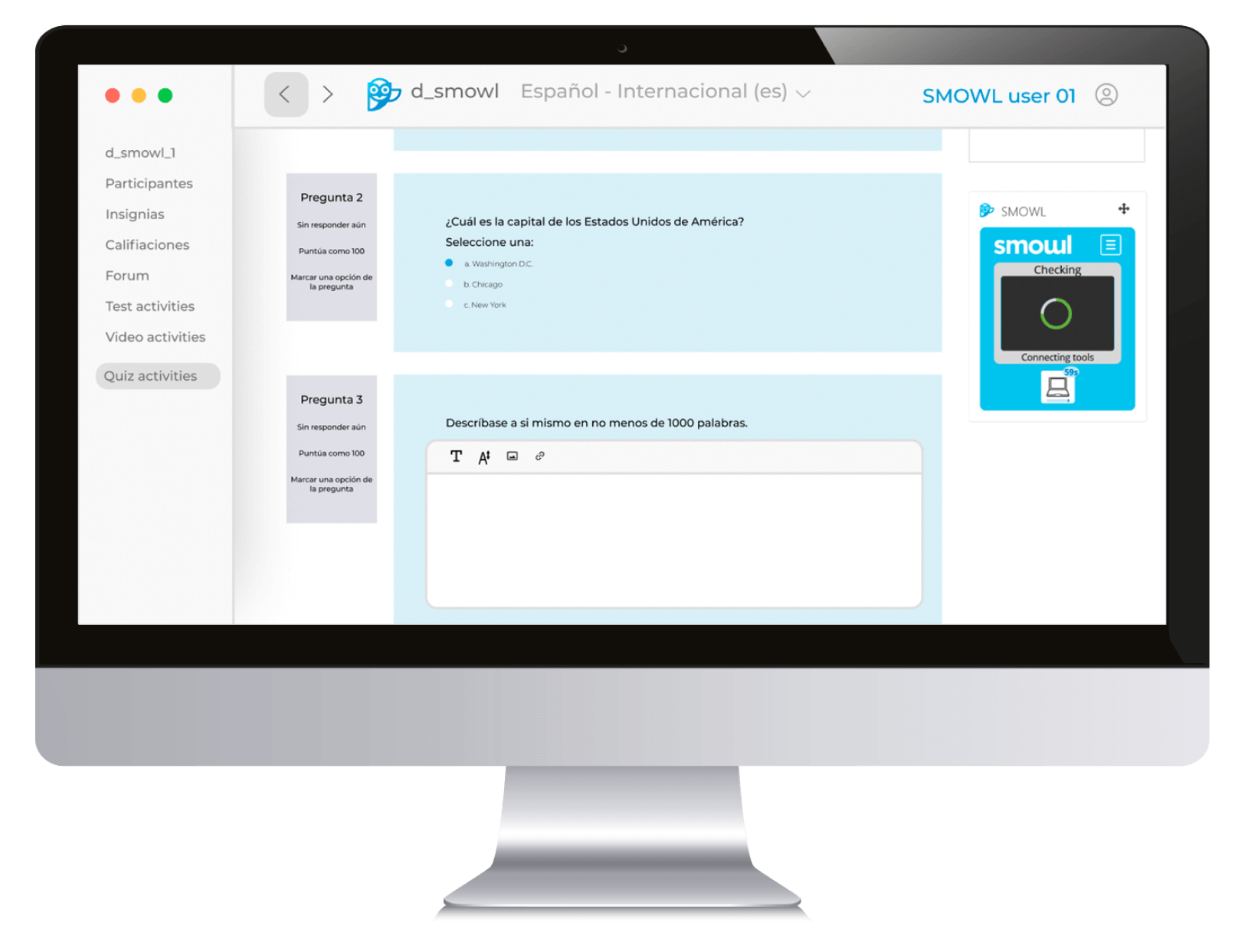
When discussing digital learning, we must necessarily address concepts such as educational integrity, accessibility, and security. This is where online proctoring solutions like those we develop at Smowltech are a great help to the entire educational community and any training project with tools such as:
- Identity authentication: Prevents identity spoofing to verify a person’s identity and ensure that students themselves are the ones who create, present, or defend the evidence in a portfolio.
- Non-invasive adaptive supervision: Monitors the completion of proposed activities, adjusting security levels based on the needs of the subject or institutions.
- Integration into the learning workflow: Can be integrated into the most widely used Learning Management Systems (LMS) such as Moodle, Canvas, or Blackboard.
Combining digital portfolios and professional proctoring tools like SMOWL proctoring plans makes it possible to certify practical, continuous learning with institutional rigor, equity, and the legal validity of a test. Feel free to request a free demo to see firsthand what we can do for your project.