Transferable skills increase the versatility and employability of teams, making them key for both employees and companies.
On the one hand, workers increase their employability, since thanks to these skills they become more decisive, effective and versatile.
On the other hand, organizations increase their competitiveness by having versatile, efficient profiles that are capable of adapting to the specific situations of a constantly evolving work environment.
Join us in this article to discover what transferable skills are, which are the most important and how they can be developed.

What are transferable skills?
Transferable skills are a set of abilities, competencies and knowledge that add value to a profile and that can be applied in any job, regardless of the sector.
This is because their most important quality, the fact that they are transferable, as the name suggests, makes them a decisive asset when evaluating and promoting talent in an organization.
A worker has been able to acquire these strategic skills in various ways: throughout their professional career, in their education and training, in internships in companies or in the organization itself in which they work through training programs, mentoring, coaching, etc.
Therefore, this type of competence encompasses all kinds of experiences and abilities such as hard skills or soft skills, aptitudes and theoretical and practical knowledge.
In any case, it is a background that the worker brings with and that will be highly valued in future job or in the performance of the different professional challenges to which the employee is exposed. As such, they can also serve as a driving force in the internal evolution of the worker.

Characteristics of skills that are transferable
For these skills to be considered transferable, they must meet four basic characteristics:
- Universal. Transferable skills must be applicable and usable in all types of industries and functions, that is, whatever role the worker performs, these skills add value.
- Adaptable. They make it easier for employees to take on other roles within an organization. They are therefore tactics in the development of horizontal careers or cross-cutting careers within the company, especially when they must be carried out urgently in response to a need in the sector or in the company’s strategy.
- Evolving. They are not static, they are skills that can be acquired and improved through training and experience, and can be found in continuous evolution.
- Valued. They are appreciated by recruiters, thus increasing the employability of profiles as they are closely linked to competitiveness, innovation and productivity.
Differences between transferable skills and hard skills
Before revealing the 7 most sought-after transferable skills, it is necessary to clarify the difference between transferable skills and hard skills.
Transferable skills are general abilities that can be used in any job, including communication and problem-solving.
Hard skills, on the other hand, refer to the specific technical knowledge needed to perform specific tasks, such as knowing how to use a particular software program or machine.
While the latter are necessary to successfully perform the technical responsibilities associated with a position and can be considered mandatory, the former provides a competitive advantage to candidates in the selection process.
Keep in mind that these skills also facilitate adaptation to new technologies and working with diverse and multidisciplinary teams, two dimensions that are increasingly common in labor markets.
We can understand them in relation to hard skills as complementary skills, but of great value.
7 transferable skills that employers are looking for
Take note of the 7 most valued transferable skills, because if your workers have them and develop them, they will become a highly valuable asset in your project.
Effective communication
This is a skill that promotes the transmission of ideas, the construction of solid interpersonal relationships and the coordination of projects.
All of this is extremely important for the functioning of the organization, the construction of a healthy work environment and the promotion of cohesion.
Critical thinking
Critical thinking is a skill that allows us to analyze information objectively and identify challenges. It also helps the person who develops it to be open to change and to the reception of innovative or different approaches.
This quality improves informed decision-making and predisposes people to continuous improvement.
Teamwork
Knowing how to work in a team is one of the most sought-after skills in information societies that are constantly faced with changing environments that cause companies’ products, services and solutions to be in a state of continuous development and adaptation.
In this scenario, collaborating to achieve common goals, exchanging knowledge and respecting the opinions and contributions of others is crucial.
Problem-solving
Having the ability to solve problems is much more than just finding solutions.
It is about identifying obstacles, tackling them in the best possible way and working on resilience, all while knowing how to adapt to unforeseen situations, often in demanding and urgent conditions.
Time management
Time is an essential resource closely linked to people’s performance and productivity. For this reason, it is one of the 7 most valued transferable skills today.
A person who knows how to manage time is able to organize themselves autonomously, establish priorities, deal with emergencies and meet established deadlines, both individually and as part of a team.
Thanks to this skill, the impact on the rest of the team that depends on their work is very positive because they are able to meet deadlines and, therefore, do not cause delays in delivery or related problems.
Adaptability
Employers highly value the ability to face and manage change in dynamic and unstable work environments.
This skill is usually accompanied by good stress management and the organizational ability to deal with any eventuality.
Leadership
Leadership is not only useful in positions where teams are managed, it goes much further.
It implies, for example, having the ability to positively influence the environment, taking initiative, acting as a role model and inspiring trust.
Now that you know the most sought-after transferable skills, you can understand their importance. To give you an example, think of a salesperson in the sales department who moves to the marketing department. They can use their communication and negotiation skills to obtain better contracts in their new responsibilities.
Another case would be that of a teacher who moves to business management. This profile can take advantage of their organizational and leadership skills in their new job.
Top 3 transferable job skills
For a more exclusive classification, the transferable skills we have just seen include communication, problem-solving and adaptability. But what is the justification?
These 3 skills facilitate effective collaboration between colleagues, other teams, suppliers, customers and users, foster innovation and drive success in constantly changing work environments.
Do you want to stay on top of the latest trends in eLearning, EdTech, and Human Resources?
Fill out the form to receive our weekly newsletter with industry insights from our experts.
25+ examples of transferable skills
We thought you might be interested in knowing 25 additional examples of transferable skills, but this time organized by type, so you can see that they cover different dimensions of the person.
This will also allow you to identify the ones you consider crucial in your project or to know how they can help you promote it.
Interpersonal skills
Interpersonal skills are social skills and individual abilities that help people interact with others and create bonds.
Active listening, empathy, negotiation skills, conflict management and networking are important here, that is, knowing how to build and maintain a network of professional contacts.
Management and organizational skills
Within the set of transferable skills, management and organizational skills allow professionals to plan, coordinate and execute tasks efficiently, regardless of the context.
For this reason, it encompasses competencies in project management, decision-making, strategic planning, attention to detail and organization, in a broad sense of the term.
Cognitive and analytical skills
Cognitive abilities are necessary for processing complex information, identifying patterns, solving problems and anticipating work-related challenges.
These transferable skills include strategic thinking, data analysis and the ability to synthesize, but also the creativity to find innovative solutions and the ability to constantly update and expand knowledge.
Digital and technological skills
These types of abilities are increasingly important in information societies.
Mastering digital tools allows people to optimize processes and take advantage of the digital transformation of companies, which is necessary to maintain competitiveness.
Therefore, digital literacy, making efficient use of technological resources, correctly managing digital information, classifying and filtering data, or having the ability to work in virtual environments are crucial skills in increasingly demanding contexts.
Personal and self-management skills
Finally, personal and self-management skills strengthen individual performance and make it easier for professionals to deal with unforeseen events or drastic changes in their schedules.
Here, therefore, you can find indispensable skills such as autonomy, resilience, professional ethics, proactivity and, of course, stress management.

Why are the transferable skills important in the job market?
At this point in the article you may assume that transferable skills transcend roles and sectors, resulting in high value precisely because of their transversality, versatility and adaptability.
Let’s look in a little more detail at the arguments that justify their importance in the world of work.
Strategic value in recruitment processes
The importance of transferable skills affects both candidates and employers in terms of valuing and identifying talent, respectively.
On the one hand, having these characteristics allows the candidate to stand out from other profiles with similar training and technical abilities.
On the other hand, recruiters can detect the added value of the candidate in an objective and relevant way for their business.
Benefits and impact on the organization
Having this kind of talent in your organization means having flexible, diversified, highly mobile and competitive teams thanks to people who know how to adapt to different challenges and environments.
For this reason, it is so important to train workers in these skills that have a direct impact on the productivity of companies.
Present and future relevance in information societies
The level of flexibility we are talking about facilitates adaptation to the automation of processes where superior cognitive, emotional and technological skills are highly recommended.
So the future trend is that the demand for these types of skills will intensify.
How to develop and improve transferable skills?
Transferable skills can be acquired and developed. This is one of their great virtues, meaning that anyone can access them and add value to their career plan and the organization they work for.
In the following paragraphs, we are going to share some guidelines that can help you enhance them in your company.

Implement internal evaluations
Internal evaluations will allow you to identify the type of transferable skills you have in your company, as well as to detect areas for improvement.
You can use self-assessment questionnaires. Although they can be too objective, they will help you understand your employees’ expectations and adjust the content of training cycles.
A good option for gaining objectivity is 360-Degree Feedback. These are omnidirectional evaluations where a person receives an evaluation from their supervisors, colleagues and teams under their charge, if they have any, but also from external suppliers and clients. With this evaluation you gain objectivity and eliminate possible biases.
Set clear goals
In competency development, defining clear and measurable objectives is a highly advisable step.
To achieve this, stick to what are known as SMART goals (Specific, Measurable, Achievable, Realistic and Time-bound) in your training and always use them as a roadmap.
Don’t forget to communicate them to your workers, so they know what is expected of them and how beneficial it can be for their development.
Create continuous training programs
Ensure that your employee training programs are integrated into continuous training with different formats such as workshops, courses, training, etc.
They should address the development of the transferable skills that your teams need, so don’t hesitate to ask for your employees’ opinions and involve them in the process from the beginning.
This simple fact will provide you with valuable first-hand information, but it will also help you increase their level of commitment by being properly informed and feeling listened to.
Design practical experiences
Practical learning experiences facilitate the development of skills and give meaning to the process.
Assign specific projects and tasks that require the use of the skills to be strengthened, so that employees understand their importance and actively participate in their own development.
It can be a good complement to the more theoretical parts of your training plans.
Use mentoring and coaching
Coaching and mentoring are two very useful resources when it comes to training transferable skills.
Bear in mind that these are processes that favor real-time feedback, thus allowing you to learn from past experiences while practically applying key competencies in real environments, something of great value.
Promote collaboration
Make collaboration one of the pillars of the company culture.
Create spaces and opportunities for teamwork to develop comfortably, and launch interdepartmental collaboration projects and activities.
The enrichment will be profound in the sense that, in addition to developing empathy and respect for the work of others, you will achieve a great diversity of skills in your organization.

Offer channels and means for continuous feedback
Regular follow-up meetings, employee performance evaluations and digital platforms that allow anonymous input are all channels that encourage continuous feedback.
Furthermore, it is one of the most effective ways to prevent information and training gaps from developing between leaders and teams, peers or departments.
Work on the learning culture
A learning culture encourages innovation and adaptability because it invites your employees to continuously want to update and expand their knowledge and skills.
If you incorporate the recommendations and dynamics that we have just shared with you into your Human Resources (HR) strategies, you will succeed in building a kind of organic educational community.
To do this, it is necessary to create suitable physical and virtual spaces, to offer the necessary resources and tools and to explore all the possibilities that artificial intelligence can offer to automate processes, define patterns and segment your teams.
Can transferable skills be measured?
Yes, transferable skills can be measured, although their evaluation is less obvious than that of hard skills.
You can use the 360-degree evaluations we’ve told you about, self-assessments and questionnaires, as well as observation in situational tests, simulations or role-playing.
Along these lines, the different types of key performance indicators (KPIs) can be very beneficial. For instance, you can use KPIs to analyze conflict management, team satisfaction, work performance or the communication measures implemented in your company.
In this respect, technological platforms that integrate artificial intelligence solutions can help you detect behavior patterns, make forecasts and provide you with detailed reports on the strengths and areas for improvement in transversal skills.
Bonus: transferable skills and remote supervision systems
Distance learning has facilitated the development of transferable skills without the limitations of face-to-face education, especially in work environments or in the case of people who do not have the flexible schedule necessary to attend pre-arranged classes.
But with this great advantage, important challenges have arisen, such as guaranteeing a fair and reliable evaluation in virtual environments.
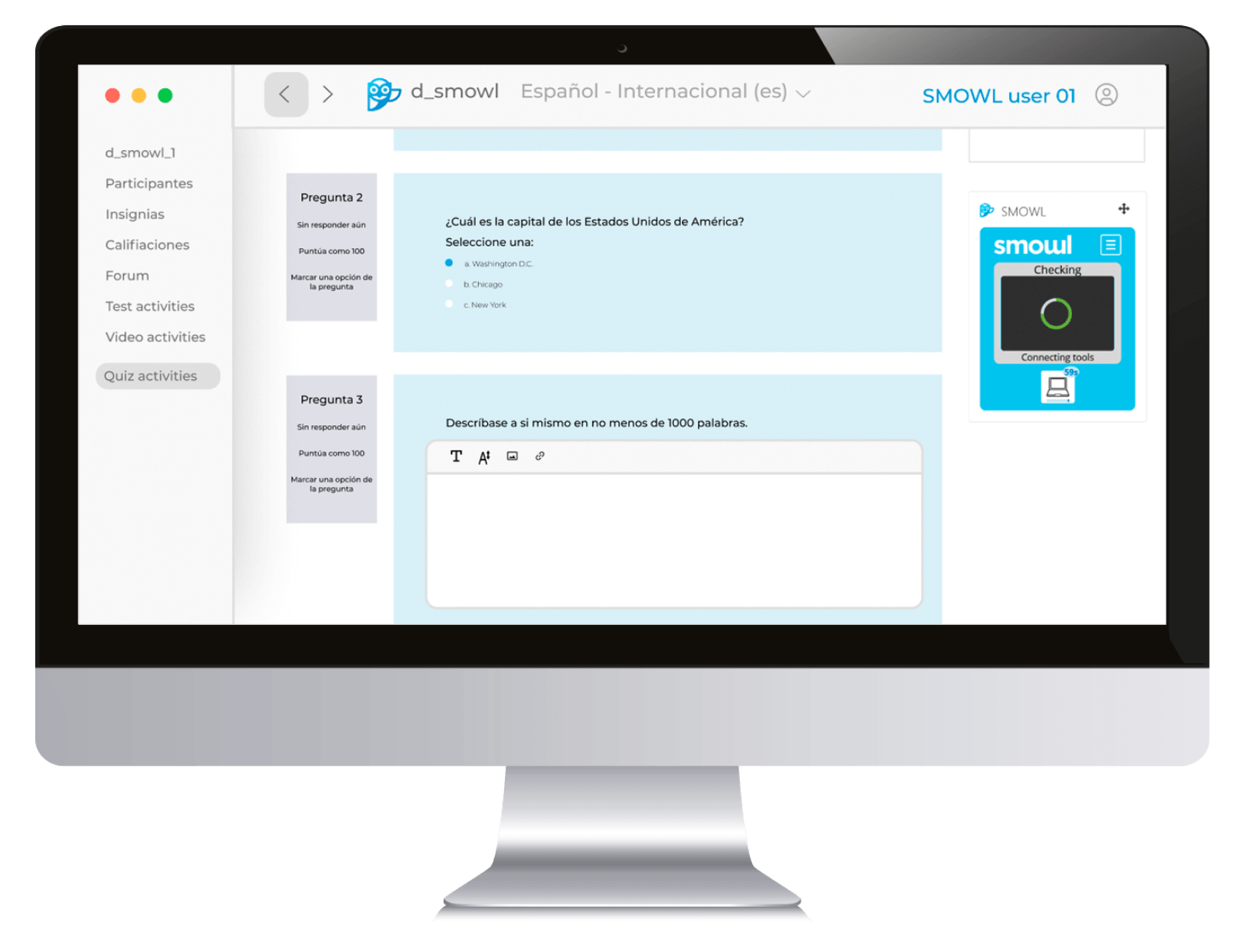
On this point, Smowltech’s proctoring plans take on great relevance by offering advanced monitoring technology that ensures the integrity of exams and certifications.
SMOWL products help you to evaluate transferable skills in an objective and transparent way, and to prove it, we offer you a free demo that you can request right now with no obligation.
8 interesting facts about proctoring
Fill out the form and download the guide where we cover everything about online monitoring and help you choose the best software.