Social skills in the workplace are competencies that allow professionals to communicate and work effectively in professional settings.
Beyond technical knowledge, these social skills in the workplace determine aspects of a candidate such as their adaptation to the team, their response to change, and their contribution to the work environment.
In this article, we are going to explain what social skills are in the workplace and why they are important for employability and talent assessment. Furthermore, we will share clear examples of how they manifest in interviews, tests, and group dynamics.

What are social skills in the workplace?
Social skills are a set of interpersonal and behavioral competencies that allow a person to collaborate, communicate, and function effectively within a team and an organization.
These skills cover how a person expresses themselves, listens, adapts, negotiates, and integrates into specific work contexts. Their core is formed by 3 capacities that activate and participate in any type of professional interaction:
- Active listening: focuses on understanding what the speaker is communicating before responding.
- Assertiveness: facilitates the defense of one’s own ideas and interests without being aggressive or submissive.
- Empathy: allows one to understand the other person’s point of view without having to share it.
These interpersonal competencies do not operate in isolation; rather, they determine a person’s communication style and their capacity to manage conflicts, negotiate agreements, and maintain self-control in situations of pressure or uncertainty.
For a company, the relevance of social skills in the workplace is centered on their ability to predict aspects that technical knowledge cannot anticipate, such as adaptation to the role, the quality of teamwork, and the response to frustration or unexpected change.
Differences between social, socio-professional, and technical skills
Social skills, socio-professional skills (or social skills in the workplace), and professional skills are terms that can be confused, although, from a business perspective, they do not refer to exactly the same thing:
- Social skills focus on general interaction, covering everything from courtesy, respect, or empathy to emotions in relation to other people.
- Socio-professional skills incorporate these competencies into the work environment, developing in interactions with clients, colleagues, outsourcing companies, suppliers, etc.
- Professional skills or technical competencies focus on know-how, for example, the mastery of tools, protocols, procedures, or regulations of the job the person performs.
In a company, the worker’s value comes from the combination of all of them, since an employee with great technical capacity but very few social skills in the workplace can generate friction that may affect results.
For their part, interpersonal skills, also known as cross-cutting competencies or soft skills, are the set of individual capacities and social dexterity a person has when interacting with others.
These competencies should not be confused with social skills in the broad sense or with professional or technical skills, which respond to different dimensions.
Soft skills vs. hard skills in the work environment
Another distinction we must address is that between soft skills and hard skills:
- Soft skills are innate interpersonal skills or those developed through a person’s life experience, such as their capacity for leadership, active listening, or emotional intelligence.
- Hard skills are technical competencies acquired through study or experience that facilitate the performance of a specific job. Learning a language, knowing how to handle software or machinery are some examples.
Social skills in the workplace typically fit within soft skills, as opposed to hard skills, which are measurable technical competencies. In the work context, soft skills are usually more complicated to measure, but their impact is decisive on the work environment, team turnover rate, and productivity.
Do you want to stay on top of the latest trends in eLearning, EdTech, and Human Resources?
Fill out the form to receive our weekly newsletter with industry insights from our experts.
Why are social skills in the workplace important?
The importance of social skills in the workplace manifests in specific areas, ranging from individual employability to team cohesion and organizational culture.
Increased employability and job adaptation
Social skills in the workplace translate into greater employability. Consider that a candidate who knows how to listen, adapt, collaborate, and manage their emotions is a person who will typically integrate into the team faster, accept feedback, and adjust their behavior to better respond to challenges.
For this reason, training programs often incorporate specific units on how to work as a team, maintain motivation, and respond to conflicts. Thus, in the framework of talent assessment, when this dimension is integrated, the results offer a more realistic picture of future job adaptation.
Improved teamwork and work environment
Organizations that invest in training their teams in social skills in the workplace usually benefit from improvements in the work environment and team cohesion.
When team members know how to put themselves in someone else’s position, respect external viewpoints, and cooperate without seeking the spotlight, they participate in building a better environment and better results in the projects they work on.
In selection and assessment processes, this translates into observing how a candidate behaves in group dynamics, simulations, and practical cases.
Relevance in selection processes and talent assessment
In talent acquisition, social skills in the workplace are a critical factor. Assessment becomes more reliable when it evaluates the candidate’s behavior in addition to their technical competencies.
In other words, the result is observed, but also the process: how they communicate, how they react to errors, how they manage time when collaborating with other people, and whether they are flexible when faced with changes in test conditions.
Incorporating this analysis into structured rubrics, following phases of automation and behavior consolidation, improves the quality of the hiring decision. It also helps reduce the risk of incorporating highly competent profiles with poor adaptation to the actual socio-professional environment.
Social skills in the workplace examples
These skills can manifest in everyday situations that any evaluator can identify through a comprehensive assessment.
During the job interview
In a job interview, social skills are evidenced in how a candidate expresses themselves and participates in interactions. Some of the positive signs an evaluator can detect include:
- Ability to narrate experiences with concrete social skills in the workplace examples.
- Use of clear and well-structured language.
- Calm reactions, even to complicated questions.
- Genuine interest in the company and the team that comprises it.
In a personnel selection interview, technical questions can be combined with others such as “how would the candidate respond in this situation if a colleague fails to fulfill their responsibilities?” This allows observation of how social skills in the workplace are integrated into real professional contexts or simulated real-life situations.
In group dynamics and practical tests
Group dynamics test candidates’ capacity to collaborate, negotiate, share ideas, and assume roles. In this context, some of the signals that companies and evaluators can observe are:
- Who facilitates communication.
- Who organizes the work.
- Who listens and reformulates proposals based on the information they receive.
- Who adapts to group decisions, even when they do not align with their preferences.
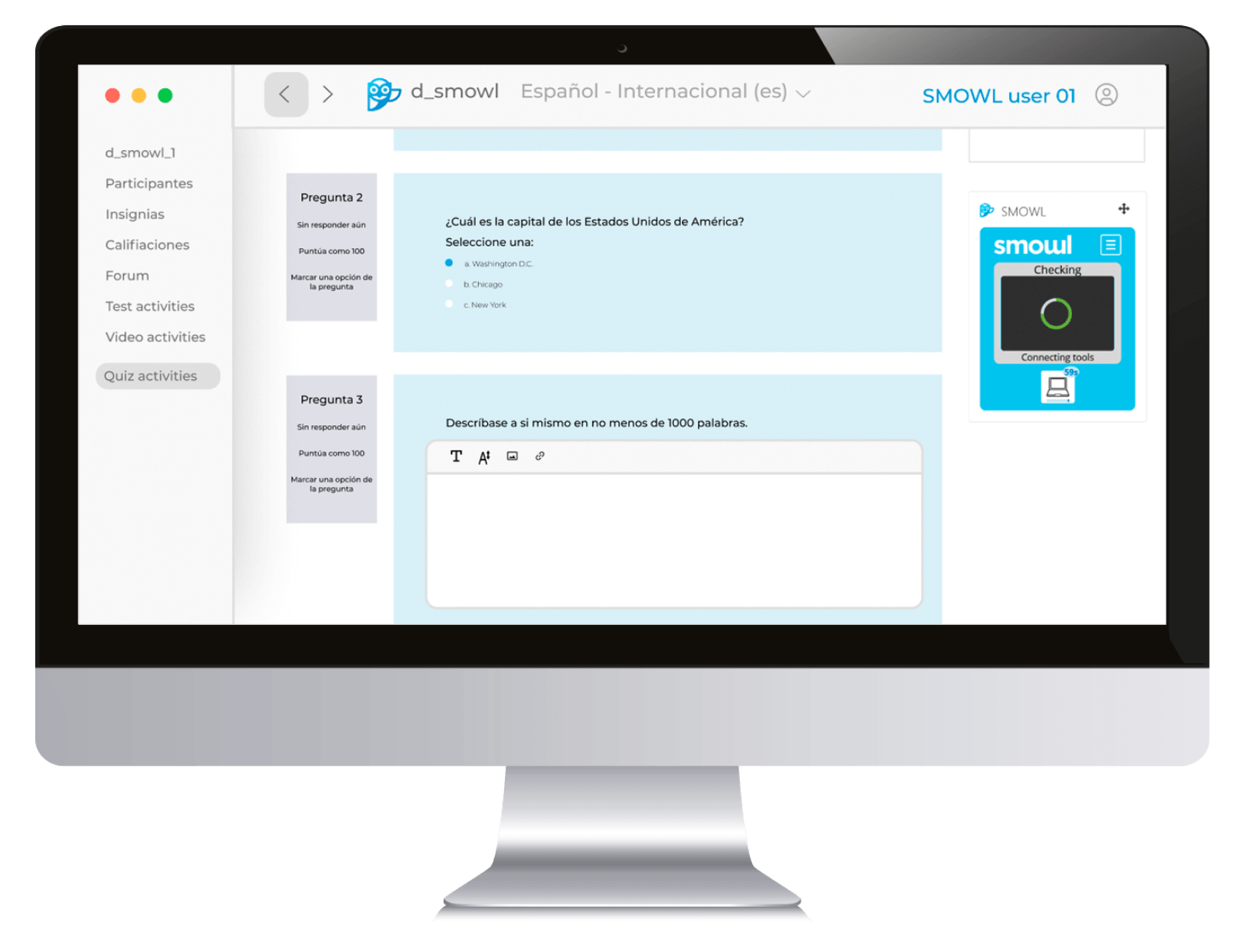
This type of interaction in digital environments can be recreated through simulations, forums, group chats, or collaborative tests that can be remotely supervised by proctoring systems. These solutions allow for capturing behavior patterns, among other evidence.
In customer service and support services
In jobs involving customer service, social skills in the workplace become a direct asset to the company’s reputation.
A high level of empathy, patience, active listening, and emotional control allows the employee to resolve complex demands effectively, without deteriorating the customer experience.
When a person with a problem contacts customer service and finds an interlocutor who actively listens, is clear, accepts criticism, and seeks solutions, they will highly value the service, and by extension, the company.
This is a key social skills in the workplace example. When the user experience improves, the organization’s brand image benefits. These social skills can be detected and reinforced with training activities such as role-playing, gaming, real cases, and simulations combined with specific feedback.

Within teams and collaborative work contexts
The capacity to share information, coordinate actions, and adjust one’s own behavior according to group needs are very valuable skills for an organization, even becoming core to what are known as power skills.
These are essential capacities to face the challenges of present and future society, which facilitate the transfer of knowledge to other team members and empower the people who develop them.
In collaborative work, people with socio-professional skills are usually capable of:
- Integrating into heterogeneous groups.
- Accepting feedback and correcting errors.
- Balancing their participation and enhancing listening.
- Interacting effectively and respectfully with colleagues of different levels and experience.
Due to their relevance, training programs often include these dimensions to prepare candidates for real work contexts.
What are the most valued social skills in the workplace?
Depending on the context, some socio-professional skills are more decisive than others for a person’s employability and performance.
The 4 most important social skills in the workplace for employability
The following skills appear recurrently in selection processes because they influence the candidate’s initial integration into the job.
Assertive communication
Assertive communication is the capacity to express ideas, needs, and limits with clarity, respect, and without aggression. This method of communication can prevent misunderstandings and conflicts.
Empathy and active listening
Empathy and active listening are pillars of teamwork and conflict management. An empathetic person can put themselves in the other person’s place, understand their emotions, and react appropriately. Active listening involves understanding the other person’s message and responding coherently to it.
Teamwork
Teamwork is a cross-cutting social skill required in virtually all jobs. A person with a good capacity for teamwork knows how to share responsibilities, listen to proposals, accept roles, and contribute their knowledge to the group to achieve a common goal, without losing autonomy.
Adaptability and change management
The more dynamic an environment is, the more necessary adaptability and change management become, as they involve reorienting when conditions, priorities, or criteria change, without losing motivation or efficiency.
Candidates who possess these capacities adapt better to new processes, tools, or ways of working without generating resistance or friction.
7 key everyday socio-professional skills
Accessing employment, maintaining it, and evolving within the company largely depend on the aptitudes that we will share with you next.
Respect and courtesy
Respect and courtesy involve treating people with consideration, avoiding disdain, and constructively criticizing ideas without attacking people, all while maintaining the appropriate tone. In the work context, these social skills in the workplace translate into treating colleagues, subordinates, superiors, clients, and suppliers with dignity.
Cooperation and collaboration
A cooperative person offers help, shares useful information, and seeks joint solutions without expecting an immediate benefit.
These types of profiles are extremely useful in a team because they reduce the load in coordinating teams, improve their efficiency, and help maintain focus and motivation.
Emotional control
Emotional control is the capacity to manage frustration, anxiety, and irritation, preventing these emotions from negatively affecting interactions with others. People who control their emotions are capable of channeling them and gaining positive performance from them.
Conflict resolution
When we talk about conflict resolution, we are not referring to avoiding conflicts, but to knowing how to manage them constructively. This requires listening, reformulating, seeking solutions that the parties accept, reaching balanced and respectful agreements, and above all, separating the problem from the person.
Constructive feedback
Giving and receiving constructive feedback is a key social skill in the workplace. It involves pointing out errors or areas for improvement in a concrete, relevant, respectful, and solution-oriented manner. It also means being able to accept criticism without reacting defensively.
Group integration
Group integration allows a person to adapt to new or heterogeneous groups. To achieve this, the person must be capable of showing interest in others, accepting group norms, and not remaining on the sidelines without reason.
Social responsibility
Social responsibility is a skill that involves acting while thinking about the impact of one’s actions on others, whether they are colleagues, clients, or any agent in the business ecosystem.
In this sense, it is important for the worker to be able to fulfill commitments, opt for transparency in their actions, and correct errors that affect other people.
The 10 social skills most valued by companies
The evaluation patterns for talent acquisition often incorporate the following socio-professional skills:
- Communicate with clarity and respect: express ideas without ambiguity and with a professional tone, adapting language so that complex concepts become simple.
- Listen before responding: practice active listening to grasp nuances and reformulate before answering, avoiding reactions based on assumptions.
- Show empathy toward colleagues: recognize others’ difficulties and offer support, especially in demanding and stressful contexts.
- Collaborate without expecting recognition: contribute to collective success by sharing information and genuinely helping, prioritizing the common goal over personal prominence.
- Adapt to different profiles: interact effectively with people of diverse cultures, ages, and styles, adjusting the approach to facilitate integration.
- Manage frustration: professionally and maturely handle discomfort in the face of unforeseen events, maintaining commitment and reorienting toward a solution.
- Respect roles and hierarchies: recognize the organizational structure and communicate appropriately according to the level of responsibility, without losing autonomy and decision-making capacity.
- Be reliable and meet commitments: generate trust by respecting deadlines, communicating unforeseen events, and maintaining behavioral consistency.
- Inspire motivation in the team: spread enthusiasm and optimism when facing challenges, recognizing the efforts of others and improving group morale.
- Foster the work environment: promote cordiality and mutual respect, avoiding behaviors that are harmful to others and personal friction.
How to evaluate social skills in the workplace for talent management?
To accurately evaluate social skills in the workplace, it is necessary to observe how they manifest in real tests, interviews, and dynamics, as well as establishing adapted behavioral indicators and evaluation criteria. Observing a candidate’s behavior in a test yields relevant information about their future performance.
Analyzing how they communicate their experiences, how they manage their silence, how they respond to uncomfortable questions, or whether they are capable of adapting their communication style to their interlocutor helps detect interpersonal skills and a person’s capacity for self-regulation under pressure.
Observation is usually structured based on different levels of depth:
- Basic level. Observation at this level focuses on immediate action skills, such as whether the candidate is capable of maintaining conversations fluently or if they present themselves naturally.
- Intermediate level. The analysis focuses on evaluating conversational and cooperation skills, such as analyzing whether they listen before giving an opinion or if they collaborate without imposing their criteria.
- Advanced level. In this case, skills related to emotions are observed, such as the expression of feelings or the understanding of others’ feelings.
Behavioral observation is not limited to physical tests or interviews; with online tools, you can record interactions and analyze patterns such as constant interruptions or evasion of questions.
Behavioral indicators and concrete evidence
Behavioral indicators and concrete evidence complement mere observation, as they allow you to compare and argue your decision. Some of the most commonly used indicators of social skills in the workplace are:
- Fluid and clear communication in response to open questions.
- Active listening without interruptions.
- Ability to give and receive feedback.
- Initiative when collaborating in group dynamics.
To these indicators, those specific to the profile must be added. For example, if you need to evaluate a candidate for a position that requires client management and work with vulnerable groups, skills such as emotional control under pressure and the capacity for self-assertion without aggression may be especially relevant.
In talent assessments, these indicators of social skills in the workplace can be collected through rubrics that define degrees of competence and allow candidates to be compared objectively. Additionally, they help personalize the design of individual development plans.
Use of rubrics and evaluation criteria for social skills in the workplace
Evaluation rubrics are indispensable tools for objectifying observable behaviors. Thanks to them, you can argue your decisions to the candidate or a client and reduce possible biases in the assessment of social skills in the workplace.
The dimensions of the evaluation rubrics will depend on the needs of each project. In the evaluation of social skills in the workplace, the most common are communication, empathy, collaboration, adaptability, and emotional control.
For each dimension you analyze, you can establish 3 or 4 performance levels with specific behavior descriptions. Let’s imagine you use levels ranging from basic to excellent in the evaluation of communication. The rubric could look like this:
| Performance level | Description of observable candidate behavior |
| Basic level | Shows difficulties structuring the message. Non-verbal language is contradictory or passive and does not adapt to the interlocutor. |
| Developing skill | Transmits information clearly, though with little fluency. Maintains intermittent eye contact and responds to questions reactively. |
| Competent | Articulates ideas with coherence and security. Listens actively and adjusts their tone and vocabulary according to the test context. |
| Excellent | Demonstrates superior eloquence. Manages silences masterfully, persuades with solid arguments, and leads the interaction empathetically. |
In personnel selection processes, human resources experts recommend following these steps:
- Define evaluation criteria per skill before starting tests or interviews.
- Use examples previously agreed upon among evaluators, in case there is more than one.
- Systematically record observations.
Rubrics can be integrated into digital forms that allow for real-time scoring and commentary on the evaluation, reducing the burden of subsequent analysis of social skills in the workplace.
Integration with innovative proctoring platforms
Online proctoring platforms help prevent fraud through tools such as authentication, screen monitoring, or navigation blocking, guaranteeing the authenticity of the data obtained.
The result is a more complete and fair talent assessment, where the evaluator’s decisions are supported by documented behavioral evidence and not just subjective impressions.
Solutions like the SMOWL proctoring plans allow for more comprehensive, equitable, and respectful talent evaluations, monitoring behaviors ethically, in detail, and ensuring the integrity of the tests.
If you want to delve deeper into its operation, you can request a free demo to see how you can apply the solutions we offer in your evaluations.

How to improve social skills in the workplace?
Social skills in the workplace can be perfected following a process that goes from preparation to consolidation, when they become a habit. We have compiled some of the most used strategies.
Formal training and development programs
Development programs for companies often include specific modules on communication, teamwork, emotional management, and conflict resolution, as you know. To improve results, it is crucial that formal training is developed in practical settings to give relevance to the learning process.
In this context, active learning techniques like gamification foster engagement with practice, improve critical thinking, and individual and group responsibility.
In fact, many organizations currently incorporate this type of training into onboarding plans and continuous training programs, linking social skills in the workplace to performance evaluations. This allows them to transition from being desirable skills to measurable and improvable competencies.
Practice in real and simulated environments
Practice in real or simulated environments, such as role-playing dynamics or digital simulations using virtual reality, allows for rehearsal under controlled conditions, facilitating subsequent generalization to everyday situations.
Cross-departmental projects help complete the process and develop social skills in the workplace like empathy or communication.
Continuous feedback and self-assessment
A way to multiply the impact of any training in social skills in the workplace is to provide specific, personalized, constructive, and action-oriented feedback. It is not just about pointing out errors, but about providing solutions and encouraging self-assessment of individuals.
In this way, when people become aware of their areas for improvement and their strengths, they take control of their evolution and can focus on avoiding recurrent patterns.
The role of the coach and digital tools
Implementing concrete improvement programs through coaching or mentoring within the company can be decisive, especially in onboarding processes, job succession, or leadership training.
Digital tools with a pedagogical focus, such as learning management systems (LMS), can be very useful for personalizing learning paths and scaling training with content adapted to each person’s needs.
Resources for developing social skills in the workplace
If you wish to delve deeper into the topic we have addressed today, we suggest some resources that may help you:
- Emotional Intelligence, by Daniel Goleman. It is one of the essential works for understanding how emotion management impacts professional success.
- The skills to pay the bills: returns to on-the-job soft skills training (Adhvaryu, A., Kala, N., & Nyshadham, A., 2017). This research from the University of Michigan, MIT, and Boston University demonstrated that soft skills training in work environments generates a 250% return on investment.
- Analysis of generic competencies for the employability of Social Work students in Spain: A mixed-methods approach (García-Uceda, E., León-Herrera, S. and Sánchez-Álvarez, C., 2025). This study identifies the key competencies in people’s professional development to improve employability.
- 13 Key Skills for employment: Guest self personal competence. This is a publication from the Spanish Ministry of Labor and Social Economy to promote lifelong learning and support innovation and competitiveness through worker training.