Education 5.0 is the fifth revolution in education, aimed at eliminating barriers to learning, personalizing information pathways, and enhancing student well-being.
Its goal is to overcome the limitations of Education 4.0, the previous model that had shortcomings in terms of accessibility, humanization, well-being, and equity.
To achieve this, it relies on advanced technologies such as artificial intelligence, virtual and augmented reality (VR/AR), big data, the Internet of Things, blockchain, and 5G.
The global EdTech market reached $163.49 billion in 2024 and is expected to grow to $348.41 billion by 2030. This investment will drive the integration of artificial intelligence and personalized learning solutions.
In this article, we will explain what Education 5.0 is in detail, with practical examples, and discuss the main current trends.
What is Education 5.0?
Education 5.0 is a post-constructivist paradigm focused on the active participation of students in their learning process to co-construct knowledge in a meaningful way that is adapted to the social, economic, and environmental reality of their environment.
Thus, in addition to overcoming the limitations of digital education 4.0 and responding effectively to technological advances, it seeks to prepare students to contribute effectively to society. In short, Education 5.0 is a bold change in the evolution of learning.
It pursues human-centered development and aims to educate citizens who are aware and capable of facing complex global challenges such as climate change, misinformation, and inequality. In a nutshell, it consists of a rehumanization of education.
To this end, it is essential that they have access to digital tools that enhance human connection, rather than replace it, which are also necessary to overcome uncertainty or fluctuating environments.
In this vein, it is also necessary to prepare lifelong learners so that they can become agents of change who know how to innovate without losing autonomy.
In short, Education 5.0 is not limited to integrating new technologies, but rather reimagining education in student-centered environments to create a human, interdisciplinary, and purposeful learning experience.

Core principles of education 5.0: a human-centered and AI-enhanced learning model
Education 5.0 is based on four pedagogical pillars: cooperative learning, adaptive learning, learning analytics, and customized learning.
Let’s take a closer look at each of these so you can understand how they contribute to disruptive education.
Cooperative learning
Cooperative learning focuses on small work teams collaborating to achieve common goals, creating knowledge communities.
This organization allows for effective interaction among all components, increases motivation, and helps develop cognitive skills such as individual and group responsibility.
Strategies that can be used include peer tutoring, constructive controversy, and reciprocal teaching.
Adaptive learning
Adaptive learning is an educational method aimed at personalizing content through the use of technology and addressing the individual needs of each student.
Its implementation is based on resources such as personalized paths, immediate automated feedback, and data analysis. These tools facilitate the maximization of results.
Learning analytics
Learning analytics is the measurement and analysis of educational data to understand and improve the student experience and optimize processes.
It encompasses data collection, predictive analysis, personalization, and continuous and constructive performance evaluation.
Customized e-learning
Customized e-learning adapts the content and pace of teaching to the individual needs, interests, and abilities of each student.
To implement it, you have options such as adaptive trajectories, Learning Management Systems (LMS) such as Moodle or Blackboard, diagnostic tests, and branching scenarios.
In short, in order to meet the challenges of globalization, it is necessary to promote personalized learning paths and enhance emotional intelligence, mental health, and resilience. All this without forgetting disciplines such as philosophy or ethics in curricula based on the multidisciplinary approach of STEM education.
This explains why collaborative, adaptive, analytical, and personalized learning are indisputable pillars of this new model in the classroom.
Education 5.0 vs. education 4.0: key differences and why it matters
Education 4.0 enabled the introduction of powerful tools such as AI, virtual reality, and the Internet of Things (IoT) into the classroom.
This facilitated the personalization of learning, but also highlighted challenges such as:
- Unequal access to digitalization among students.
- Isolation due to excessive digitization.
- Loss of genuine human interaction.
Education 5.0 truly puts people at the center by ensuring equity and prioritizing the mental and emotional well-being of students.
This process helps students adapt to real needs, encourages interdisciplinary, and emphasizes the importance of responsible data management.
Education 4.0 was instrumental in preparing students for the fourth industrial revolution, but Education 5.0 educates them to be agents of change in knowledge societies that use technology to innovate, without losing control of their education.
Do you want to stay on top of the latest trends in eLearning, EdTech, and Human Resources?
Fill out the form to receive our weekly newsletter with industry insights from our experts.
Is Education 5.0 only for higher education?
No. Education 5.0 is not exclusive to higher education. In fact, in the US, it is applied from K-12 to universities, using educational solutions such as artificial intelligence (AI) and virtual reality (VR) to personalize learning and enhance access to inclusive education.
Likewise, strategies such as project-based learning, which propose activities with social commitment and connected to the community, can be adapted to create meaningful learning even for the youngest students.
What skills does education 5.0 emphasize?
Education 5.0 promotes skills such as empathy, ethics, creativity, problem-solving, and critical thinking, in addition to technical and academic skills. It also integrates digital literacy as a foundation for learning to use technology effectively.
Gamification, flipped classrooms, immersive virtual reality, and project-based learning are some of the dynamics that allow these core skills for the 21st century to be developed.
They encourage collaboration and communication and cultivate lifelong learning skills in students.
What does Education 5.0 free us from? Strategic benefits
Education 5.0 incorporates advanced technologies, but it also frees the education system from limitations inherited from previous phases, such as rote memorization, repetitive learning, passive education, and excessive dependence on technology.
How does it achieve this? We explain it below.
Active and practical experiences
The one-way teaching and rote memorization typical of Education 1.0 are replaced by real-world actions and active learning.
Students solve practical problems and apply their knowledge to real-world projects that are relevant to society, i.e., they learn by doing, achieving more creative and lasting learning.
Personalized learning paths
If anything characterizes Education 5.0, it is total flexibility, as opposed to the curricular rigidity of versions 1.0 and 2.0.
Each student participates in the design of their learning path thanks to the use of adaptive platforms that adjust to their pace and interests, maximizing results.
Comprehensive and more effective approach
While Education 3.0 introduced technology and basic collaboration, 5.0 focuses on the development of social-emotional and creative skills for learning that is more adapted and relevant to today’s world.
Technology is used, but as a support, to make the process more human and effective.

Ethical and responsible use of AI
The fifth educational revolution corrects the technological dependence of Education 4.0.
AI complements, but is guided by the teacher, who is concerned with the emotional support of their students and prioritizes data ethics in every activity.
Inclusion, equity, and universal access
Accessibility gaps are bridged with inclusive AI, immersive tools, and the IoT.
The aim is to enable all students, including the most vulnerable populations, to access learning on equal terms.
In summary, Education 5.0:
- Overcomes the rote memorization of Education 1.0 with active experiences and practical problem-solving.
- Overcomes the curricular rigidity of Education 1.0 and 2.0 with personalized and flexible training paths.
- Corrects the technological dependence posed by Education 4.0 with a human-centric and ethical approach.
- Helps reduce accessibility gaps with universal inclusion and equity.
Challenges and ethical considerations in education 5.0
Without forgetting the important educational advances offered by education 5.0, we must bear in mind the challenges we need to work on, such as:
- High costs for implementation related to digital tools (hardware, software, etc.), as well as training for teaching staff. The solution is to adopt a phased implementation with scalable solutions and public-private partnerships to distribute costs.
- Challenges in terms of cybersecurity, making it necessary to work on solutions that guarantee data privacy and security. One possible solution is the implementation of educational technology trends, such as blockchain or zero-trust architecture, to protect student data.
- Ethical conflicts in the use of AI can be resolved with constant human monitoring and advanced proctoring solutions that comply with data protection regulations and create secure environments. It is also important to limit bias in artificial intelligence with regular audits to ensure transparency and fairness.
How is Education 5.0 transforming educational institutions? Examples in practice
The disruptive nature of Education 5.0, which we have discussed throughout this article, is evident in projects such as Stanford University’s Virtual Human Interaction Lab.
This lab investigates the psychological and behavioral effects of virtual reality and augmented reality. Its studies focus on how these tools transform people and society, and how they can be created and consumed to improve the world around us.
The Dearborn Artificial Intelligence Research (DAIR) Center is an example of the development and implementation of adaptive learning platforms. They monitor students’ performance and emotional well-being, facilitating early and timely intervention in the event of potential academic or emotional difficulties.
Also, important are anti-bullying programs that use AI and mediation to identify and resolve conflicts between students, creating more inclusive environments.
The use of educational chatbots that integrate emotional support is also relevant. They are not limited to answering academic questions, but also offer initial guidance on stress management, or direct students in need to campus mental health resources.
Main educational trends defining education 5.0
If anything sets Education 5.0 apart from its predecessors, it is the human-centered approach, which seeks a balance between technology and the development of human skills such as creativity, critical thinking, and emotional intelligence.
In this sense, personalization, collaboration, and the intelligent use of data help promote continuous, flexible learning tailored to individual needs.
The four trends we share with you below are essential to the process.
AI-Powered learning automation
AI-powered learning automation is transforming education through chatbots, virtual assistants, and automatic correction systems capable of providing instant feedback.
This is especially useful for repetitive tasks, freeing up teachers to focus on personalized mentoring. You can see examples on platforms such as Duolingo Max or Google Classroom.
In the business ecosystem, the return on investment is also positive. For example, corporate programs with automated grading allow for scaling up mass training without losing focus on the human element.
Immersive technologies (VR/AR/XR)
Immersive technologies allow you to work in virtual laboratories. This is the case with Horizon Workrooms, a virtual collaboration platform from Meta that transforms remote meetings into immersive spaces.
Another example is Microsoft HoloLens, a pair of autonomous mixed reality glasses that project interactive 3D holograms into the real world. They can be used for training in surgery, engineering, industrial maintenance, etc.
Gamification and game-based learning
As you know, Education 5.0 focuses on active learning, in which gamification (applying game elements in the classroom) and game-based learning are strategies used to increase engagement.
Gamification helps increase participation by appealing to intrinsic motivation, i.e., the desire for achievement and social connection.
In addition, these techniques improve long-term knowledge retention and yield good results in upskilling training in competitive teams, while helping to prevent burnout.
Data-Driven decision-making
The use of Big Data and learning analytics allows educational institutions to make data-driven decisions using teaching dashboards and IoT metrics.
Thanks to these systems, the risk of school dropout can be predicted with a very high degree of accuracy. This makes it possible to take timely action to prevent it, for example, by using personalized learning paths.
A real-life example can be found in the Chicago school district, which uses these technologies to promote racial equity and reduce learning gaps.
Predictive analytics is also useful in corporate human resources departments, as it allows training needs to be identified before problems arise.

How to implement education 5.0: a step-by-step roadmap
The implementation of education 5.0 requires careful planning to allow for phased execution.
You can start with this basic roadmap below, which you can adapt to your needs:
- Conduct a detailed audit of teachers’ literacy levels and students’ access to technological devices. It is very important to identify gaps in connectivity, hardware, and software, as these can be obstacles to further progress.
- Invest in teacher training. Teachers play a pivotal role. They must have access to ongoing training on AI solutions, adaptive learning platforms, and student-centered pedagogy. Technology is advancing very quickly, and teaching staff must be able to adapt to changes.
- Launch small pilot programs in specific classrooms or departments to test VR simulations or gamified learning modules. This will help you refine your programs and gather feedback from teachers and students to better choose the dynamics and resources.
- Implement systems that guarantee data privacy from the outset and establish clear policies on the use of AI and algorithmic transparency.
- Scale your proposals gradually and safely, and monitor the results with learning analytics dashboards.
- Establish a communication strategy to boost people’s involvement and foster trust in the project. You can also use technological solutions to automate newsletters and keep those involved up to date with changes.
With these steps, you are closer to training resilient citizens who are prepared to lead change in interconnected societies.
Future outlook: the next 5 years of education 5.0
Over the next 5 years, trends seem to point toward developments such as the following:
- A dominance of personalized AI tutors to tailor lessons to each individual student. They will become more sophisticated and integrate predictive learning analytics.
- Greater implementation of augmented and virtual reality to offer more immersive practices to students.
- A greater reduction in equity gaps, thanks to ethical AI and lifelong learning access, whose uses will expand.
As you can see, Education 5.0 makes learning a more efficient, immersive, fair, and personalized process.
Online proctoring: from surveillance to AI-driven ethical assessment
Assessment is one of the most sensitive pillars within the Education 5.0 ecosystem.
The transition to Education 4.0 led institutions to resort to remote, control-based supervision to ensure academic integrity in digital environments. However, the first versions raised concerns about privacy, AI biases, and accessibility.
Therefore, in the new educational paradigm, unlike traditional assessments, the aim is to go beyond standardized tests to achieve a real-world impact.
In this context, academic success is defined as the ability to use learning meaningfully and purposefully, adapting to the rapid changes of the interconnected world.
As we have seen throughout this article, Education 5.0 proposes a more humane, ethical, and student-centered model, and proctoring has not escaped this evolution.
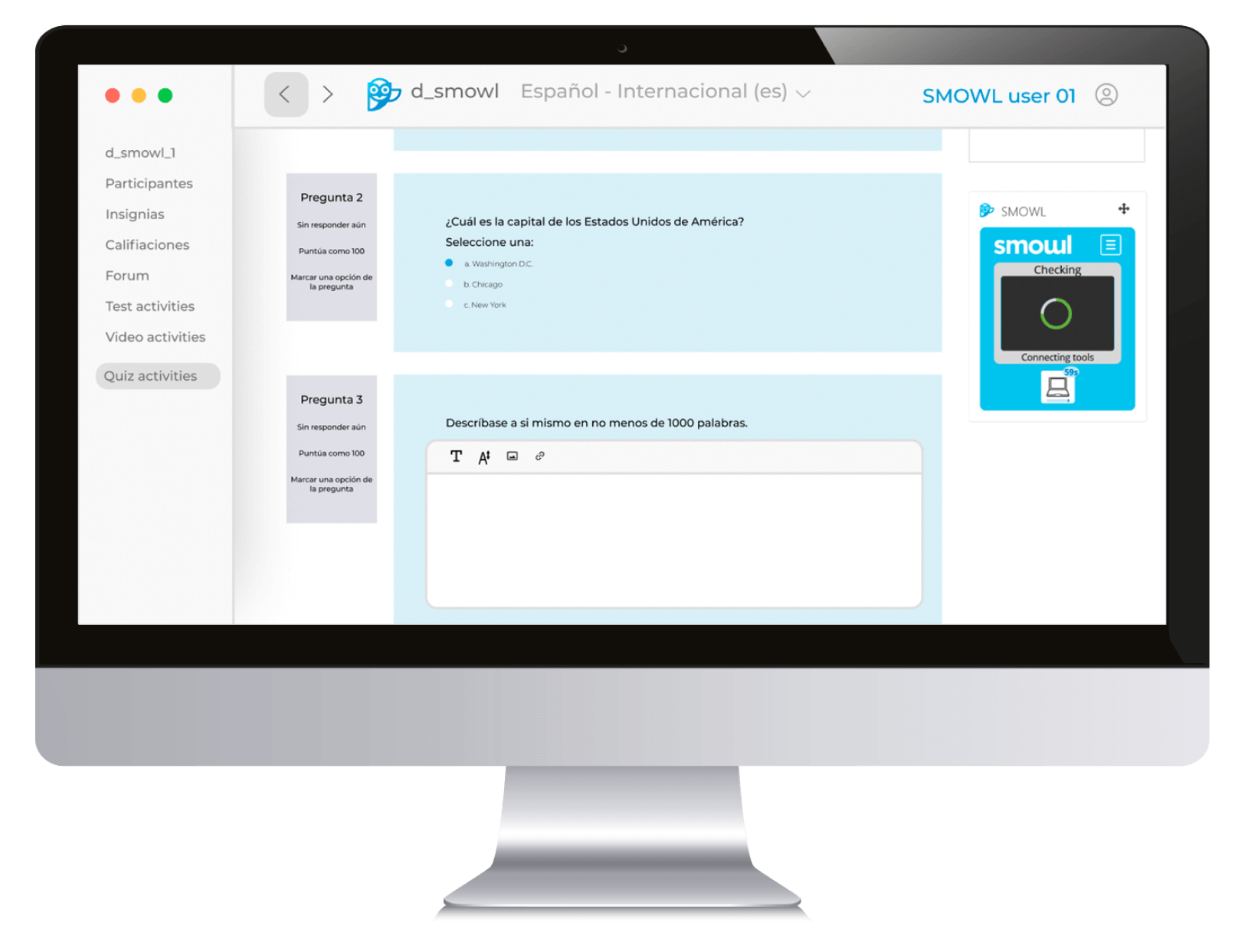
At Smowltech, aware of the responsibility we assume as developers of online educational supervision solutions, we have created innovative proctoring plans that are more responsible, transparent, and adaptive.
We rely on technologies such as ethical AI, respectful biometrics, and hybrid supervision models, for example.
Request a free demo so we can explain in practical terms the importance of choosing ethical proctoring solutions such as SMOWL, developed from a privacy-by-design approach.
In addition, we comply with FERPA and GDPR security standards to respond positively to current challenges regarding security, trust, and digital ethics.
Continue learning about education 5.0
With the following materials, you will be able to continue delving deeper into the subject:
- The OECD’s institutional report Trends Shaping Education 2025 on educational megatrends.
- The academic article ” Transforming Education 4.0 to Education 5.0 from the Journal of Research in Innovative Teaching & Learning. It analyzes the transition to the new model, as well as the role of Education 5.0 in the SDGs (Sustainable Development Goals).