Digital education continues to gain ground across Latin America. More and more people are studying from home, but this growth brings a major challenge: how can remote assessments be kept transparent, fair, and truly representative of each student’s knowledge?
I-ED (Digital Education) has established itself as a key player in addressing this challenge across the region. As a strategic partner of global educational technology leaders such as Coursera and Speexx, I-ED’s core mission is to democratize access to the best learning tools in Latin America.
However, its vision goes beyond simply distributing software. I-ED is committed to ensuring that the adoption of these technologies upholds the highest standards of quality and academic integrity.
This commitment was put to the test when I-ED took responsibility for managing the assessments of Peru’s Beca Cometa scholarship program, a high-impact social initiative designed to transform the future of talented young people by providing them with access to education at the top universities in the United States.
Assessing without identity verification
The Beca Cometa scholarship program represents a life-changing opportunity for many students in Peru. As a highly competitive initiative where full scholarships are awarded to study undergraduate programs in the United States, meritocracy is not just an abstract concept, it is the foundation of the entire program. Every scholarship awarded incorrectly due to fraud represents a missed opportunity for a student who has earned it through genuine effort.
Before I-ED decided to implement a remote proctoring solution, assessments were conducted in traditional digital environments, without proctoring tools or user authenticator systems. This lack of security created several vulnerabilities, with plagiarism and identity impersonation posing the greatest risks.
In an online environment, the ease of accessing unauthorized assistance threatened the credibility of the scholarship program.
For I-ED, continuing with this approach was not a viable option if they wanted to ensure a selection process that was truly fair, transparent, and based entirely on merit.
Finding the right solution with SMOWL
The need to significantly reduce plagiarism and protect the integrity of online assessments led I-ED to look for a technology partner specializing in remote exam proctoring. After evaluating several solutions on the market, the choice was clear: SMOWL, Smowltech’s online proctoring software.
As Luis Cordova Delgado, Product Owner at I-ED, explains, the decision was based on more than just the platform’s technical capabilities. Two key factors made the difference and added exceptional value:
“We chose SMOWL because of its proven track record in the Peruvian market and the Spanish-language support provided by a Latin America–based team that assisted us exceptionally well from day one.”
For a project of this scale, having a reliable and robust proctoring solution is only half the equation. The other half is knowing that your technology partner understands the cultural, operational, and technical realities of the region where the solution is being implemented.
Proactively preventing fraud with SMOWL CM
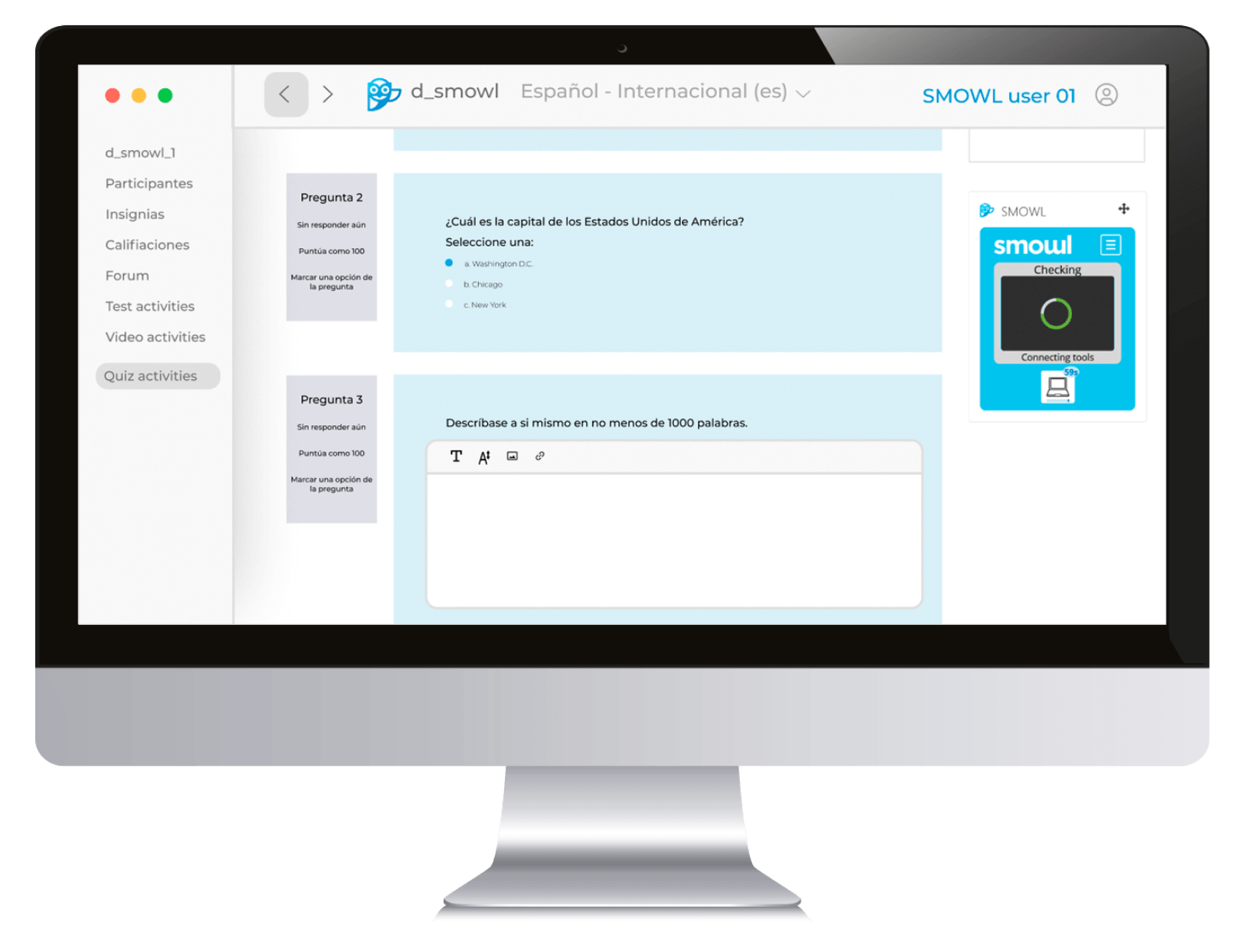
To meet the requirements of the Beca Cometa scholarship program, I-ED implemented SMOWL CM (Computer Monitoring). This feature is specifically designed to monitor students’ computer activity throughout an online assessment.
Its primary purpose is to detect, prevent, and discourage the use of unauthorized digital assistance, such as opening additional browser tabs, using messaging applications, duplicating screens, or accessing local files during an exam.
As the platform administrator, the I-ED team was able to see in real time how the solution served as a highly effective deterrent against academic misconduct.
The system not only collected the evidence needed for evaluators to make informed decisions, but also created a secure testing environment that minimized distractions and prevented attempts to cheat.
The human factor: Support that understands the local context
In a global market filled with automated but impersonal software solutions, I-ED found that SMOWL’s true value extends beyond the technology itself. One of the biggest challenges organizations in Latin America often face when adopting international software is dealing with language barriers and time zone differences.
Luis Cordova emphasizes that this is precisely what makes their experience relevant for other institutions in the region that are still considering remote proctoring:
“Our story can inspire others by highlighting the value of having support available in Spanish and from people who truly understand the realities of the region.”
Knowing that there is a dedicated team behind the technology—ready to resolve technical issues in real time and in the same language—provides invaluable peace of mind for both exam administrators and students.
Managing change: The student experience
Introducing any new technology comes with a learning curve, and remote proctoring is no exception. For many applicants to the Beca Cometa scholarship program, this was their first experience taking an exam under digital supervision.
As expected, the unfamiliar process initially raised questions, caused some anxiety, and led to a few operational mistakes while students learned how to use the platform. Rather than seeing these challenges as obstacles, I-ED approached them as a natural part of the implementation process and an opportunity for continuous improvement.
Thanks to the flexibility of the solution and ongoing refinements across multiple projects, these initial difficulties were successfully addressed over time. As students became more familiar with the platform, they understood that proctoring was not intended to punish them, but to ensure that everyone competed under the same conditions. This significantly strengthened perceptions of fairness, transparency, and the overall credibility of the scholarship selection process.
Proctoring as the new standard in digital education
The partnership between I-ED and SMOWL has ultimately resulted in a significant increase in trust. By implementing proctoring technology, I-ED has strengthened the credibility, integrity, and fairness of the assessment processes it manages, reinforcing the reputation of the educational programs delivered to its clients.
Looking ahead, Luis Cordova believes that digital proctoring is no longer an optional or temporary solution, but a fundamental component of modern e-learning strategies:
“Proctoring is becoming an essential standard for ensuring the quality and credibility of academic outcomes worldwide.”
By providing secure and trustworthy assessment environments, solutions like SMOWL do more than prevent fraud. They enable organizations such as I-ED to confidently expand their online education offerings, knowing that the degrees, certifications, and scholarships awarded through digital learning carry the same value—and, in some cases, even greater credibility—as those earned through traditional in-person education.
Do you want to stay on top of the latest trends in eLearning, EdTech, and Human Resources?
Fill out the form to receive our weekly newsletter with industry insights from our experts.