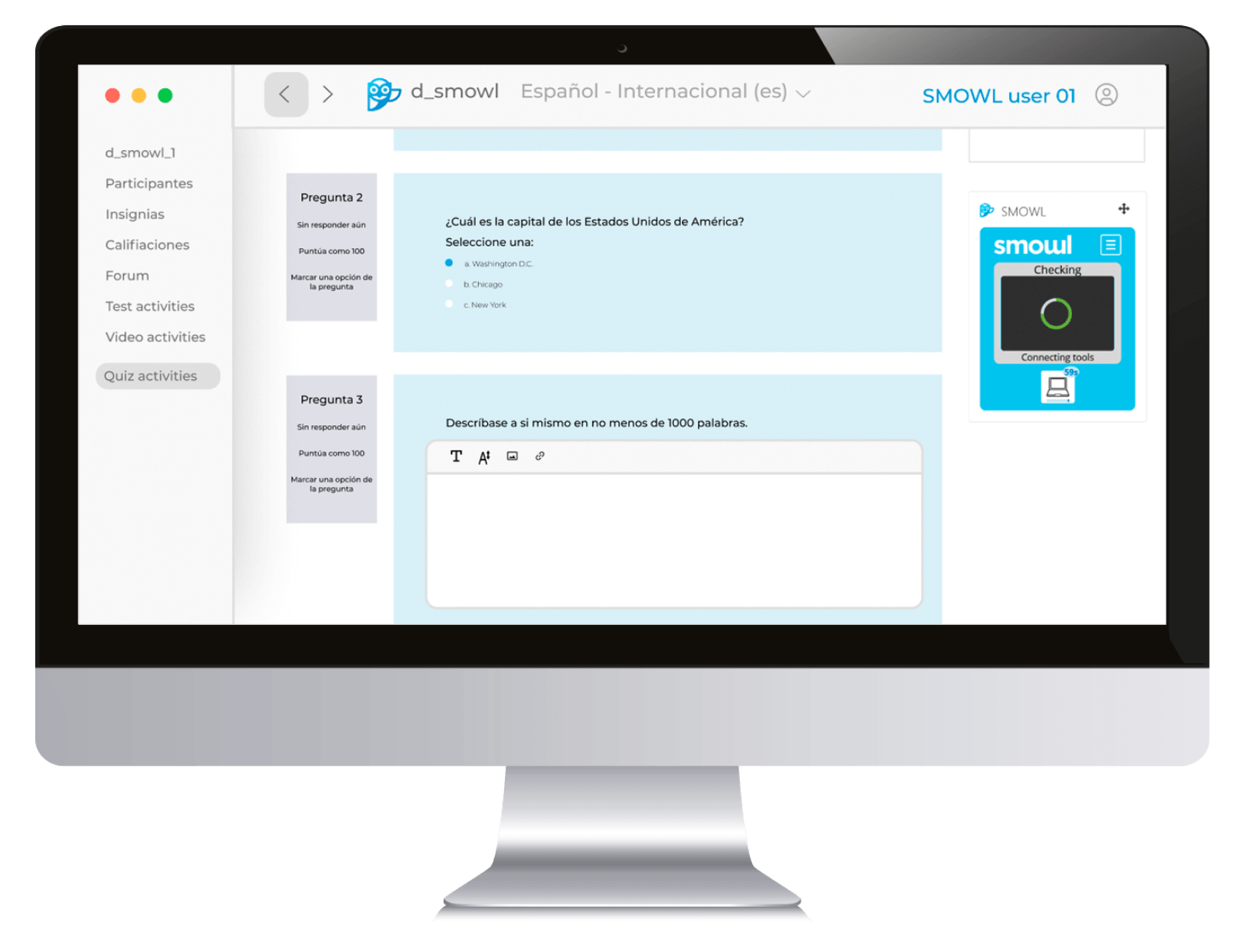
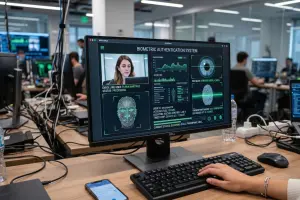
As digital education continues to expand, test proctoring has become a critical component in maintaining academic integrity.
Educational institutions are increasingly offering online or hybrid programs, but with this shift comes a pressing challenge: ensuring exams remain secure in a digital, AI-driven environment.
This practical guide will help modern institutions understand, choose, and implement the right exam supervision strategy based on their specific needs.

What is test proctoring and why it matters
Test proctoring refers to the process of monitoring digital exams to ensure that students follow rules and complete assessments honestly. Traditionally, this meant in-person invigilators supervising exam rooms.
Digital proctoring allows for the supervision of assessments in both remote settings and in-class exam environments.
The importance of test proctoring has grown significantly as educational institutions increasingly deliver online and hybrid learning programs and students gain greater access to multiple devices during exams.
This problem is further intensified by the emergence of generative AI tools, which can rapidly produce answers to complex problems, posing new challenges to the fairness and integrity of assessments.
As Alex Vea, Chief Strategy Officer at Smowltech, explains:
“Artificial intelligence, particularly generative AI, has opened the door to new opportunities for cheating, which means proctoring is no longer optional for institutions that offer digital programs.”
Without effective test proctoring, institutions could see the credibility of their credentials compromised, their reputation damaged, and the trust of key stakeholders affected.
The impact of AI on academic integrity
Artificial intelligence has transformed both learning and assessment. On one hand, it improves education by offering personalization and support, among other things.
On the other hand, it introduces new risks during digital exams, as students can use AI tools to:
- Generate answers in seconds.
- Solve problems in real time.
- Access explanations during assessments.
This creates a fundamental issue: AI tools can compromise the validity of exams, meant to evaluate independent knowledge and skills. Banning AI, however, is neither practical nor desirable, as it has become an integral part of modern education.
Alternatively, institutions can embrace AI for its many benefits while simultaneously implementing test supervision strategies that maintain controlled exam environments.
This approach ensures that AI is used responsibly, allowing students to leverage its advantages without compromising the integrity and fairness of assessments.
Let’s now take a look at the different types of proctoring, one of the first aspects to consider when implementing a digital exam monitoring strategy.
Do you want to stay on top of the latest trends in eLearning, EdTech, and Human Resources?
Fill out the form to receive our weekly newsletter with industry insights from our experts.
Which type of test proctoring does your institution need?
Choosing the right proctoring solution depends on your institution’s needs and resources. There are three main test proctoring approaches:
- Live proctoring.
- Automated proctoring.
- Hybrid proctoring.
In this guide, we will evaluate the benefits and challenges of each one, helping you determine which strategy best aligns with your institutional requirements.
Live test proctoring: the gold standard for high-stakes exams
Live proctoring involves real-time supervision by human invigilators. Proctors monitor students during the exam, authenticate them, and intervene if suspicious behavior occurs.
This method closely replicates traditional exam conditions and is widely considered the most secure form of test proctoring.
Benefits:
- Immediate intervention.
- Strong deterrence against cheating.
- High level of trust and credibility.
Challenges:
- Higher cost.
- Requires scheduling and staffing.
Live test proctoring is especially effective because it fosters a sense of accountability among students. Having a human proctor present during the exam greatly deters misconduct and encourages adherence to exam rules.

Automated proctoring: cost-effective exam supervision
Automated test proctoring uses artificial intelligence to analyze exam sessions. The system automatically detects incidents such as unusual movements, unauthorized items, or suspicious activity.
Benefits:
- Cost-effective.
- Flexible scheduling.
Challenges:
- No real-time intervention.
- Automatic flagging of incidents.
Automated test proctoring streamlines the process by highlighting potential issues in the final report, helping examiners focus their attention efficiently and freeing up valuable time for other academic tasks.
Hybrid test proctoring: a balanced approach
Hybrid test proctoring combines AI monitoring with human review. In the case of SMOWL, the evidence that requires closer human evaluation is reviewed manually to determine whether any unauthorized behaviors occurred.
Benefits:
- Improved accuracy.
- Reduced false positives.
Challenges:
- Slightly higher cost than automated solutions.
- Requires coordination with reviewers.
Hybrid test proctoring offers a strong middle ground, combining efficiency with human judgment.
Having reviewed the different types of test proctoring, it’s important to note that many institutions opt to combine multiple approaches instead of relying on a single proctoring modality. This is because every assessment comes with its own specific requirements and challenges.
In this context, universities and other educational institutions are encouraged to adopt flexible exam supervision solutions that allow them to switch between supervision styles.
SMOWL, for example, provides all types of proctoring in one single ecosystem. This approach facilitates adoption by simplifying workflows and eliminates the need to manage multiple separate tools.
Considerations for selecting test proctoring types
There’s no one-size-fits-all solution when it comes to test proctoring. Therefore, institutions may carefully evaluate several key factors to determine which proctoring type is most appropriate:
- Assessment stakes: The level of oversight required depends on the importance of the exam. A high-stakes final or professional certification demands stricter monitoring than a small-impact quiz or in-class assessment designed to gauge understanding.
- Budget allocation: Financial resources play a significant role in selecting a proctoring approach. Institutions should weigh cost against risk to ensure both academic integrity and efficient use of resources.
- Exam scheduling and staff availability: The flexibility of exam scheduling can influence the choice of proctoring. Live proctoring requires real-time supervision, which may be limited by staff availability. Automated or hybrid solutions provide greater flexibility in this regard.
- Regulatory or compliance requirements: Certain regulations or policies may mandate human review of exam sessions. In these cases, hybrid or live proctoring may be required to comply with legal standards.
While these guidelines can help inform proctoring decisions, it’s important to note that not all solutions provide the same level of flexibility or services.
Our clients, for example, can choose to have our professional team monitor their exams live, ensuring reliable supervision without being limited by internal staff availability or scheduling constraints.
This approach not only guarantees high levels of exam integrity but also reduces the administrative burden on in-house personnel, allowing them to focus on other critical academic tasks.
Test proctoring types vs functionalities
With exam proctoring being a relatively new concept in digital educational settings, it’s common for the different proctoring types to be confused with the range of exam supervision functionalities, such as:
- User authentication.
- Webcam monitoring.
- Environment check.
- Two-camera supervision.
- Audio monitoring.
- Browser locking.
- Computer monitoring.
While proctoring types are determined by factors such as synchronous/asynchronous supervision and the level of automation/human involvement, functionalities refer to the capabilities of the proctoring system to detect unauthorized behaviours and provide evidence.
Tailoring SMOWL functionalities
Because not all exams require the same level of rigor, institutions using SMOWL can combine the functionalities included in their plan to match the specific needs of each assessment.
For instance, two universities subscribed to the SMOWL PLUS plan might choose to utilize different functionalities. One may combine Browser Lock with user authentication and webcam monitoring, while the other might include voice detection as well to enhance exam security.
Here’s another example: a vocational training school on the SMOWL PRO plan might configure functionalities differently based on the type of assessment.
For a standard question-and-answer exam, they may combine the Browser Lock feature with additional functionalities, such as two-camera monitoring.
In contrast, for a multi-tool assessment (where students require access to multiple programs) they could use Computer Monitoring alongside other supervision features.
Key insights
In short, proctoring types and functionalities represent distinct concepts. Understanding the difference between them is essential for designing a proctoring strategy that is both effective and tailored to the specific needs of each assessment.
Additional factors to consider
Beyond the type of proctoring and its monitoring capabilities, institutions should take a broader view when defining their test proctoring strategy. Several key considerations can significantly impact long-term success:
Compatibility
Selecting software that integrates smoothly with your existing learning ecosystem helps maintain a consistent and familiar environment for users. This allows educators to deliver assessments directly within the LMS, simplifying both administration and the student experience.
Scalability
A scalable solution can grow alongside your institution, reducing the need to switch platforms in the future. Avoiding frequent changes minimizes disruption, reduces training efforts, and avoids challenges related to user resistance to change.
Privacy
Protecting student data and ensuring regulatory compliance is essential. Institutions must verify that the chosen solution meets relevant data privacy regulations, particularly as compliance standards may vary across regions.

Support
Reliable support is essential for successful implementation and ongoing use. Providers that offer strong onboarding processes and ongoing assistance can help institutions address challenges quickly and ensure a smooth experience for both staff and students.
Reports
Reports play a crucial role in supporting informed decision-making. An effective solution should deliver clear, structured reports that allow institutions to easily identify incidents and review them efficiently, streamlining their workflow.
Free trials
Testing a solution before implementation is highly recommended. Free trials or demos allow institutions to assess whether a tool aligns with their specific needs and expectations.
By carefully considering these additional factors, institutions can adopt a proctoring solution that is not only effective but also aligned with their broader educational objectives.
SMOWL: the all-in-one 360° test proctoring solution
Proctoring is no longer optional, but essential for institutions offering digital programs that want to safeguard academic integrity and uphold their reputation in the age of AI.
The key question is not whether to implement proctoring, but which approach best fits each institution and assessment, taking into account factors such as stakes, regulatory requirements, staff availability, and budget.
At Smowltech, we believe that maintaining integrity should never be a luxury. That’s why we provide affordable real-time proctoring, which can be combined with other exam supervision functionalities within the SMOWL ENTERPRISE plan.
With our 360° proctoring solution, universities and other educational institutions can flexibly select the most suitable proctoring setup for each assessment.
This simplifies adoption, eliminates the need to manage multiple tools simultaneously, and ensures a seamless, integrated approach to exam supervision.
Request a no-obligation demo, including 25 licenses, to experience SMOWL’s capabilities firsthand.