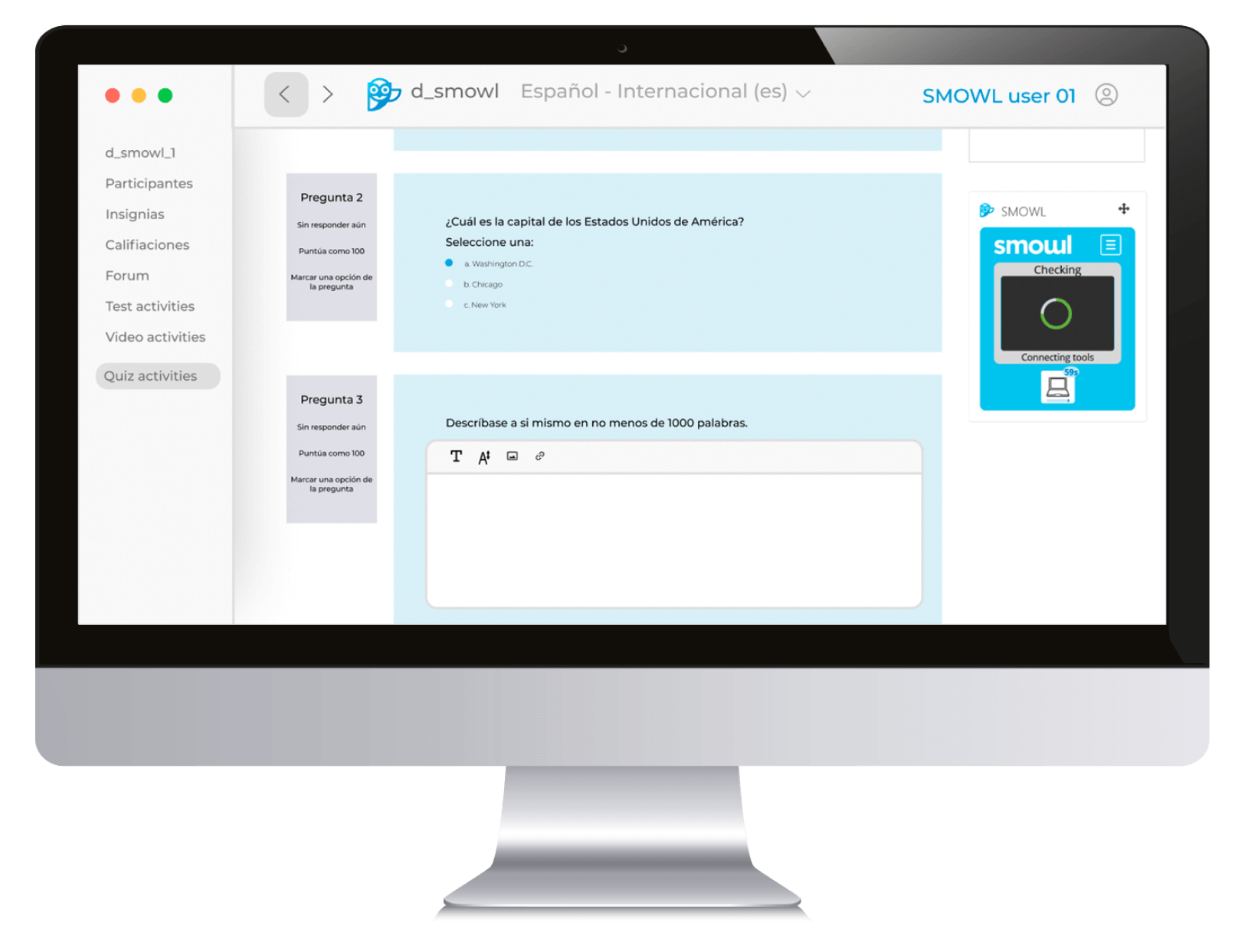
Virtual Learning Environments (VLEs) are interactive and adaptive educational ecosystems that evolve according to the needs of teachers and students.
Unlike virtual classrooms, which focus on recreating a physical classroom in a digital medium, these environments are microuniverses that are not limited to synchronous video transmission but integrate a robust architecture of tools.
As such, they allow for the traceability of learning, the incorporation of dynamic content repositories, and spaces for knowledge co-creation.
In this article, you will continue to discover more features and benefits of VLEs that will help you understand how they use technology as a channel, but also as a facilitator of student autonomy.

What are Virtual Learning Environments (VLEs)?
Virtual Learning Environments (VLEs) are web platforms designed to facilitate educational interaction between teachers and students remotely or in a hybrid format, meaning they must facilitate didactic interaction.
These spaces incorporate communication, content management, and evaluation tools. They are not merely a place where the teacher leaves materials for their students, but a dynamic and adaptive ecosystem. Some of the most notable examples include Moodle, Google Classroom, Microsoft Teams, Canvas, and Chamilo.
To confirm their growing importance, we would like to share a data point provided by Universidad Internacional de La Rioja (UNIR): online education has grown by more than 900% globally since the year 2000, so we can expect VLEs to become increasingly relevant in the future of Internet-based education.
How do Virtual Learning Environments work?
The operation of virtual learning environments is generally structured within an interactive platform such as a Learning Management System (LMS). This is a computer system that allows you total control over your distance programs.
While LMSs offer comprehensive management, other types of VLEs exist, such as wikis (collaborative websites), social networks, or blogs.
VLEs are typically organized based on 4 essential pillars:
- Management and administration. It must allow for student enrollment, schedule organization, and maintenance of academic records.
- Content repository. It must have a space to centralize the management of multimedia materials. This allows students to consult them at their own pace, personalize materials, and adjust the difficulty level.
- Two-way communication. It is important that the platform used facilitates exchange between the teacher and their students, and among peers. In this regard, it can include chat services, forums, and messaging. This helps prevent the feeling of isolation for distance learners and promotes collaborative work.
- Evaluation and monitoring. It is important that it includes tools allowing the teacher to access essential data on student performance, such as the time spent on the platform or which objectives have been met.
Based on these basic areas, options can be much more sophisticated and integrate artificial intelligence solutions to enhance the educational experience and boost personalization.
Difference between VLE and LMS
Allow us to clarify that, although they are commonly used as synonyms, the two concepts differ in that LMSs are the skeleton or infrastructure upon which the virtual learning environment is built. VLEs are, therefore, the pedagogical concept.
Ubiquity enabled by the cloud
Cloud architecture and real-time synchronization have enabled ubiquitous learning.
Learning is no longer dependent on a physical environment or a single electronic device; students can access content via any device, anywhere, and at any time they wish.
Role of students, teachers, and administrators in VLEs
This operation is better understood through the roles of students, teachers, and administrators:
- Students. Access and interact with content, submit assignments, participate in forums, organize their space, and access teacher feedback.
- Teachers. Create activities and adjust them to the needs of each learning style, evaluate, facilitate tasks, and guide discussions, monitoring all progress.
- Administrators. Configure the server, manage security, and create user accounts.
Characteristics of effective Virtual Learning Environments
The University of Valencia outlines the 4 essential characteristics for any e-learning platform according to Boneu (2007): interactivity, flexibility, scalability, and standardization.
In the case of effective virtual learning environments, we propose delving into these and adding one more that has benefited from the irruption of Information and Communication Technologies (ICT) and artificial intelligence in education: polymorphism.
Interactivity and flexibility
Interactivity is the cornerstone of VLEs, even above the technology itself.
For example, uploading a PDF to the Internet is information, but creating a debate about the information contained in that document builds knowledge, fostering deep learning.
Another indispensable characteristic is added to this: flexibility. These cloud-based learning environments allow for total adaptation to the institution’s objectives and the pace of each student.
Scalability and standardization
Scalability is another condition that these platforms must meet. They must function equally, regardless of whether the number of users is large or small.
Furthermore, standardization allows content to be imported or exported in standard formats such as SCORM (Shareable Content Object Reference Model) or xAPI (Experience API / Tin Can).
Additionally, LMSs can offer the possibility of connecting to third-party tools through resources like LTI (Learning Tools Interoperability).
Do you want to stay on top of the latest trends in eLearning, EdTech, and Human Resources?
Fill out the form to receive our weekly newsletter with industry insights from our experts.
Polymorphism
One of the fundamental characteristics of this type of environment is that they are polymorphic; the platform changes shape, transforming itself according to who is using it.
To achieve this, it must be able to recognize the user and, based on that recognition, reconstruct the interface and tools to offer an exclusive educational experience and adapted content.
Differences between a VLE and a traditional virtual classroom
VLEs are often mistaken for traditional virtual classrooms. However, their difference lies in the fact that the virtual classroom is a component, while a VLE is a complete educational system:
- The virtual classroom is a specific, generally synchronous tool, designed essentially to replicate the experience of an in-person class in real-time through video conferences. We can summarize it as an encounter environment that has a beginning and an end; it is not an evolutionary ecosystem.
- A Virtual Learning Environment is a comprehensive and asynchronous pedagogical microuniverse that contains resources such as forums, material repositories, grading systems, etc., although it also integrates synchronous solutions like virtual classrooms.
Thus, one of the great contributions of VLEs compared to virtual classrooms is that they allow learning to be continuous and autonomous.
Types of Virtual Learning Environments: LMS, wikis, blogs, and social networks
In the following table, we have compiled the 4 most commonly used virtual learning environments with their strengths and ideal use:
| Environment type | Strengths | Ideal use |
| LMS | Comprehensive management environment with control over the student’s process, assessment tools, and complete administrative management. | Formal regulated learning and corporate training. |
| WIKI | Fosters co-creation and collaborative learning. | Group projects, creation of glossaries and best practices, etc. |
| Blog | Stimulates written expression, critical thinking, and the creation of a portfolio or learning journals. | Class diaries and publication of completed assignments. |
| Social networks | Drives interactivity, is a familiar environment for the user, offers immediate communication, and fosters a sense of community belonging. | Informal learning, quick doubt resolution. Useful for open written discussions and professional networking. |
What are the 5 most popular Virtual Learning Environments?
It is complicated to speak of a global top 5 of virtual learning environments because the choice of platform depends on the nature of the educational institution (schools, universities, or companies), among other factors.
Given this, we would like to share with you 5 of the most widely used VLE platforms, so you can begin your assessment if you are not yet familiar with them:
- Moodle. One of the most successful open-source platforms in the education sector. It offers high personalization and multiple interaction options among students, favoring the social constructivism of knowledge.
- Google Classroom. It is a simple LMS that can be integrated with Google Workspace tools like Google Drive, Docs, or Meet.
- Canvas. This native cloud digital infrastructure has gained importance in teaching-learning processes, especially in higher education. Users highlight its ease of use and modern interface.
- Microsoft Teams. Although its focus was initially business-oriented, Microsoft has been evolving toward a powerful educational environment. It combines a virtual classroom with a VLE, and is one of the most used by institutions and companies that typically use the Office 365 suite.
- Blackboard Learn. It provides technical robustness, and one of its strong points is learning analytics. This tool helps teachers detect at-risk students in early stages.
How to choose the ideal platform for your VLEs?
As we have previously mentioned, when choosing a platform to develop your VLEs, it is necessary to analyze and verify the options they offer and whether they meet your needs.
If you don’t know where to start, you can consider the following aspects:
- Define your target audience. Keep in mind that the needs are not the same in primary education, secondary education, or a professional environment.
- Check ease of use. It is important that the interface is intuitive and mobile-first so that it does not become obsolete and students are more motivated to use it.
- Integration. This feature is often overlooked and is fundamental. It is imperative that the solution you choose integrates with tools you already use to maximize the resources you already have available.
- Data analytics. Another truly useful feature for being proactive and entering a dynamic of continuous improvement. Having automatic reports that allow you to detect which students are at risk of dropping out or which resources work best allows you to adjust your educational proposals and act in time.
- Adaptability and support. You can find free open-source or commercial proposals on the market, but an important feature you should assess is adaptability. In other words, that the solution you choose can grow with your project and the educational reality.

Benefits of Virtual Learning Environments
The many benefits offered by VLEs help improve student autonomy, boost their academic results, and facilitate compliance with established pedagogical objectives.
In any case, we would like to share some of the most relevant ones with you so that you can quickly identify the advantages that best suit your needs.
Advantages for the teacher
The teacher will find a pedagogical management system in VLEs that allows them to:
- Publish and share all types of resources in a structured way.
- Design a wide variety of activities in various formats (assignments, exams, questionnaires, surveys, quizzes, etc.).
- Integrate collaborative tools such as blogs, wikis, chats, as well as external applications when the platform allows it, such as a proctoring system like Smowltech’s, for effective and respectful remote supervision.
- Track progress through competence evaluation systems, activity and participation reports, badges, etc.
- Provide constructive and immediate feedback, so the student can know the results of their work in real-time.
- Develop their digital competencies and those of their students, creating opportunities for strategic feedback.
Advantages for the student
Regarding students, we have selected 5 strategic advantages that will help them improve their results:
- Greater physical and economic accessibility. VLEs do not require travel like in-person education because they eliminate the costs of transportation, accommodation, and other associated expenses. This can benefit vulnerable families who cannot afford these costs.
- Flexible learning. Students can access content, complete activities, and participate in discussions whenever they want and at their own pace.
- Environment personalization. VLEs allow for the creation of user profiles, configuration of display preferences, scheduling of differentiated content, and following learning paths adapted to each student’s progress. All of this improves the student’s commitment to learning.
- Development of digital competencies. When students regularly use these types of platforms, they become familiar with technological tools and information management on the network. They also participate in the development of collaborative work skills in digital contexts, which are highly valued in the current labor market.
- Promotion of responsibility and autonomy. Since the student is not under the constant supervision of the teacher, they develop strategic skills in information societies such as self-management, discipline, and organization of their own educational process.
As you can see, all these benefits place the student at the center of the educational process. This is known as the paidocentric approach (from the Greek paidos “child” and Kentron “center”) which reinforces the student’s commitment to their education.
How to create successful Virtual Learning Environments?
Before launching your e-learning project, it is important that you evaluate these strategic dimensions:
- Platform choice. This issue is not trivial as it will determine the educational methodologies you will be able to implement. Verify that the solution you choose has the necessary elements to design quality learning in which students can construct knowledge, individually and in groups. Also, check its adaptability and security guarantees.
- Instructional design. When creating the activities you propose, implement diverse methodologies (behaviorist, constructivist, and cognitivist) to create active, meaningful, or cooperative learning.
- Content curation. Select, organize, and improve content based on the needs of your students, without losing sight of the educational objectives and pedagogical criteria you need to evaluate.
- Integration of supervision systems. In distance education environments, incorporating a professional proctoring system is a differentiating element.
Regarding this last point, solutions like the SMOWL proctoring plans allow you to authenticate students and guarantee academic integrity, while creating safe environments that respect the most restrictive privacy policies.
You can check it out practically by requesting a free demo. You will see that it is an innovative, intuitive, and adaptive solution.
Challenges and disadvantages of a Virtual Learning Environment
In contrast to ubiquity, personalization, and the promotion of autonomy, virtual learning environments also pose challenges such as:
- The digital divide: even today, there are homes that do not have a high-speed Internet connection or adequate devices.
- Information overload. Proposing an excess of resources to students without proper teacher guidance can be counterproductive. They may feel overwhelmed and disengage from practice.
- The need for specialized teacher training. Faculty must continuously update their digital competencies to be able to create, develop, and adapt effective environments that respond to the needs of their students.
Artificial intelligence in VLEs
As we have detailed throughout this article, VLEs transform the context in which one studies.
Artificial intelligence (AI) disruptively modifies the “how,” creating living ecosystems that react to student progress in real-time, favoring adaptive learning.
Furthermore, as noted by UNESCO, it can help reduce the administrative burden on teachers and provides great opportunities to improve the student experience.
Let’s look at some examples of all this in detail.
Virtual Learning Environments and adaptive learning
In this relationship, machine learning algorithms are the protagonists. These are procedures by which an artificial intelligence (AI) is capable of detecting patterns that allow it to make accurate predictions based on new data.
How does this translate into the classroom? In two main ways:
- Creation of personalized learning paths. AI-enabled VLEs are capable of automatically reconfiguring the student’s itinerary so they can overcome detected obstacles. For example, if a student shows a block with a concept, the platform can show them explanatory videos, information capsules, or supplementary readings to help them advance.
- Individualized pace. One of the parameters that can be analyzed in these AI-assisted systems is response time. This allows tasks to be continuously adjusted so that the student can be placed in what Vygotsky defined as the Zone of Proximal Development. These are challenges that are neither too difficult (which can frustrate the student) nor too easy (which can cause the student to lose interest and become bored).
Learning analytics and dropout prediction
The school dropout rate is one of the metrics that most concerns the educational community. AI can also help reduce this thanks to tools such as:
- Early warning systems (EWS). These are algorithms that detect patterns of inactivity or declining grades and send an automatic notification to the tutor so they can intervene before it is too late.
- Content heat maps. These indicate to the teacher which content is being ignored or which generates the most doubts. Thanks to this system, the teacher can continuously improve the content.
Virtual assistants and 24/7 tutors
Artificial intelligence, through trained Large Language Models (LLMs), provides VLEs with a tutor available at all times, capable of guiding the student and resolving their doubts.
For example, if a student is studying at night and cannot find specific information or needs a definition, the virtual assistant can respond precisely or provide the link to the content they need.
Automation of feedback and grading
AI is already capable of grading multiple-choice tests, but it goes further. It can evaluate aspects such as the coherence and structure of written texts and provide immediate feedback with suggestions for students to improve their work before submitting it.
Currently, in addition to AI, tools such as augmented reality and virtual reality are being integrated to provide immersive educational experiences that will further enhance virtual learning environments.
VLEs and LOMLOE: digital competence and Competency-Based Assessment
In the Spanish educational context, Virtual Learning Environments (VLEs) have become a mandatory tool under Organic Law 3/2020, known as LOMLOE or Ley Celàa.
In this law, digitalization is presented not as an end, but as a means to achieve the student’s exit profile at the end of basic education.
Development of student digital competence
Current educational regulations require students to be capable of developing digital skills in complex environments through 3 key areas:
- Information literacy. VLEs allow the teacher to curate content based on a specific strategy. In turn, they enable the student to actively participate in filtering and organizing that information within the platform.
- Communication and collaboration. The tools used in these digital environments, such as forums or wikis, favor cooperative learning. Furthermore, they form a natural ecosystem for working on asynchronous digital communication.
- Content creation. The wide range of resources and tools available for creating content fosters digital creativity.

Competency-Based Assessment and digital rubrics in VLEs
Competency-based assessment is another pillar of the LOMLOE. Here, VLEs also offer a competitive advantage compared to the traditional classroom.
Thanks to advanced grading modules, a VLE allows each task to be associated with specific evaluation criteria and operational descriptors through assessment rubrics.
This process generates learning traceability that simplifies the bureaucratic work of teachers and provides students with immediate feedback.
The teacher thus has objective data to improve the evaluation process, and the student feels part of the process and understands what is expected of them.
In any case, the National Institute of Educational Technologies and Teacher Training (INTEF) also points out how they can function as a potentiating complement to in-person classes.
The center digitalization plan
The Reference Framework for Teacher Digital Competence directly links the quality of educational practice with these structured environments.
Thus, a center that does not have them will find it difficult to comply with the objectives of the center’s digital plan.
This is a mandatory audit focused on transforming classrooms into hybrid or semi-presential learning spaces, also known by the term blended learning.
Essential reference sources for further exploration of VLEs
Throughout this article, you have been able to confirm that Virtual Learning Environments are based on the synergies created by scientific research, teaching practice, and technological trends.
The following resource will allow you to continue delving into these educational ecosystems:EDUCAUSE. This is an educational community that introduces information technology as a tool to advance higher education. It features software comparisons and provides in-depth information on the effectiveness of VLEs.