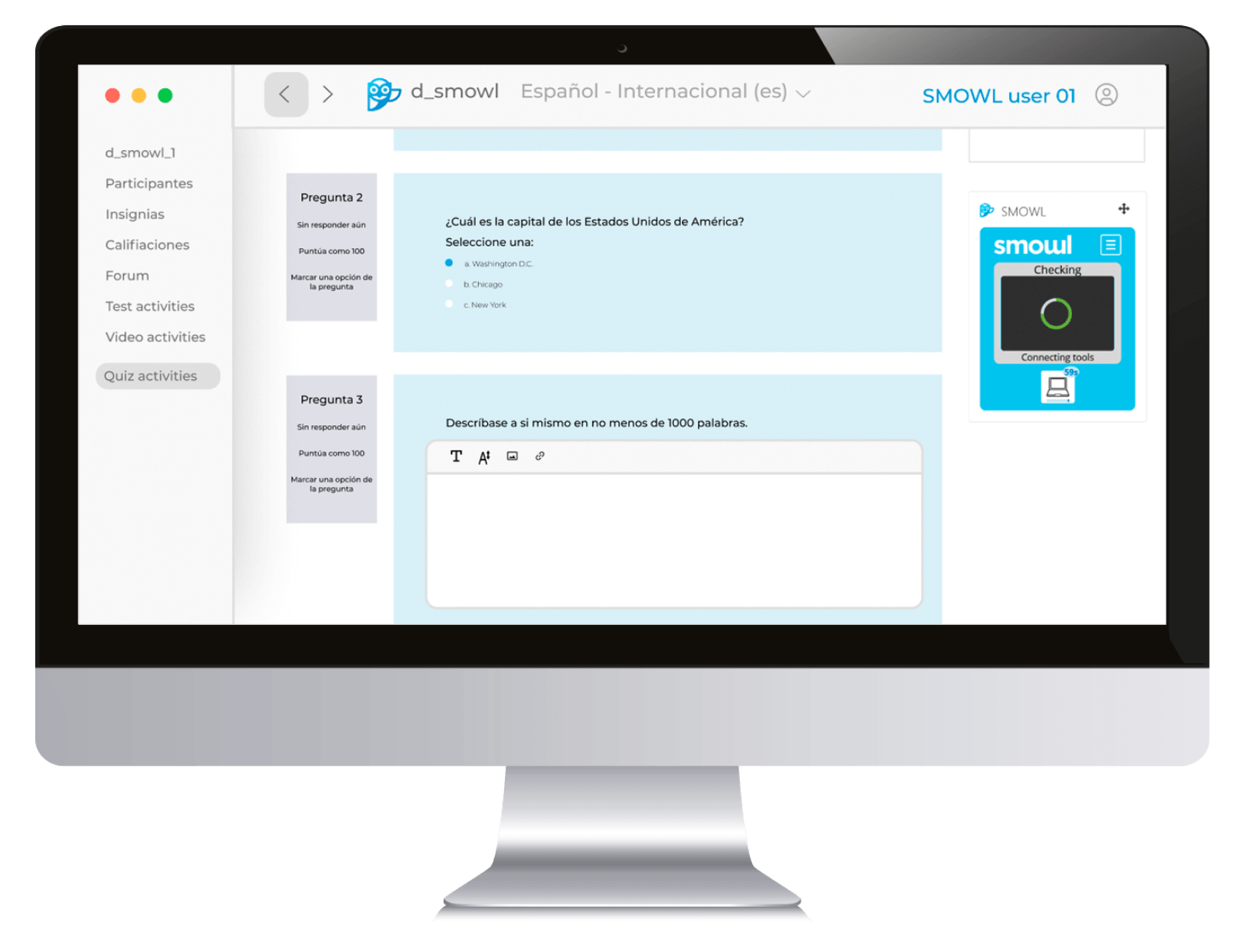
Proctoring has become an essential tool in the educational field, especially with the rise of online education.
This technology allows the remote supervision of exams, ensuring the integrity and authenticity of assessments.
But what does proctoring really detect, and how does it affect assessments?
Let’s take a look at it!

What does proctoring detect?
Proctoring is designed to detect various behaviors that could indicate cheating.
Key features include detecting unusual movements, identifying suspicious sounds, and monitoring computer screen activity.
These characteristics help ensure that students do not use inappropriate means to obtain answers during an exam.
Detection of unusual movements
One of the main capabilities of proctoring is detecting abnormal movements.
Using the webcam, the system can identify if a student is repeatedly looking away, frequently getting up, or showing signs of stress that could indicate an attempt to cheat.
For instance, if a student constantly moves their head to one side, it could suggest they are looking at hidden notes. This level of surveillance ensures that students maintain proper posture throughout the exam.
Do you want to stay on top of the latest trends in eLearning, EdTech, and Human Resources?
Fill out the form to receive our weekly newsletter with industry insights from our experts.
Monitoring suspicious sounds
In addition to visual monitoring, proctoring also captures ambient sound.
This means it can detect if someone is talking near the student, which could suggest they are receiving external help. This type of detection is crucial for maintaining fairness in remote assessments.
For example, if conversations are detected, the system can record the audio, and when played back, the supervisor can detect any anomalies, helping to prevent inappropriate communication during the exam.
Computer activity monitoring
Proctoring is not limited to physical surveillance. It also monitors the student’s computer activity. This includes detecting unusual screen changes, opening unauthorized programs, and browsing websites that are not necessary for the exam.
This function is vital for preventing the use of unauthorized resources. For example, if a student tries to open an internet browser during the exam, the system can log this activity and notify the supervisor.
A more restrictive version can block the student’s exam if this happens, instead of just notifying.
How does proctoring influence assessments?
The implementation of proctoring has significantly impacted how assessments are conducted. Here are some of the most relevant effects.
Increase in academic integrity
The main benefit of proctoring is the increase in academic integrity.
By reducing the opportunities for cheating, it ensures that grades truly reflect the students’ knowledge and skills.
This is especially important in educational environments where fair assessment is crucial.
For instance, in online courses, where exams are a critical part of the evaluation, proctoring ensures that all students are assessed under the same conditions.

Reduction of student stress
Although it might seem contradictory, proctoring can reduce student stress.
Knowing that the system will detect any attempt to cheat can deter students from even trying, creating a more relaxed exam environment focused on authentic performance.
Additionally, transparency in exam rules and knowing that everyone is being monitored equally can provide a sense of justice and fairness.
Accessibility and flexibility
Proctoring also offers benefits in terms of accessibility and flexibility. It allows students to take exams from anywhere, as long as they have an internet connection and the necessary equipment.
This is especially beneficial for students living in remote areas or who have difficulty attending physical exam centers.
The flexibility of taking exams online can better fit individual student schedules, making it easier to manage their time and responsibilities.
Preparation and technological adaptation
Implementing proctoring requires proper preparation from both institutions and students. Institutions must ensure that proctoring technology is well integrated and functions correctly.
Students, on the other hand, need to familiarize themselves with the technical requirements and ensure their equipment is properly set up. Providing clear instructions and technical support can minimize technical problems during the exam.
It is also important that educational institutions implement clear and transparent policies to inform students about what data is collected, how it is stored, and who has access to it. Additionally, they must ensure that the data is handled according to data protection laws.

Proctoring detects evidence, but doesn’t fail students
Another important point to consider is that proctoring software, like SMOWL’s proctoring plans, only collects evidence to assist teachers in evaluation.
This means that teachers decide what actions to take after reviewing this evidence. Failing a student who has cheated is in their hands.
Not all infractions are equally severe and must be analyzed in depth in each case.
In the case of locked browsers, it is important to note that although systems like SMOWL can expel the student from the exam (if configured by the entity), it is up to the teachers and administrators to grant access or attempts for the same test.
In conclusion, proctoring plays a crucial role in modernizing academic assessments. It detects unusual movements, suspicious sounds, and monitors computer screens to ensure exam integrity.
Although it poses ethical challenges and can affect student experience, its benefits in terms of academic integrity, stress reduction, accessibility, and flexibility are undeniable.
To maximize these benefits, educational institutions must implement transparent policies and provide the necessary support to students.
This way, proctoring can significantly contribute to fairness and effectiveness in modern education.
If you want your company or institution to be part of this educational revolution, we invite you to try SMOWL through a free demo.
8 interesting facts about proctoring
Fill out the form and download the guide where we cover everything about online monitoring and help you choose the best software.