Educational technology trends are driving unprecedented transformation, redefining how we teach and learn in the 21st century.
From artificial intelligence to virtual reality, microcredentials, and blockchain technology, technological advances are enabling adaptive and predictive education that enhances student outcomes.
These tools democratize access to knowledge and prepare students to successfully face the challenges of constantly evolving digital societies.
To see how this dynamic and disruptive landscape is energizing education, let’s take a closer look at recent trends in educational technology.
What is educational technology in education?
Educational technology in education is a discipline that conceives of technology as a central part of culture. It focuses on its study and understanding. It offers students the ability to identify and solve technical problems through critical thinking.
Beyond teaching techniques or motor skills, it encourages the exchange of knowledge and experiences through technological resources.
In this way, technology is understood as a sociocultural process that encompasses systems and tools that support digital teaching and learning, including emerging technologies such as artificial intelligence.
This discipline implies a disruptive change in the way we learn through universal access to high-quality educational experiences, as well as providing new ways of teaching that are more in line with the reality of students.
Be that as it may, as Dan Schwartz, Dean of the Stanford Graduate School of Education, points out, EdTech trends are transforming education and creating opportunities to devise new methods.
AI-driven personalized learning: transforming student success
Artificial intelligence allows learning paths to be personalized according to the needs of the student, as well as offering rapid feedback in real time, tailored to the needs of each individual.
This responsive support is transformative, but it requires effective implementation and practices that ensure equity.
What is AI-driven personalized learning?
AI-driven personalized learning creates personalized learning experiences that are tailored to each student’s needs, preferences, learning pace, and special needs.
In this way, educational programs are tailored to student performance. For example, if a person is struggling with a topic, the system intervenes by offering additional support or specific practice to help them overcome the obstacle.
Real-world platforms and benefits
The fact that adaptive learning platforms use algorithms to personalize educational experiences promotes more engaging and effective learning for students.
This is the case, for example, with SchoolAI, an ecosystem that integrates AI to support students with tools such as learning spaces and an AI assistant that provides personalized monitoring and support.
It also helps teachers by generating class structures, exercises, quizzes, and assessment rubrics, as well as adapting teaching materials to different learning styles, among other options.
It should be noted that these types of platforms are not limited to providing answers to students, but rather create an entire educational environment aimed at supporting them and maintaining their engagement.
For these reasons, more and more higher education institutions are incorporating digital learning platforms to offer personalized instruction and comprehensive management of the student experience.

Predictive algorithms and teacher adaptability
Predictive analytics is another current trend in educational technology. It uses a series of algorithms and data mining to predict student performance, with the great advantage of being able to identify those at risk and take action to prevent them from dropping out.
It works by processing large amounts of data collected from various learning and/or administrative environments and provides useful information to teachers, students, and parents.
Rather than considering AI as a complement, it is more appropriate to see it as an essential factor in ensuring efficiency and equity in education, allowing all students, regardless of their background and status, to benefit from its advantages.
Immersive learning: virtual reality (VR) and augmented reality (AR)
The recent trend in educational technology focuses on two immersive tools: virtual reality (VR) and augmented reality (AR). Let’s go into a little more detail.
How VR and AR are revolutionizing education
Although their use is not yet widespread, virtual, augmented, and mixed reality are expected to become more prevalent in the coming years.
One of their great advantages is that they transform learning into an experience, increasing its value for students without exposing them to the risks associated with certain real-life experiences. This process helps them gain confidence in their skills and abilities.
For example, they can perform chemical experiments in complete safety or rehearse surgical procedures before performing them on a real patient. In this sense, these educational technologies are also really interesting for the continuing education of professionals.
Likewise, students can participate directly in the construction of their learning by creating, for example, their own interactive scenarios.
Here again, we see two major pillars of educational technology trends: personalization and adaptation.
Adoption and accessibility
One of the current areas of development for this technology is control of the level of immersion, which several companies are working on.
The biggest challenge when introducing this type of tool into the classroom is the investment required, although technology will continue to advance to promote the universal use of these resources.
Do you want to stay on top of the latest trends in eLearning, EdTech, and Human Resources?
Fill out the form to receive our weekly newsletter with industry insights from our experts.
Case studies and results
The study The Effectiveness of Virtual Reality Soft Skills Training in the Enterprise, conducted by PricewaterhouseCoopers (PwC), yields results that speak for themselves.
Participants who were trained with VR education tools increased their confidence levels in applying what they learned by up to 275% compared to those in traditional classrooms. In addition, they completed the training up to four times faster (compared to e-learning, 1.5 times faster).
Gamification in education: boosting engagement and motivation
Gamification in education helps transform learning into an interactive and meaningful experience, increasing student motivation, participation, and retention.
What is gamification and why does it work
Gamification in education consists of applying game mechanics and principles in the classroom, such as points, badges, rewards, etc.
This activates the brain’s reward system, which increases student motivation and reinforces positive behavior.
Leading gamification tools
Platforms such as Kahoot!, Quizlet, and Gamify facilitate the gamification of learning, as well as offering immediate feedback and promoting healthy competition.
Another example, focused on foreign language learning, is Duolingo, which organizes lessons into levels of progress and rewards, motivating its users to continuously advance and self-assess.
Learning analytics and data-driven decision-making
Learning analytics collects and analyzes information to improve the teaching process, personalize learning, and make informed and objective educational decisions, reducing potential human bias.
What are learning analytics
Learning analytics (LA) are a series of tools that allow data related to students and the educational environments in which they operate to be collected, measured, analyzed, and reported.
The type of data used may vary depending on the initial objectives of each project, although it provides valuable information about student behavior, academic progress, and learning styles.
Predictive insights and adaptive learning
Thanks to descriptive data, AI-driven analytics enable institutions to create personalized learning experiences and recommend the most appropriate ones to optimize learning.
These types of strategies also help institutions test their methodologies and discard the least effective ones.
The result is an increase in the quality of teaching and the added value of your educational project.
Institutional success stories
As reported in the study 2025 State EdTech Trends Report (Lee, Popoff, & Walker, 2025), the state of Utah launched a pilot data science program in secondary schools, recognizing the great importance of digital literacy in today’s job market.
Currently, this state is presented as a model of strategic investment in educational technology, which includes teacher training, with initiatives such as the DTL Master Plan, the First Credential Program, and the K-12 AI Framework, and an open educational resources (OER) platform.

Microcredentials and blockchain: the future of certification
Microcredentials and blockchain are revolutionizing educational certification through decentralized technology that eliminates intermediaries.
They help create immutable, distributed records, helping to instantly verify credentials without the need to contact the issuing institution. This reduces fraud and forgery.
What are microcredentials and digital badges?
Microcredentials certify a specific skill or competency that learners can obtain in short, specialized courses.
Unlike traditional certificates, these types of digital credentials record information on decentralized blockchains, making it easy to verify information in real time.
Impact on employers and learners
The impact of microcredentials on employers and learners plays a major role in meeting the immediate needs of labor markets.
An example of these new synergies is Arizona State University’s partnership with LinkedIn Learning, which offers hybrid badge programs in emerging fields.
Likewise, companies can use blockchain-based microcredentials to verify candidates’ skills and competencies or improve their internal talent pool, saving them time and resources.
Cybersecurity and student privacy in educational technology
The two major challenges in educational technology trends are cybersecurity and student privacy.
The growing need for data protection
Ransomware cyberattacks (malicious software that takes control of computers) have increased by 68%, according to the 2024 ThreatDown report.
For EdTech leaders, cybersecurity in education is their primary concern in preventing inappropriate and criminal access and use of student records and personal information held by educational institutions.
Technological solutions and best practices
When it comes to ensuring cybersecurity in education, it is essential to implement increasingly innovative solutions such as advanced firewalls, antivirus software capable of analyzing behavior, and intelligent intrusion detection and response systems.
One of the most effective measures is multi-factor authentication, which implements multiple authentication tools in systems.
These can consist of the use of biometric data, sending a temporary personal identification number (PIN) to a phone, or even taking into account specific patterns, such as typing speed or a range of locations.
Social learning and hybrid models in the post-pandemic era
The COVID-19 pandemic accelerated the classroom revolution, marking an evolution in face-to-face training and rigid learning schedules. Today, the trend in education is to adapt to specific needs in near real time.
In the wake of the pandemic, funding programs such as the Elementary and Secondary School Emergency Relief Fund (ESSER) were launched, which many districts used to invest in educational systems for K-12 schools.
Here, hybrid education and blended learning or b-learning are the big players: they combine face-to-face teaching with online learning activities using digital resources, forums, and educational platforms.
Collaboration and inclusion
One of the most significant advances in new trends in educational technology is its social role. Despite the detractors of AI or virtual reality solutions, these technological advances serve as vehicles to connect, not isolate, students on screens.
For example, VR allows students to participate in group interactions, regardless of their location, improving cooperative learning and maximizing results.
Together with other tools, they also help to create large knowledge communities.
EdTech tools supporting social interaction: an example from Alabama
ACCESS Virtual Learning is an educational program from the University of Alabama that provides free middle and high school courses to students in Alabama’s public schools.
It is specially designed to support students in rural areas or with limited access to face-to-face resources.

Future-proofing education: sustainability and ethical considerations
To safeguard the future of education, we need sustainable and ethical technology that can create lasting and equitable learning experiences.
Sustainability in EdTech ecosystems
Referring back to the SETDA State Trends Report mentioned above, state policies are promoting the development of technology based on three pillars: efficiency, scalability, and sustainability.
This strategy requires a long-term vision that allows for organic growth of solutions and promotes responsibility among members of the educational community.
In addition to these considerations, educational technology must be geared toward reducing barriers to access and facilitating flexible learning experiences capable of adapting to the speed at which changes are taking place in information societies.
Ethics and responsible AI use
In terms of ethical considerations and the responsible use of AI, we are faced with the need to place human beings at the center of technological progress.
In other words, the humanity of teaching and learning must be maintained with solutions that protect privacy and promote equity, in addition to considering the cognitive differences of users.
To this end, regulations such as Delaware’s Digital Citizenship Education Act are crucial for establishing the key elements for achieving media literacy. This involves addressing issues such as Internet safety, online ethics, and reducing bias in artificial intelligence.
In any case, the adoption of these tools must be accompanied by oversight and governance protocols to reduce excessive technological dependence and avoid negative effects such as discrimination.
Teacher training and continuous innovation
In light of everything discussed in this article, one key need is clear: teacher training must be continuous in order to achieve the best results for students.
Knowing how to choose the right technological solutions, applying constructive and relevant assessments, and ensuring effective feedback that respects classroom diversity are fundamental skills for 21st-century teachers.
Thus, experts recommend that educational institutions and projects of all kinds should combine technical training with ethics and pedagogy, which will enable teachers to innovate correctly and safely.
Technology can also help here, for example by training professionals through VR solutions.
How to adapt to new trends in educational technology
Forbes magazine sets out three recommendations for successfully adapting to trends in educational technology:
- Cultivate curiosity as the basis for leadership.
- Integrate immersive technologies such as augmented reality or virtual reality to offer realistic experiences that promote meaningful learning.
- Make the most of AI to exercise people-centered leadership to build trust and support teams in their development.
To complement these tips, we would like to share with you some best practices for adapting to new Edtech trends:
- Enhance the personalization of your proposals through AI, learning analytics, and adaptive learning paths.
- Empower teachers with continuous training and spaces for pedagogical innovation. Strategies such as up-skilling (improving existing skills) and re-skilling (acquiring new skills) will be very useful.
- Prioritize sustainable and scalable solutions.
- Choose tools that include ethical considerations and ensure data privacy and security.
- Promote hybrid and flexible learning models to adapt to diverse contexts and learning styles.
- Rigorously evaluate the impact of the educational technologies implemented.
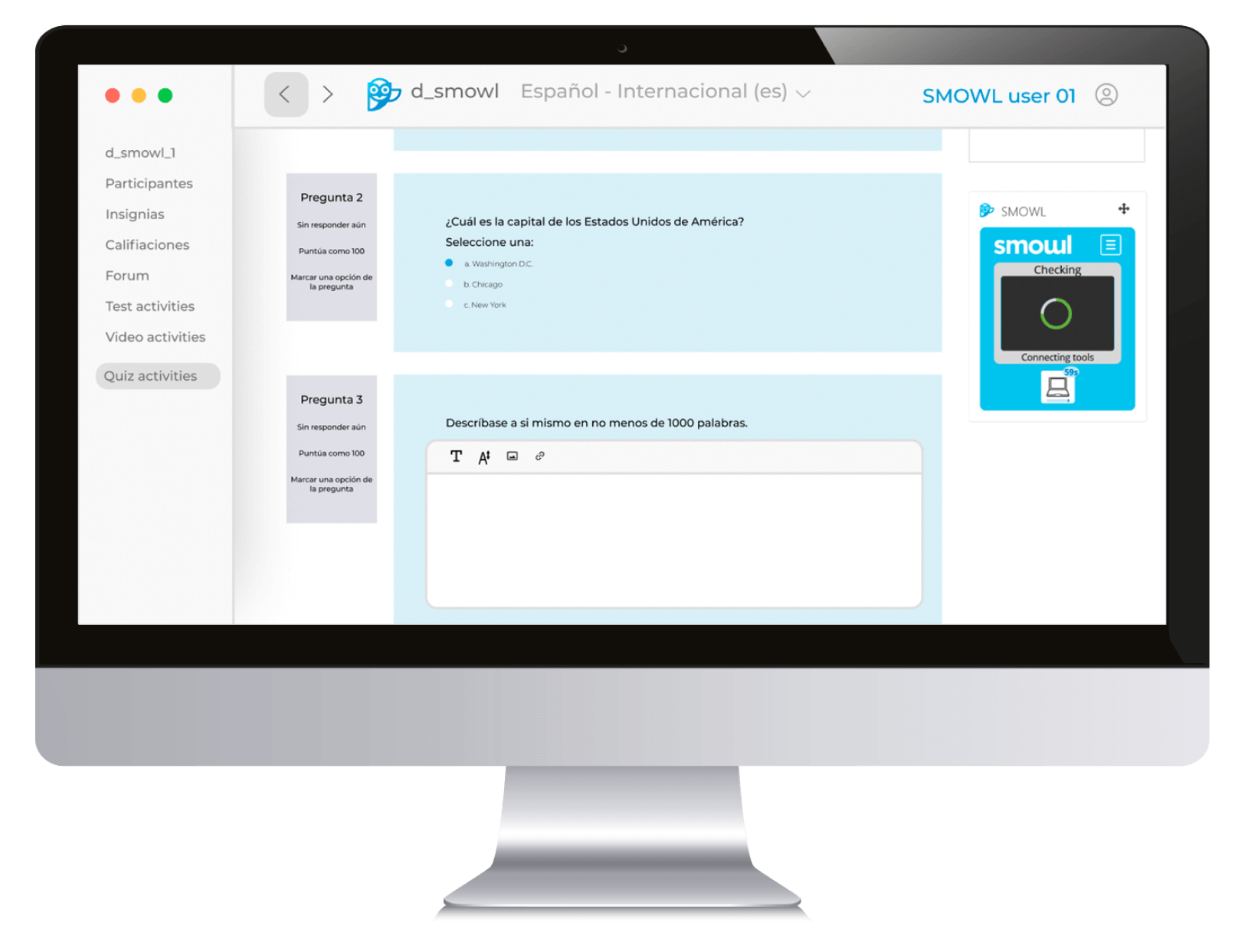
At Smowltech, we are well aware of the challenges that implementing educational technology trends can pose. To help you with this adaptation, we have developed proctoring plans that incorporate the latest trends.
They help you, for example, to reflect the student’s actual progress with behavior reports that make it easier for you to interpret their results, and allow you to ensure academic integrity and fairness in digital and hybrid environments.
If you would like to see for yourself, we invite you to request a free demo.
To go further in educational technology trends
You can continue to explore educational technology trends with these resources we have compiled for you:
- Artificial Intelligence and the Future of Teaching and Learning. Official report from the U.S. Department of Education that analyzes the integration of artificial intelligence and proposes best practices in educational environments.
- Virtual Reality Utilization in History Education: Discovery Through a Systematic Quantitative Literature Review (Bonsu, N. O. et al., 2025) Academic article from the University of Arizona that analyzes emerging trends, pedagogical innovation, and practical Edtech applications.
- An Empirical Study on Immersive Technology in Synchronous Hybrid Learning in Design Education (Tris Kee et al., 2024). A study that evaluates immersive technology in hybrid environments, providing evidence on the impact of EdTech.