Educational quality is the set of conditions, processes, and outcomes that guarantee meaningful, inclusive, and equitable learning for all students.
Its purpose is to equip individuals with key competencies—cognitive, emotional, and social—so they can thrive in life, reduce inequalities, and participate in sustainable development. All of this aligns with the frameworks of UNESCO, the SDGs, and the European Commission.
Throughout the following lines, you will discover the meaning of educational quality, the objectives it pursues, its main challenges, and its importance for our future.

What is educational quality?
Educational quality is a multidimensional concept that encompasses system inputs (available academic resources, infrastructure, and teaching staff), teaching and learning processes, and the real, measurable impact on students’ cognitive, emotional, and social development.
Thus, beyond ensuring the acquisition of relevant and contextualized knowledge, this comprehensive pedagogical strategy seeks to develop the skills necessary for students to thrive throughout their educational journeys and contribute to the sustainable development of society.
Educational quality according to UNESCO
For UNESCO, educational quality must be understood as quality learning built upon inclusive and equitable learning environments, relevant curricula, well-trained teachers, and evidence-based assessment to meet the real needs of students.
This approach goes far beyond theory. UNESCO works to improve learning quality by supporting Member States in designing curricula, pedagogical approaches, and evaluation practices aimed at achieving the targets set by SDG 4.
The SDGs are Sustainable Development Goals outlined in the 2030 global agenda, where quality education plays a central role as a driver of social, economic, and environmental transformation.
What does educational quality look like? 5 principles of quality
The 5 key principles of educational quality are effectiveness, efficiency, equity, impact, and relevance. These factors are essential to prevent an educational system from leaving behind those who start from a disadvantaged situation, even if it achieves good average results.
For this reason, international organizations that analyze educational systems evaluate them across several dimensions that sustain an optimal ecosystem to guarantee students’ rights.
Effectiveness
Effectiveness is measured by the degree to which learning objectives are achieved. In other words, it focuses on analyzing whether the system is succeeding in getting students to learn what they should learn.
According to data from the Global Education Monitoring Report, only 58% of students reach the minimum proficiency level in reading and 44% in mathematics by the end of primary school.
Evidence is key to monitoring whether teaching actually works.
Efficiency
Efficiency is the optimal use of resources or, put another way, the ratio between the outcomes achieved and the resources deployed to attain them.
This is what the European Commission targets when advocating for efficient and sustainable investment in education and training to improve learning strategies.
In many instances, as concluded by the analysis of the Valencian Institute of Economic Research (Ivie) regarding Spain’s Autonomous Communities, having a larger volume of resources and spending does not guarantee high performance. What matters most is how resources are utilized and what best classroom practices are implemented.

Equity
Equity ensures that all students can achieve strong learning outcomes regardless of their socioeconomic background, gender, or geographic location.
In an equitable education system, all students can reach the established goals and develop their full potential, including those coming from disadvantaged backgrounds.
The goal is that no one is left behind, which includes bridging the gender gap. In certain fields of study such as engineering, manufacturing, and construction, women still represent barely a quarter of enrollment, and the gap is even wider in ICT.
Thus, it is imperative for quality education to build inclusive classrooms as safe and equitable learning environments to combat inequality from an early age.
Impact
Impact translates into positive medium- and long-term effects on individuals and society. Quality education prepares citizens to thrive, strengthens social cohesion, and supports economic resilience.
So much so that the European Commission establishes a direct link between quality education and economic resilience and national prosperity. Indeed, organizations like Educo highlight educational quality as a pathway to break out of poverty and expand opportunities. This project focuses not only on curricular content but also on student well-being (including nutrition) and the active role families must play.
Relevance
Relevance is the design of meaningful, contextualized curricula suited to students’ needs and realities. According to this fifth principle of quality education, a relevant curriculum creates meaningful learning.
UNESCO considers relevance an essential element of educational quality whenever curricula are contextualized and taught by well-qualified teachers using active, interactive, and student-centered approaches.
To ensure curricula respond to the demands of a constantly changing society and labor market, they must be regularly reviewed to incorporate scientific and technological advancements.
Ultimately, relevant content is effective when it teaches students how to think, collaborate, and solve problems.
These five dimensions explain how quality education is recognized, but none gain full meaning without answering a fundamental question: what is the purpose of all this effort?
What is the purpose of educational quality?
The purpose of quality in education is to ensure that all students without exception can develop key competencies necessary to thrive in life, reduce inequalities, and contribute to building a more just, sustainable, and prosperous society.
As seen above, Sustainable Development Goal SDG 4 establishes that education must be inclusive, equitable, and of high quality for all—a framework reinforced by organizations such as UNESCO, the World Bank, and UNICEF, which coordinate efforts to make this a reality.
Within the European framework, the European Pillar of Social Rights recognizes everyone’s right to quality, inclusive education, training, and lifelong learning. This principle translates into European initiatives such as Pathways to School Success, Erasmus+ programs, and European micro-credentials.
Do you want to stay on top of the latest trends in eLearning, EdTech, and Human Resources?
Fill out the form to receive our weekly newsletter with industry insights from our experts.
The dual function of educational quality
To better understand the purpose of educational quality, it is essential to look at its dual function:
- Individual level: enables each person to access the knowledge, skills, and attitudes required to build their life project.
- Collective level: forms informed, critical citizens capable of participating in and sustaining democratic societies. Quality education is a human right that, beyond unlocking career opportunities, must promote equity, gender equality, and social cohesion.
Ultimately, the purpose of educational quality must focus on breaking systemic cycles of disadvantage, serving as a tool for protection, social mobility, and transformation.
Why is quality education important?
The importance of educational quality lies in how it shapes individuals’ future opportunities, enhances health and well-being, drives social cohesion and economic resilience, and reduces performance gaps shown in PISA (the Program for International Student Assessment).
However, to grasp its significance fully, one must examine the magnitude of the crisis education seeks to address. Below are 3 key issues that demand urgent attention.
Stagnant access and learning poverty
A core premise to clarify is that being in a classroom does not equal learning. We face two main challenges: school enrollment progress has stalled, and instruction is failing at basic levels:
- 251 million children and youth remain out of school, according to UNESCO data—a number that has barely dropped over the past decade.
- 70% of 10-year-olds in low- and middle-income countries cannot read or understand a simple text, according to World Bank data.
It is worth noting that learning loss is not confined to fragile nations. According to recent PISA data, the percentages of European Union students falling below Level 2 (the OECD’s minimum baseline proficiency) stand at: 29.5% in mathematics, 26.2% in reading, and 24.2% in science.
Geographic and socioeconomic gaps
Universal educational quality loses its meaning if access depends on location or family income. Inequality becomes evident when examining detailed metrics:
- Regional inequality. In Spain, only 10.6% of students achieve top performance levels—roughly 3 percentage points below the OECD average, with significant disparities between autonomous communities. This was highlighted in the monograph by the Valencian Institute of Economic Research (Ivie).
- Socioeconomic gap. Regional evaluations in Latin America and the Caribbean reveal deep disparities linked to students’ socioeconomic backgrounds, as documented in studies such as the Comparative and Explanatory Regional Study (ERCE 2019).
- Crisis and war zones. In contexts like the war in Ukraine, maintaining schooling becomes nearly an act of educational survival.
Faced with these figures, the primary challenge in achieving universal educational quality is ensuring that rural areas and disadvantaged environments no longer automatically correlate with lower performance and fewer opportunities.
Deficits in learning conditions
The major hurdle for education is activating all key levers simultaneously. A school placement is of little use without well-trained teachers, good infrastructure, or when children lack basic daily needs.
Given this reality, 3 essential areas of action must be addressed:
- Physical and emotional student well-being. Mental health and proper nutrition form the foundation of learning. Initiatives like Educo Dining Grants or UNESCO’s Happy Schools initiative show that well-being is vital for effective learning.
- Family involvement. The home environment strongly influences student learning. Therefore, engaging families as active members of the educational community and supporting vulnerable households through targeted aid is essential.
- Access to technology. Beyond distributing devices, ensuring connectivity and digital literacy is essential so technology acts as a tool for inclusion rather than another source of inequality.

The risks of low-quality education
The lack of quality education widens learning gaps, increases early school dropout rates, reduces employability, and perpetuates social inequality, as highlighted by reports from UNESCO, the OECD, and the European Commission.
When instruction falls short, consequences follow into adulthood. For instance, a student who fails to master literacy, basic math, or critical thinking will encounter major hurdles later in life:
- Educational: barriers to pursuing further education and training.
- Employment: struggles to secure decent jobs in a knowledge-based economy.
- Social: challenges in fully engaging as active, informed citizens.
Consider this statistic: according to UNESCO, 739 million youth and adults lack basic literacy skills. This deficit severely limits individual potential and slows community development. Therefore, ensuring educational quality is an absolute prerequisite for meaningful progress.
How can we improve educational quality?
Improving educational quality requires sustainable funding, qualified educators, modernized curricula leveraging technology strategically, and active family involvement.
Public policies must also align with frameworks established by the European Commission and the European Education Area.
Key strategies for improving education in vulnerable environments
In vulnerable settings, these factors are even more critical. Beyond structural needs, challenges like poverty, unequal resource access, and limited family support require targeted economic, pedagogical, and social interventions.
3 examples illustrating improvements in educational quality
The following examples of educational quality improvement show that initiatives must simultaneously address teacher training, equity, and policy design to drive meaningful change:
- Estonia: a leader in equity and purposeful technology integration. Estonia ranked highest among European nations in PISA 2022 (first in science, second in reading and math). The key to its digital model lies in aligning technology with pedagogical goals while granting teachers significant autonomy.
- Canada (Ontario): focused on inclusion by dismantling systemic barriers for immigrant students, low-income families, and students with special needs. It boosted overall performance through strong family engagement.
- Portugal: after spending two decades below the OECD average, Portugal surpassed it while dropping early school leaving rates from 44% to just over 12%. This progress resulted from joint efforts between schools and families in disadvantaged communities.
How is educational quality measured?
Educational quality is measured by combining 3 key dimensions:
- Inputs: refers to invested resources such as funding, infrastructure, and student-to-teacher ratios.
- Processes: encompasses teaching strategies, instructional methods, and effective learning time.
- Learning outcomes: evaluates students’ actual achievement using standardized metrics, such as minimum proficiency rates in reading and math.
No single assessment is sufficient on its own. Standardized tests should be complemented by holistic evaluation methods, such as educational portfolios, to capture overall progress.
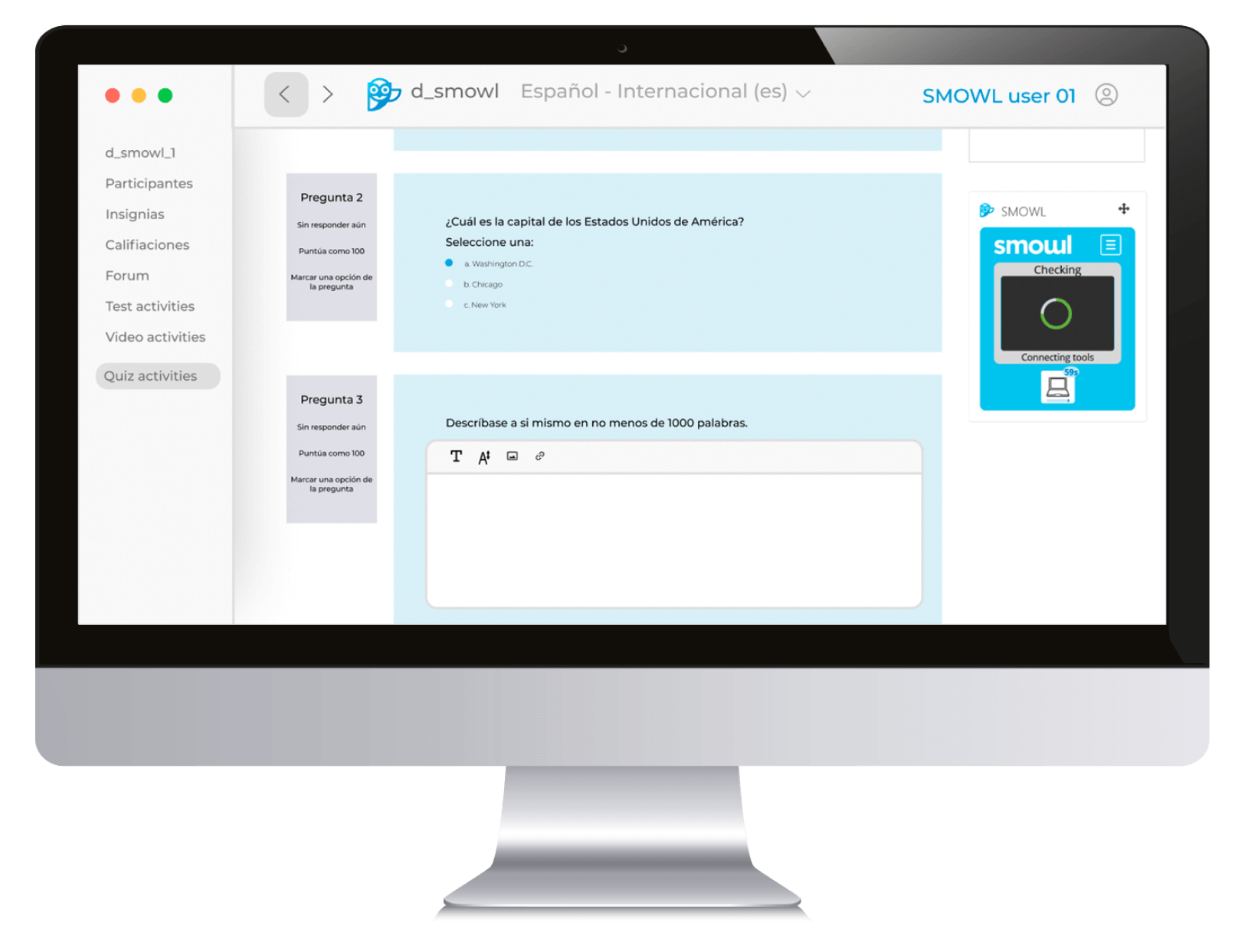
In any case, reliable evaluation depends on trust in outcomes—and that is where proctoring delivers value. When tests are administered online, ensuring assessment integrity that reflects genuine student knowledge is vital. However, proctoring must never compromise student privacy and accessibility.
With this principle in mind, Smowltech has leveraged over a decade of expertise to enhance the quality of online assessments by building secure, non-invasive environments that generate solid learning evidence. Our proctoring plans adapt to each project, delivering respectful innovation that promotes equity, security, and accessibility.
Experience how we can help your institution firsthand by requesting a free demo.
Resource for further reading on educational quality
For a closer look at educational quality and how student performance is measured, explore the following OECD resource:
- Reading Performance (PISA). Interactive indicator by the OECD allowing comparison of reading literacy data among 15-year-old students.