Artificial Intelligence (AI) hasn’t arrived in universities like a polite guest waiting at the door; it has burst in, tearing down walls and rearranging the furniture. Since the emergence of Large Language Models (LLMs), the education sector has been living in a state of awe—and, in many cases, paralysis.
However, paralysis is not an option. We are facing what many experts call a “calculator moment,” but multiplied by a thousand. If the calculator changed mathematics and Google changed documentary research, generative AI is changing the very nature of human thought and content creation.
In this extensive analysis, we break down the four fundamental pillars that will determine whether your institution is leading the change or simply trying to weather the storm.
DOWNLOAD THE ‘AI Readiness Assessment’ CHECKLIST
1. Institutional policies: the governance framework
The foundation of any solid institution is its regulations. Without a clear legal and ethical framework, faculty act out of fear and students act out of opportunism. AI governance is not an annex to the rulebook; it is a new way of understanding educational sovereignty.
Official policy: from static PDF to living document
Does your institution have an official policy? Many universities have made the mistake of issuing a brief statement saying, “ethical use is permitted.” But what exactly is “ethical”?
A robust policy must define:
- Levels of use: From “prohibited use” in certification exams to “mandatory use” in innovation-focused subjects.
- Transparency: The student’s obligation to declare which tools they used and how they used them.
- Authorship: Who is the author of a co-created text? This is a legal challenge that universities must lead.
Departmental communication: avoiding “silos”
It is common to see Engineering departments embracing AI while Humanities departments strictly ban it. A prepared university ensures that policy is cross-functional. Communication must be clear so that a student doesn’t feel confused when moving from one classroom to another. Institutional consistency is the first step toward equity.
Update protocol: “Moore’s Law” applied to regulations
If your AI policy was written six months ago and hasn’t been reviewed, it is likely already obsolete. AI models advance at an exponential rate. Leading institutions establish quarterly reviews to analyze new capabilities (multimodality, autonomous agents, real-time voice) and adjust the regulatory framework immediately.
Academic integrity and the new concept of “fraud”
Historically, fraud meant plagiarism (copying another human). Today, the challenge is “machine plagiarism.” Academic integrity regulations must be explicit in this regard:
- Is it fraud to ask an AI to structure an outline?
- Is it fraud to ask it to translate one’s own text? Defining these boundaries protects both the instructor and the student.
The AI lead: the academic “Chief AI Officer”
AI cannot be a side project for the IT manager. It requires a multidisciplinary committee including experts in pedagogy, law, ethics, and technology. This committee is responsible for ensuring that implementation is not just technical, but profoundly human.
Faculty training: from apprehension to mastery
A university’s greatest asset is its faculty. If instructors feel threatened or overwhelmed by technology, the institution will fail regardless of how many software licenses it purchases.
The detection myth
Spending thousands of dollars on AI-text detectors is usually a losing battle. Detectors have a high rate of false positives and are easily bypassed by advanced prompting techniques or simple paraphrasing tools. Training should focus on helping faculty understand that detection is a support tool, not irrefutable proof. In this context, true detection is based on the professor’s deep knowledge of their student’s progress.
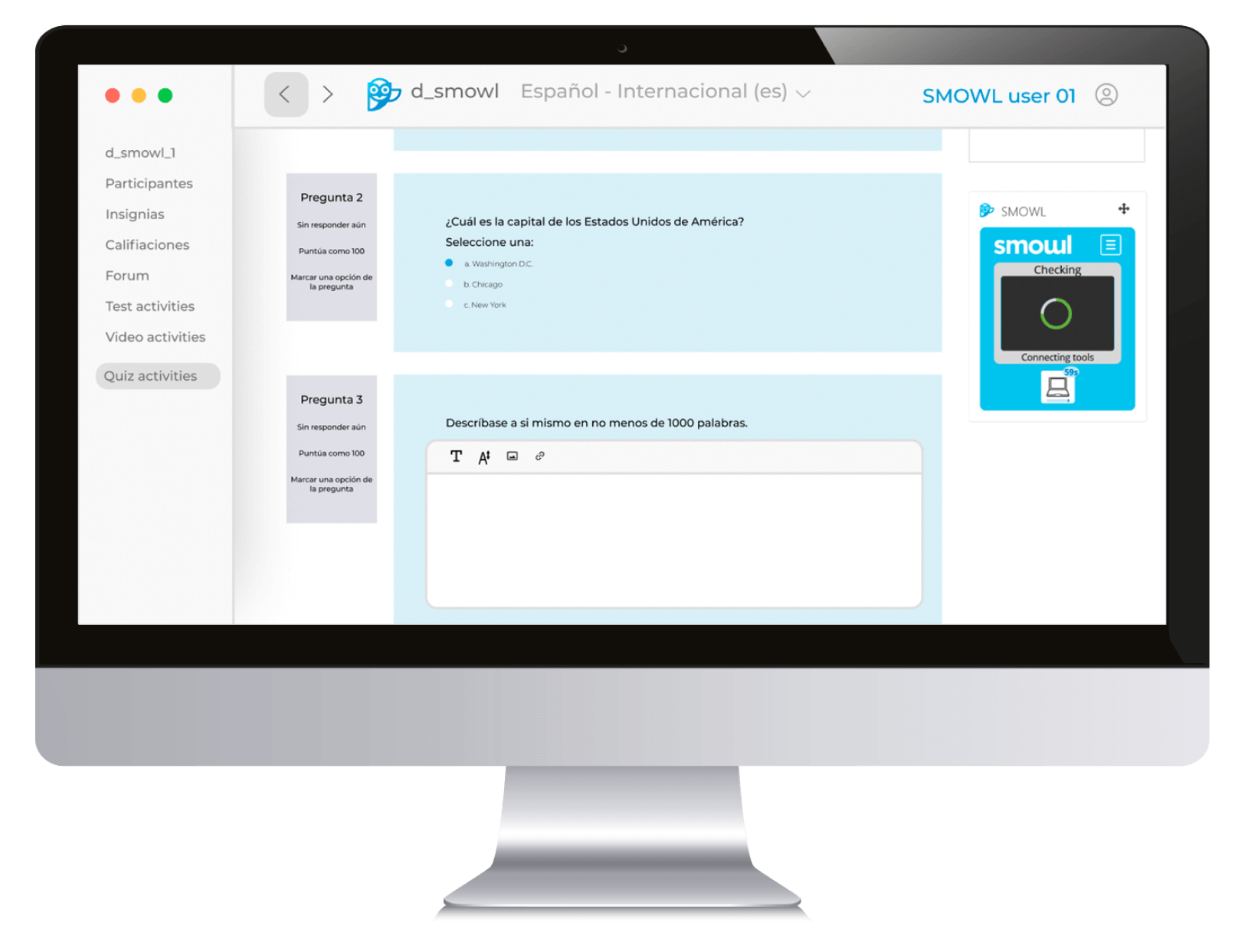
Note: AI detectors (designed to identify text generated by AI) should not be confused with proctoring solutions used to monitor digital exams. Unlike AI detectors, proctoring tools do not analyze written content; instead, they track user activity to detect the use of AI chatbots on a computer and identify external AI-assisted devices through webcam or audio monitoring.
Redesigning assessment methods
This is the most critical point. Faculty need training to shift from evaluating the “what” to the “how.”
- Process evaluation: Grading drafts, intermediate reflections, and edit histories.
- Dialogic evaluation: Reclaiming the value of the spoken word and in-person defense.
Sharing spaces: communities of practice
Learning to use AI in teaching is experimental. A leading university creates virtual coffee spaces or “show and tell” sessions where a medicine professor, for example, explains how they use AI to simulate clinical cases, inspiring a law professor to use it for simulated trials.

Legal framework, privacy, and data
In their eagerness to innovate, many instructors upload confidential student data or unpublished exams to free models without knowing they are feeding external databases. Training in data protection (GDPR/FERPA) is an administrative urgency. Faculty must know which tools are “secure” and which represent a risk to the university’s intellectual property.
Continuous training plan
AI training cannot be a “one-off summer workshop.” It must be a continuous learning roadmap, ranging from basic levels (what is an LLM) to advanced levels (fine-tuning or creating custom GPTs for a specific course).
Assessment design: safeguarding quality
If assessment fails, the university degree loses its market value. The university must guarantee that graduates truly possess the competencies the degree certifies.
Encouraging critical thinking
AI is excellent at generating “average” answers. Therefore, assessment must move away from the average. Don’t ask for a summary of the French Revolution; ask for a comparison between the rhetoric of a current tweet and a Robespierre speech, analyzing historical biases. This forces the student to use AI as a tool, but the critical judgment remains theirs.
Digital supervision (proctoring) and in-person attendance
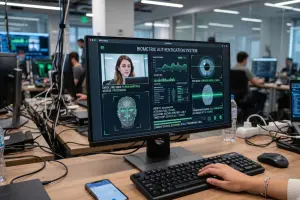
In a digital world, student authentication is key. Using proctoring tools that respect privacy while ensuring integrity in digital exams is a necessary investment. However, this must be balanced with a return to strategic in-person testing (or the use of live proctoring, which successfully replicates the strict conditions and rigor of an in-person environment—for high-stakes assessments.
Diversifying formats: Bloom’s Taxonomy revisited
Bloom’s pyramid has been inverted. “Remembering” and “Understanding” (the base) are now handled by AI. The university must evaluate “Creating,” “Evaluating,” and “Analyzing.”
- Suggested formats: Podcasts, debates, digital portfolios, service-learning projects, and real-time complex problem-solving.
Rubrics for co-creation
If you allow the use of AI, how do you grade it? You need rubrics that evaluate:
- The quality of the initial prompt.
- The ability to edit and correct the AI output.
- The integration of verified external sources. Evaluating the interaction process with AI is the new professional competency.
Assessment audits
Universities must audit their own exams by “running” them through GPT-4o or Claude 3.5. If the AI earns an ‘A’ without human help, that test must be redesigned immediately. It is a process of continuous improvement.

Student relations and communication: toward a new social contract
Students are AI natives, but they are not necessarily “AI literate.” There is a massive difference between knowing how to use a chat interface and understanding the implications of what that chat generates.
Algorithmic transparency
If the university uses AI to grade, filter admissions, or recommend academic paths, the student has a right to know. Transparency builds trust. A prepared university explains how its algorithms affect the student’s academic life.
The ethics channel
There should be a place where students can ask: “If I use this AI to translate my bibliography, am I cheating?” or “Can I use AI to format my citations according to APA guidelines?” Fear of unfair punishment creates defensive students. An open consultation channel encourages honesty.
The integrity pledge (honor code)
Ethics are not imposed; they are agreed upon. Having students sign an updated honor code at the start of each semester, committing to the responsible use of AI, has a proven psychological impact on reducing academic fraud.
AI literacy
Universities don’t just teach careers; they form citizens. A 21st-century citizen must understand AI biases, hallucinations (false data), and the ecological impact of these models. AI literacy should be a cross-functional subject in all degree programs.
Student defense protocol
What happens if a professor accuses a student of using AI based only on intuition or an unreliable detector? The university must guarantee the presumption of innocence. A fair defense protocol, where the student can demonstrate their creative process (version history, bibliography, oral interview), is essential to avoid injustice.
Conclusion: the future belongs to the prepared
AI is not going to replace universities, but universities that ignore AI will be replaced by institutions that are more agile, transparent, and connected to technological reality.
Preparing an institution for this era is not an expense; it is an investment in its own survival and relevance. The prestige of your credentials depends on the strength of your response to this challenge.
Do you want the full diagnostic for your leadership team?
Don’t stop at just reading. We have prepared a practical tool so you can present this data at your next department or board meeting. Download the professional version of the University AI Readiness Checklist now. It includes a detailed scoring guide, examples of best practices, and a roadmap for implementing each section.
Secure the future of your institution. Transformation begins with an honest question.