Education has undergone an unprecedented metamorphosis in the last decade. What once seemed like a technological utopia or a resource exclusively for exceptional cases is now the standard that defines how we learn, how we teach, and how we certify knowledge.
But what does it really mean to transform education when the classroom is no longer the only possible location? How do we move from simply “using technology” to implementing a digital education with purpose?
In one of the episodes of the Smowltech podcast, we had the pleasure of speaking with Francisco Ñato, an expert in e-learning and educational transformation at Seidor, with more than 10 years of experience supporting institutions across Latin America.
During our conversation, we explored everything from the lessons the pandemic left us with to artificial intelligence trends and the vital importance of academic integrity through proctoring.
Below, we break down the deepest reflections from this interview and analyze how the education sector is moving from challenge to infinite possibility.

The end of conservatism: the mandatory leap toward digitalization
To understand where we are today, it is essential to look in the rearview mirror and analyze the context prior to the global health crisis. Historically, the education sector—particularly in regions like Latin America—has been deeply conservative.
The traditional paradigm of the professor in front of the chalkboard, imparting knowledge to a group of students seated at their desks, seemed unshakeable.
Francisco shared a highly revealing anecdote about what it was like selling educational technology before 2020:
“Before the pandemic, when we offered technology, many higher education institutions would tell us: ‘Your product is interesting, very innovative, but not for now. We are conservative.’ Then the pandemic hit, and they were knocking on our door saying: ‘We need this technology; we cannot stop operations’.”
This rupture was brutal but necessary. Institutions had to put aside their fears and prejudices about remote work and distance education. The myth that “the student doesn’t learn unless they are in the classroom” or that “the professor doesn’t work unless they are on campus” collapsed under the force of necessity.
The greatest lesson from this stage was not simply learning to use video conferencing platforms, but losing the fear of technology.
Institutions, which often adopted a paternalistic stance fearing their students would not have the resources or ability to adapt, discovered that human beings are extraordinarily resourceful.
We saw students connecting from their mobile phones in rural areas or sharing internet connections so they wouldn’t miss their classes. The will to learn far surpassed the initial barriers.
Do you want to stay on top of the latest trends in eLearning, EdTech, and Human Resources?
Fill out the form to receive our weekly newsletter with industry insights from our experts.
It’s not about replicating the physical classroom: the true digital mindset
One of the most common mistakes during the first months of forced digitalization was the attempt to “copy and paste” the in-person experience into the virtual environment.
Institutions wanted online classes to last the exact same number of hours, for students to sit in front of the camera in the same way, and for exams to be controlled using the same physical logic.
Francisco explained how this approach generated technological friction and frustration:
“We saw that the mindset was to replicate the in-person and send it to the virtual. For exams, they would say: ‘Prohibit everything, block the screen, they can’t do anything.’ But this required heavy installations and superior internet connections, which created obstacles.”
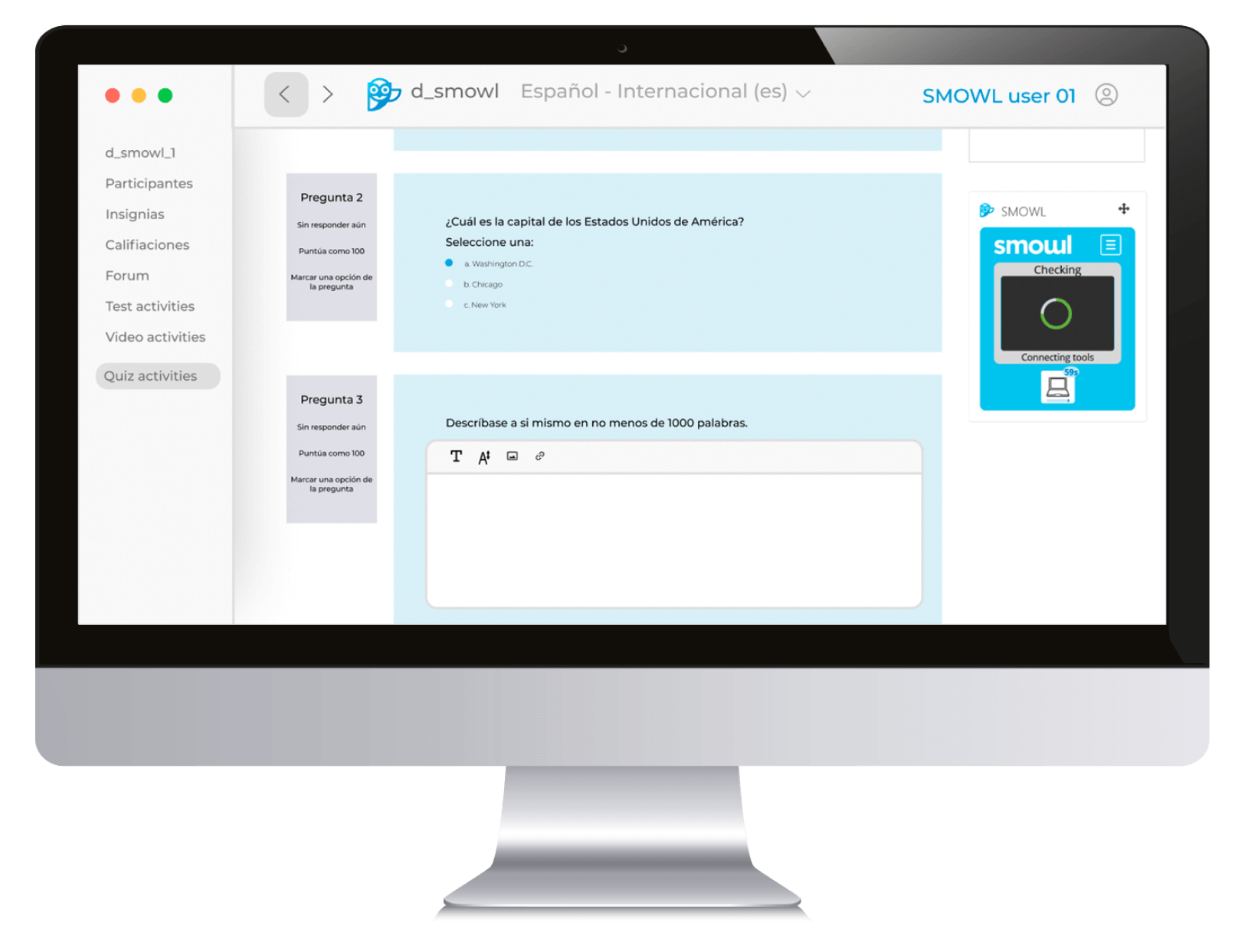
This is where solutions like SMOWL’s made a difference. The revelation for many universities was understanding that the exact same pedagogical and evaluation objective can be met, but by using paths natively designed for the digital environment.
A lightweight proctoring system, which does not require massive bandwidth or intrusive blockages that paralyze the student’s computer, proved that technology is not there to complicate life, but to facilitate the achievement of objectives efficiently and amicably.
Flexibility, hybrid models, and the rise of ‘Lifelong Learning’
Today, having overcome the emergency, e-learning is no longer a contingency measure but a market requirement. Students have changed. The person enrolling in a postgraduate degree or continuous training course is often a working professional who has family responsibilities and values their time above all else.
Before, a student would leave work exhausted, drive during rush hour to the university, attend classes late into the night, and return home worn out. Today, technology allows that same student to start listening to their class on the way home and finish it comfortably in their living room.
This flexibility has driven two major phenomena in modern education:
- Hybrid and HyFlex models: The student holds the power of decision. One day they may decide to attend the physical campus for networking and a practical workshop, and the next day they can connect from home for a theoretical class. It is no longer an imposition by the university, but an experience adapted to the user.
- Lifelong Learning: Traditional 5- or 6-year careers are no longer the only path. In a world where technology advances at a dizzying pace (and problems mutate just as quickly), professionals need continuous training. Micro-credentials and short online courses allow people to update their technical skills without having to pause their professional careers.
<h2>Academic integrity: why students love proctoring
One of the most fascinating points of our conversation with Francisco Ñato revolved around evaluation and the integrity of academic degrees. When we talk about implementing surveillance systems or proctoring during online exams, the initial reaction is often rejection due to privacy concerns. This is a valid and necessary debate from a legal and ethical standpoint.
However, the reality in practice has shown a surprising twist: students themselves are the biggest advocates for proctoring.
In Latin America, and much of the world, academic and labor competitiveness is fierce. A student who spends weeks studying, sacrificing their weekends to earn a score of 18 out of 20, feels deep frustration if they see a classmate, using cheating in an unsupervised virtual environment, obtain a 20 effortlessly.
Francisco summarized it with a brilliant anecdote:
“The curious thing is when they realized that the students themselves were grateful for being monitored. By implementing this type of technology, everything leveled out based on each student’s effort. They are thankful because they say: ‘I can leave this institution with pride, knowing that all of us who have this degree complied with good practices and did not commit any misconduct’.”
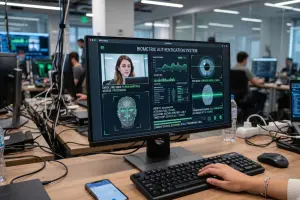
Non-intrusive proctoring tools like SMOWL not only prevent fraud but re-evaluate the university degree. They create an ecosystem of trust based on three pillars:
- The student, who feels their effort is validated and competes on equal terms.
- The instructor, who has the peace of mind that their evaluations measure real competencies.
- The institution, which protects its prestige in the job market by guaranteeing that its graduates truly possess the skills certified by their diploma.
The role of the instructor: from resistance to digital evangelization
We cannot discuss educational transformation without putting instructors at the center. They have been the warriors on the front lines of this monumental change. Initially, frustration was palpable. Professors with decades of experience, who perfectly dominated the physical classroom setting, felt disarmed in front of a screen full of turned-off cameras and muted microphones.
Pedagogical support in any digital transformation project is non-negotiable. It is not enough to buy software licenses and hand out usernames and passwords. As Francisco rightly points out, the technological need originates in the academic area, and technology must be the support that understands and solves that need.
By providing constant training not only in the use of tools but also in methodologies for making virtual classes dynamic, magic happens. The most critical profiles—those initial “haters” who resisted change—end up becoming the biggest sponsors or ambassadors of e-learning within the institution.
When a professor discovers they can automate test correction, use interactive tools for their students to participate more than in the physical classroom, and optimize their time, resistance disappears and gives way to constant innovation.
Looking to the future: Artificial Intelligence, avatars, and the digital divide
To close the interview, we asked Francisco to bring out his crystal ball and tell us which trends will dominate the educational landscape over the next 5 to 10 years. His answers charted a clear map between hyper-innovation and social responsibility.
The era of Artificial Intelligence and automation
Artificial intelligence has just begun to show its potential. In the coming years, we will see an explosion of hyper-personalized virtual tutors. Imagine a learning ecosystem where the university has its own AI agent, trained exclusively on the content of its subjects, capable of precisely resolving student doubts at 3 a.m.
Furthermore, content format is mutating. New generations (and not-so-new ones) consume information in short, dynamic formats, à la TikTok. Institutions are already exploring the creation of AI-generated avatars for instructors.
If a professor struggles to record themselves in front of a camera, they will soon be able to simply draft the pedagogical script, and a virtual avatar will deliver the lesson in a highly dynamic and attractive video, speaking the visual language that today’s students demand.
Data analysis to prevent dropout
Another major technological trend will be the predictive use of data to humanize support. Platforms will know if a student is falling behind, if they have stopped submitting assignments, or if they are not connecting.
Automatically, but with a warm and human tone (far from the classic robotic bot), the system will contact the student via WhatsApp or email to ask: “We have noticed that you are not attending. How can we help you so that you don’t lose your time and money investment?
The great pending challenge: closing the digital divide
Technology advances, but we cannot leave anyone behind. Francisco brought up a vital issue that we often forget in the euphoria of innovation: the digital and social divide.
Digitalization proved to be wonderful for those who have fiber optic internet at home, but it exposed the structural deficiencies in rural or low-income areas in Latin America and the world. Universities and governmental institutions looking toward 2030 have the ethical duty to create inclusive infrastructures, offline programs, and technological solutions.
If another global crisis, or even a major technological blackout, hits us in the future, the education system must be prepared to guarantee that learning reaches everyone equally, mitigating inequality instead of amplifying it.
Technology as a means, learning as an end
The conversation with Francisco leaves us with a crystal-clear conclusion: technology in education is no longer an end in itself but the most powerful vehicle for achieving a purpose.
Whether it’s integrating agile payment gateways, using Artificial Intelligence to personalize study, or implementing proctoring systems like Smowltech to shield confidence in academic degrees, everything must revolve around improving the human learning experience.
The education of the future is flexible, continuous, secure, and above all, it must be accessible. The tools are already here; the limit now is solely our capacity to imagine and build classrooms without borders.