Far from being a modern problem, academic dishonesty has accompanied education since its earliest days. However, the rise of technology, and especially artificial intelligence, is raising concerns throughout the education sector.
Generative AI, capable of instantly answering exam questions and drafting full-length essays, has completely transformed the academic landscape. As we’ll see throughout this article, academic fraud has consequences that extend far beyond the financial sphere.
To address academic dishonesty in the digital era, educational institutions around the world are seeking effective solutions to a problem that, if left unchecked, could lead to serious economic, reputational, and even legal repercussions.
In this article, we’ll explore in detail what academic dishonesty is, the different types that exist, and the consequences of failing to address it. We’ll also review recent examples involving artificial intelligence.
In addition, we’ll discuss how to prevent cheating in digital exams and the crucial role of proctoring in maintaining academic integrity.

What is academic dishonesty?
In general terms, academic dishonesty (also referred to as academic fraud and academic misconduct) refers to unethical practices within an educational setting. These fraudulent behaviors — designed to pass exams, complete coursework, or produce final projects and even doctoral theses — harm both students and institutions.
First, because students fail to acquire the knowledge expected from their programs, and second, because academic fraud undermines the credibility of universities and educational institutions, diminishing the value of their credentials.
Academic fraud throughout History
Dishonesty has existed since the inception of academia, often motivated by the desire for higher grades or greater prestige.
History is full of examples of deceit, from the Piltdown Man, one of the greatest frauds in paleoanthropology, to the recent case involving a U.S. nuclear missile proficiency exam in which 34 officers were suspended after receiving correct answers via text messages.
In 2020, the Spanish newspaper ABC reported that more than 2,000 scientific papers had been retracted over the past fifty years after being deemed fraudulent by the scientific community. The report highlights the urgent need for mechanisms to detect fraud before it occurs.
With the advent of new technologies, academic fraud has multiplied — especially with the emergence of artificial intelligence and chatbots such as ChatGPT, Perplexity, Copilot, and Gemini, which can instantly generate answers or write academic texts.
As noted by Himendra Ballalle and Sachini Pannilage in their study published in ScienceDirect, “Artificial intelligence poses a risk to the educational ecosystem in terms of maintaining academic integrity.” While AI has revolutionized education, its potential for misuse must be addressed.
Types of academic dishonesty
Academic fraud encompasses a wide range of dishonest practices — from plagiarism to identity theft, document falsification, data fabrication, and purchase of academic work. Let’s take a closer look at each one.
Forgery
In education, forgery refers to falsifying or creating fake diplomas, degrees, or certificates to gain access to academic programs or jobs. This practice is not only common but a service that is easily available online, which is why verifying academic credentials has become crucial — a process increasingly aided by blockchain technology.
Plagiarism
According to the 1995 Random House Compact Unabridged Dictionary, plagiarism is “the use or close imitation of the language and thoughts of another author and the representation of them as one’s own original work.”
Artificial intelligence has reignited debates around intellectual property, as chatbots can easily rephrase existing texts to bypass originality detectors, allowing users to present another author’s ideas as their own.
Impersonation
In education, it refers to the form of cheating where someone impersonates a student to take an exam on their behalf. While this practice has always existed, it has become more common with the rise of remote testing.
To commit this type of fraud in in-person exams, students would need to find someone with similar physical features to take the test on their behalf.
However, without a user authentication system, online exams provide the perfect environment for impersonating a student to help them achieve a passing grade.
Purchase of academic work
The purchase of undergraduate theses, master’s dissertations, and other academic papers has become a booming business.
A simple online search reveals dozens of websites offering to sell ready-made academic works that students can submit as their own.
While purchasing such materials is not illegal, presenting them as one’s own can result in severe disciplinary actions, including revocation of degrees.
Data fabrication
This type of academic fraud refers to the falsification of data, results, and/or citations in order to support an argument or to falsify the outcomes of a research project.

Cheating in exams
In general terms, “cheating” refers to replicating information obtained through unauthorized means in order to pass an exam. This type of academic fraud includes, but is not limited to, tactics such as consulting notes or reference materials, or looking at another student’s answers to replicate them.
As technology advances, the opportunities to obtain exam answers discreetly have multiplied. In addition to its many benefits for the education sector, artificial intelligence has provided students with tools to access immediate, and in many cases, correct answers.
While paper-based exams are typically supervised in person, technological advances present new challenges for institutions that administer digital exams, whether in a classroom or remotely.
Unfortunately for institutions, cheating is not only possible through chatbots. Recent innovations, such as the development of AI-enabled glasses, further highlight the need to adopt effective proctoring solutions.

The cost of cheating for educational institutions
Cheating, like all other forms of academic dishonesty, carries a cost that goes beyond the financial impact for academic centers and universities. Let’s examine its consequences:
Economic costs
Cheating on exams carries an economic cost for educational institutions for the following reasons:
- Misused resources: Resources allocated to appointing academic staff, developing instructional materials, managing educational platforms, etc., become ineffective when students choose the path of academic fraud.
- Decline in enrollment: A widespread association of an institution with academic dishonesty can devalue its degrees, which may lead students to enroll elsewhere. Additionally, by failing to acquire the expected competencies, students who cheat may not succeed in subsequent courses. This could result in an increased dropout rate.
- Marketing and advertising expenses: Institutions where cheating is possible may see their reputation and enrollments affected, as noted above. This may require greater investment in marketing and advertising to recover.
- Fewer donations: Institutions that fail to address academic fraud may lose access to critical donations needed for their operation.
- Loss of research funding: A university that does not address academic misconduct could lose support from institutions, organizations, and companies that finance its research projects.
- Fraud investigation costs: Investigating fraud is a labor-intensive task that can consume a significant number of staff hours.
Reputational costs
Rumors and scandals about the possibility of cheating at an institution undermine its reputation and brand image, which in turn affects its credibility and future prospects.
A culture of academic dishonesty, for example, can cause a university to lose positions in national and international rankings, with the resulting consequences for student enrollment.
Legal and disciplinary costs
Cheating on exams can result in sanctions for institutions. In the most severe scenario, schools and universities with significant deficiencies in maintaining academic integrity could even lose their accreditation.
Combating exam fraud is undoubtedly of vital importance in the educational sphere. However, it is essential to have solid evidence, since an unfounded or insufficiently supported accusation could likewise trigger legal proceedings, with reputational and financial costs for the institution.
As we will explore in greater depth later, proctoring or digital exam monitoring solutions play a crucial role in supporting cases of dishonest behavior during digital exams.
Institutions are aware of this, and an increasing number are adopting exam monitoring systems. For example, in the United States and Canada, according to a study by George Veletsianos, proctoring had already been adopted by nearly 63% of institutions in 2021.
Academic dishonesty in numbers
As we have already seen, cheating is as old as exams themselves. A survey conducted by Don McCabe, one of the founders of the International Center for Academic Integrity (ICAI), with a sample of 70,000 students from 24 U.S. high schools, concluded that 64% of students had cheated on an exam.
In 2020, the ICAI repeated the survey with 840 students from different campuses. The study found that 29% had cheated on at least one exam. While this represents a smaller sample and a considerably lower percentage of academic fraud, the figures are still concerning for institutions.
The rise of artificial intelligence has marked a turning point for the education sector, which is now trying to adapt its assessments to combat fraud. According to The Guardian, thousands of students in the United Kingdom have attempted to cheat using AI in recent years.
A recent study on academic integrity concluded that 5.1 out of every 1,000 students — based on verified cases — cheated using artificial intelligence in 2023–2024, compared to 1.6 cases per 1,000 students in 2022–2023.
This makes sense considering that, for example, ChatGPT was launched in 2022, and Gemini, DeepSeek, and Copilot in 2023. It should also be noted that this figure represents only detected cases, not all instances of academic fraud.
In 2025, the English newspaper predicts that the figure will reach 7.5 students per 1,000, but as experts point out, this is only the tip of the iceberg. Indeed, according to the GoStudent platform, 33% of students admit to having used AI specifically to cheat.
Do you want to stay on top of the latest trends in eLearning, EdTech, and Human Resources?
Fill out the form to receive our weekly newsletter with industry insights from our experts.
Academic dishonesty examples: 7 cases of AI use in exams
Academic fraud in exams is a global issue, not only in the education sector but in any context where assessments play a critical role.
Let’s look at some real cases from the past year, which illustrate the magnitude of the problem and its reputational and financial consequences.
- In Argentina, smart glasses triggered a scandal during the entrance exam for medical residencies in the national health service. The Argentine Ministry of Health detected extraordinarily high scores, which led to the scheduling of a new evaluation. Suspicions about the use of smart glasses arose after a video went viral showing an applicant filming the exam questions.
- Also in Argentina, a police officer used AI-enabled glasses during a test to secure a promotion. Upon discovering the attempted fraud, the candidate was removed from their position.
- In Italy, a university required students to retake an exam after detecting widespread use of ChatGPT. Although there was evidence of AI usage, the professors could not identify which students had used the chatbot, so they decided to cancel and repeat the test.
- In Belgium, more than 5,000 entrance exams for medical school were reviewed after three students were caught cheating. The exam sessions, which ended with a pass rate much higher than usual, prompted a thorough investigation by IT experts, who were asked to analyze all computers used. The scandal resulted in the resignation of the president of the organizing committee.
- In India, it was discovered that an engineer used ChatGPT to obtain answers for two civil service questionnaires and then transmitted the answers via Bluetooth to candidates in exchange for money. The exams were allegedly sent to him by the examiner ten minutes after the start of the tests.
- In Vietnam, a student was accused of sending literature exam questions to a friend to obtain answers via ChatGPT. In a press conference about the incident, it was stated that authorities had identified three other students at different institutions who had sent photographs of their exams to AI platforms to get answers.
- In the United States, a university expelled a doctoral student after accusing them of using artificial intelligence during an exam, because, according to the examiners, the tone of the answers did not match the student’s usual style. The student denied using AI in their appeal, which was rejected and led to a legal process.
These cases not only illustrate the consequences of academic dishonesty in the age of artificial intelligence but also highlight the importance of having reliable evidence to justify sanctions and avoid potential litigation or media scandals.

Combating academic fraud in digital exams
AI isn’t just used to cheat; it’s also used to prevent cheating. Increasingly, academic institutions are using AI-based proctoring solutions due to their ability to identify patterns and suspicious behaviors.
Rather than taking drastic measures like those in China, where AI functions such as those of Doubao, YuanBao, and Kimi were deactivated during university entrance exams (known as gaokao), proctoring tools allow institutions to strictly monitor what happens during digital exams.
Proctoring as a solution to academic dishonesty
Digital exam monitoring technology allows supervision of both remote exams and in-class assessments. There are different types, solutions, and proctoring plans, which each institution selects based on its specific needs.
Thanks to proctoring software, universities, educational centers, academies, and institutions can ensure the academic integrity of their evaluation processes.
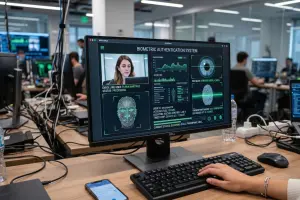
These programs can detect any suspicious behavior, from conversations to the presence of additional people during the exam, as well as impersonation and the use of chatbots like ChatGPT or unauthorized materials.
How does proctoring work?
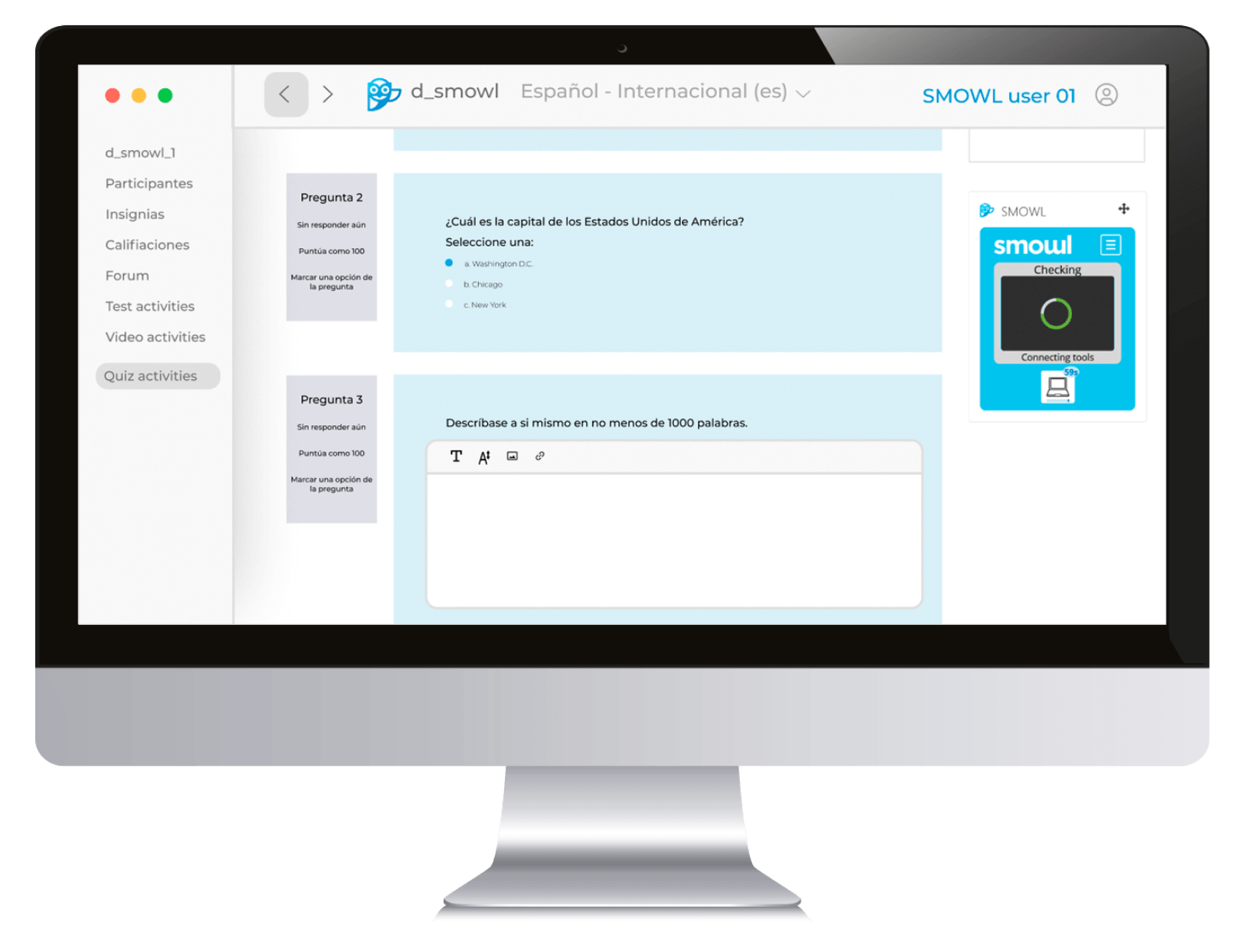
Let’s take SMOWL, developed by Smowltech, as an example, along with its two monitoring solutions. On one hand, there is the option to supervise an exam using Browser Lock, a browser extension that restricts actions to the exam screen.
On the other hand, there is SMOWL CM, a computer monitoring tool that allows students to use their computers freely while keeping a record of their actions during the exam and flagging those deemed not allowed.
Depending on the institution’s needs, examiners can combine either of these two solutions with webcam monitoring, audio capture, and user authentication in plans for remote assessments. Additionally, the environment can be monitored with a second camera in the most advanced plan.
The plan for in-person digital exams, however, does not offer these features (unless specifically required), since these are functions that the proctor present in the classroom can perform.
SMOWL does not make academic decisions; it provides detailed reports with evidence of incidents so that examiners can decide whether the student passes or fails the exam.
Short-term action plan for academic institutions
The Australian government has established a short-term action plan to address the risks AI poses to academic integrity, which can serve as a reference for institutions worldwide. The immediate steps are:
- Understand AI capabilities: The guide emphasizes the importance of understanding new technologies and encourages all education professionals to interact with emerging tools to gain firsthand experience.
- Differentiate generative AI from other support tools: The action plan compares generative AI, which is easy to use, to a calculator, which requires knowledge of mathematics, highlighting the importance of not generalizing when penalizing students for using digital tools.
- Limit the use of AI content detectors: These tools have proven unreliable in detecting AI-generated content. The guide cites the example of an AI detector that flagged the Bible as text written by ChatGPT.
- Monitor and review academic fraud: While updating policies, processes, and systems in educational institutions may take time, the guide recommends monitoring and reviewing attempts and instances of academic dishonesty.
- Seek expert advice: As AI evolves, the Australian government recommends listening to experts in academic integrity, educational technologies, and artificial intelligence, not only directly but also through online articles, guides, and podcasts. For example, Big Smowl Talks is a series of video interviews by Smowltech featuring expert voices from the education sector.
- Partner with students: Considering students’ perspectives as AI users can provide valuable insights when defining guidelines for its use.

Conclusion
New technologies, and specifically artificial intelligence, play a crucial role in the era of digital education.
Emerging forms of academic dishonesty pose a challenge for schools, universities, and, more broadly, institutions and organizations that, if they fail to address academic fraud, risk undesirable consequences.
As we have seen, inadequate management of academic misconduct can trigger reputational damage, legal challenges, penalties, and substantial financial losses.
Proactivity plays a decisive role in this regard. That’s why an increasing number of institutions are turning to solutions such as digital exam monitoring programs, which are capable of detecting both current and future forms of cheating.
Updated on